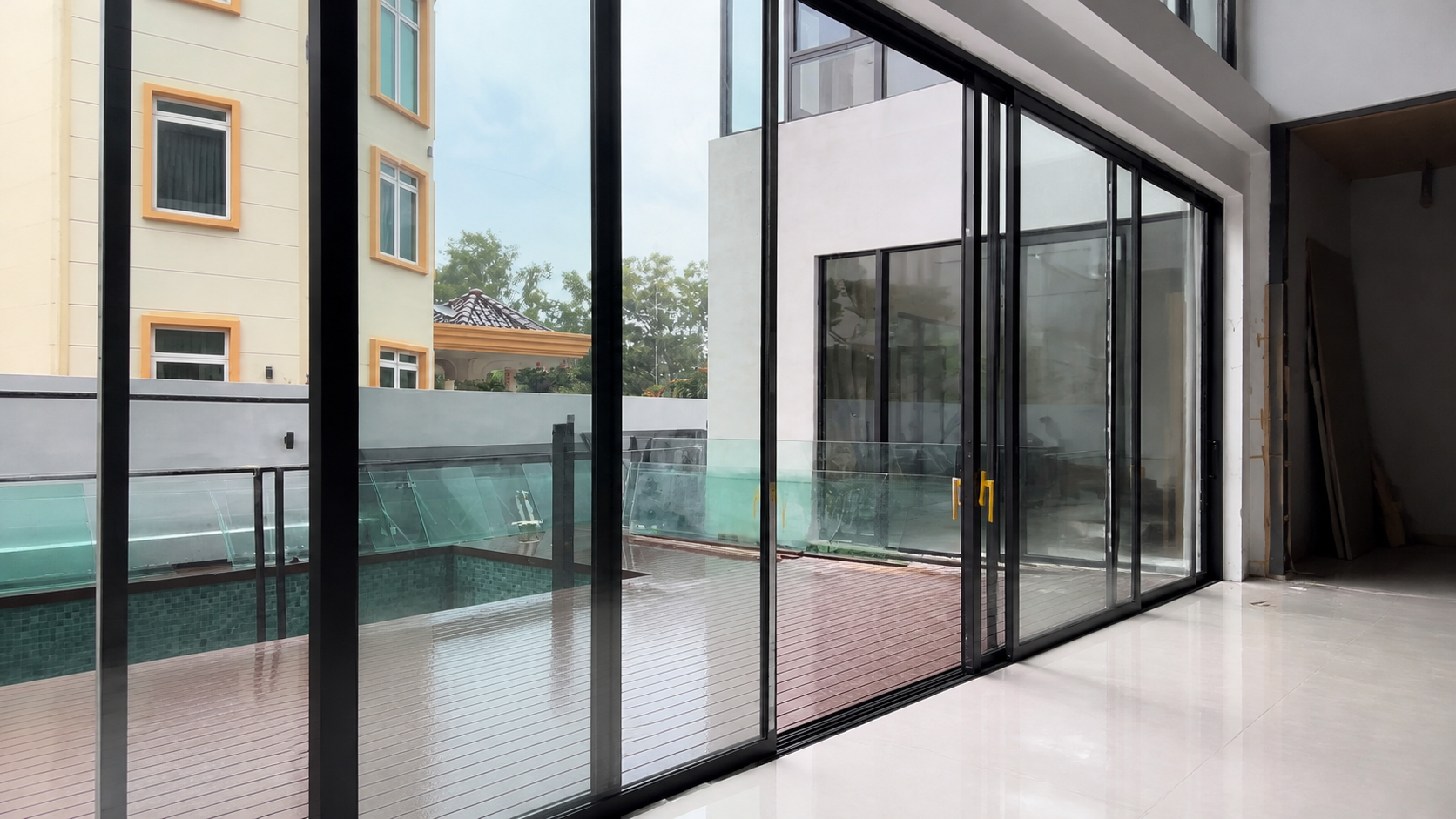
Short answer: thermal-break aluminum windows separate the interior and exterior frame sections with a lower-conductivity material, reducing heat flow through the metal frame. Non-thermal-break systems do not provide the same separation. The better choice depends on climate, condensation risk, glazing, building use, local code and the tested performance of the complete window—not the frame label alone.
For a project buyer, “thermal break” should be the beginning of the specification discussion, not the final specification. Two windows described with the same phrase can have different glass, spacers, seals, profile depths, hardware, drainage and installation details. Those differences can change energy, air, water and structural performance.
| Decision factor | Thermal-break aluminum | Non-thermal-break aluminum |
|---|---|---|
| Frame construction | Interior and exterior aluminum sections are separated by a lower-conductivity element | Aluminum provides a more continuous conductive path |
| Heat flow through frame | Designed to reduce frame conduction | Normally higher when other conditions are comparable |
| Condensation control | Can improve interior frame surface temperatures; verify the complete design | May present greater risk in cold or humid conditioned environments |
| Typical discussion | Conditioned homes, hotels, apartments and projects with energy targets | Mild climates, unconditioned areas, interior uses or less demanding approved applications |
| Quotation requirement | Confirm the whole-product rating, tested configuration and local compliance—not only the frame description | |
Aluminum is strong, dimensionally stable and useful for narrow profiles and large openings, but it also conducts heat readily. A thermal break interrupts part of that conductive path between the exterior and interior frame sections. This can reduce heat transfer through the frame and help manage interior surface temperature.
The thermal separator is only one component. Corner assembly, sash-to-frame interfaces, glazing beads, reinforcement, drainage paths and hardware penetrations also influence the finished product. Ask the manufacturer which exact system, size range and glass build-up the available performance evidence covers.
The U.S. Department of Energy notes that frame material, glazing, gas fills, spacers and operation all affect overall window properties. It recommends using whole-product ratings when comparing products. The DOE window technology guide and the NFRC rating framework are useful references for understanding U-factor and solar heat gain coefficient (SHGC).
A thermal-break system is commonly considered for conditioned buildings in cold climates, hot climates with substantial cooling loads, mixed climates and projects with explicit energy or condensation criteria. It may also be relevant when large amounts of aluminum framing surround high-performance glass; otherwise, a conductive frame can weaken the benefit of the glazing package.
Do not select the frame independently from the glass. Double or triple glazing, low-e coating location, gas fill, spacer type and edge conditions should be coordinated with the required U-factor, SHGC, visible transmittance and safety glazing rules. Orientation also matters: a specification appropriate for a shaded north elevation may not be appropriate for a large sun-exposed opening.
A non-thermal-break aluminum system may fit an interior partition, an unconditioned building area, a mild climate or a project whose approved calculations do not require the additional frame performance. It may also be considered where simplicity, profile availability or budget is prioritized and the design team has accepted the resulting performance.
“May fit” is not the same as “always suitable.” Coastal exposure, wind, driving rain, opening size, air-conditioning, indoor humidity and local codes remain relevant. A low-cost frame can become expensive if it contributes to condensation, comfort complaints or replacement work.
ForgeWin supports made-to-order project review through its custom aluminum windows and doors manufacturer page. Final values, certifications and system limits must be confirmed for the selected configuration and destination.
A thermal-break frame uses a lower-conductivity separator between interior and exterior aluminum sections. A non-thermal-break frame has a more direct conductive path. Glazing, spacers, seals and installation still affect final performance.
No. Review the complete tested product, including U-factor, SHGC, air leakage and the configuration covered by the documentation.
It may be reasonable for mild climates, unconditioned spaces, interior partitions or approved projects without demanding thermal criteria.
Send project location, drawings, sizes, quantities, operating types, performance targets, glass, finish, hardware, screens, applicable standards and delivery requirements. Request a project review after the scope is defined.
2026-09-10

2026-10-04