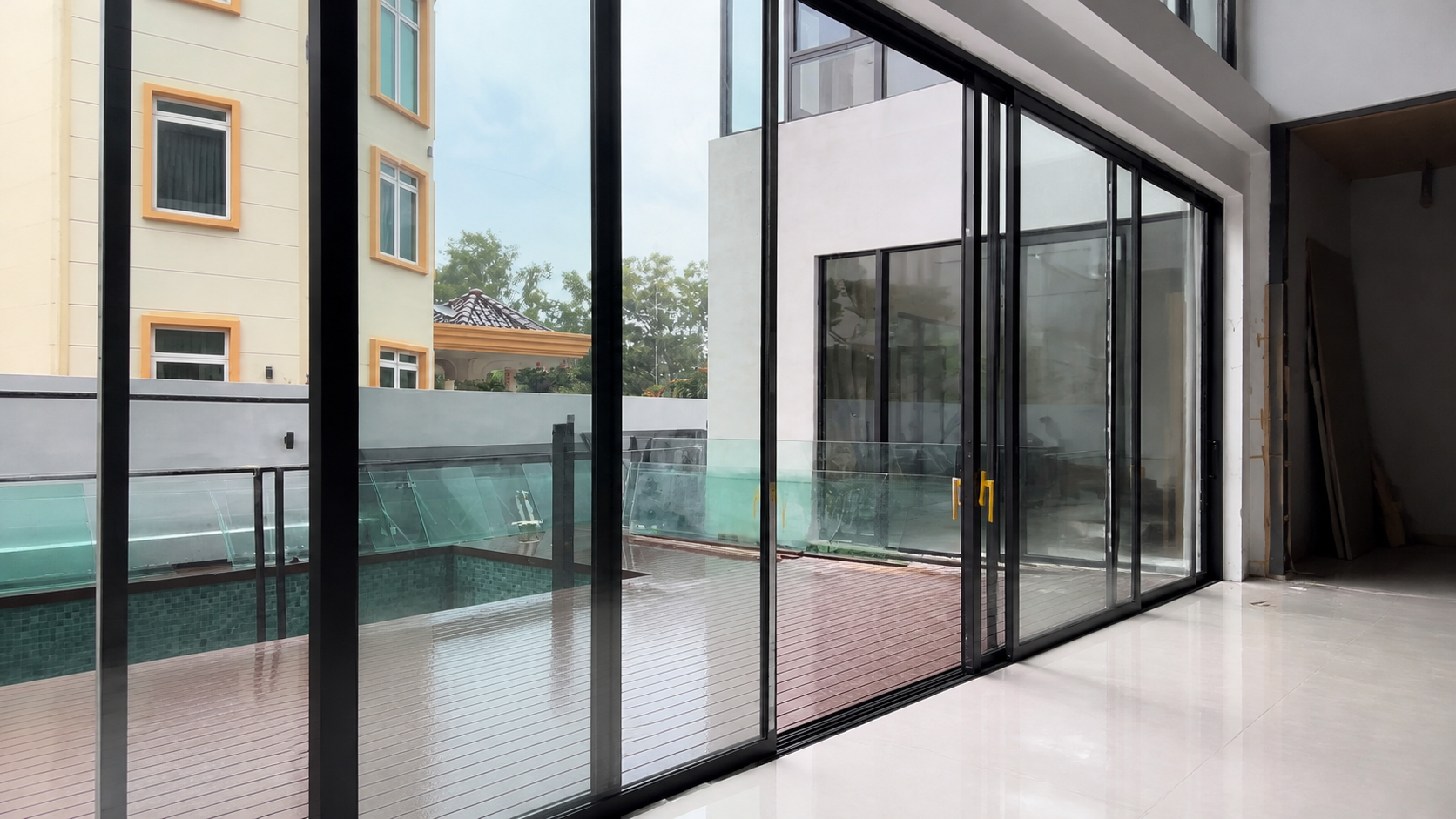
Short answer: aluminum windows are often chosen for strength, slim sightlines, finish range and large openings, while uPVC windows offer low frame conductivity and familiar multi-chamber thermal designs. Neither material is automatically better. Compare the complete tested window for climate, size, glass, air and water performance, structural load, maintenance and local compliance.
A material-only comparison can mislead buyers. A well-designed thermal-break aluminum window may outperform a basic metal window by a large margin. A uPVC window’s reinforcement, profile geometry, corner welding, glass and hardware also affect its performance. Ask for evidence tied to the exact product configuration.
| Factor | Aluminum windows | uPVC windows |
|---|---|---|
| Frame conductivity | Metal conducts heat; thermal breaks can reduce frame heat flow | Base material has lower conductivity; profile chambers and reinforcement matter |
| Sightlines | Often supports narrow visible profiles | Profiles may be wider depending on system and reinforcement |
| Large openings | Frequently considered for structural capacity and large glazed areas | Size limits depend on profile, reinforcement, color, glass and hardware |
| Finish | Powder coating, anodizing and other system finishes may be available | White, colored, laminated or co-extruded surfaces may be available |
| Maintenance | Hardware, seals, drainage and cleaning require maintenance in either material | |
uPVC’s lower material conductivity is an advantage at the frame level. Aluminum needs careful thermal design when the project requires low heat transfer or condensation control. A thermal break separates interior and exterior aluminum sections with a lower-conductivity element.
Whole-product performance includes the frame, sash, glass, spacers, seals and product size. The U.S. Department of Energy explains these interacting components in its window types and technologies guide. Compare U-factor and SHGC for the exact product rather than using material as a substitute for a rating.
For a deeper frame discussion, read thermal-break vs non-thermal-break windows.
Aluminum is often selected for tall panels, wide doors and narrow sightlines. That does not remove the need for engineering. Mullions, reinforcement, frame depth, joints, anchorage, glass weight and design pressure must be checked.
uPVC systems can use internal reinforcement and multi-chamber profiles. Their size and color limits vary. Dark finishes can change solar heat absorption, while large sashes increase hardware and deflection demands. Ask for maximum approved sizes and the test configuration.
Frame material alone does not determine leakage. Gaskets, brush seals, corner assembly, drainage, thresholds, hardware adjustment and installation interfaces are central. Sliding, casement, awning and tilt-turn products also seal differently.
For exposed projects, request evidence for air leakage, water penetration and structural performance. Confirm whether the tested size, glass, mullion and operating type match the proposed product. Site installation, perimeter sealant and sill drainage must be coordinated separately.
Aluminum commonly offers powder-coated and anodized finishes, narrow frames and coordinated window-and-door systems. uPVC can offer colored profiles and decorative foils. Evaluate color stability, coastal suitability, scratch repair, cleaning and future replacement matching.
Request physical samples under project lighting. Website images do not show texture, gloss, corner quality, gasket color or frame depth accurately enough for final approval.
Both materials need drainage paths kept clear, seals inspected and hardware adjusted. Coastal deposits, construction dust and incompatible cleaners can damage finishes or hardware. Service life depends on system quality, exposure, installation and maintenance rather than material name alone.
Ask which components can be replaced locally: rollers, hinges, handles, locks, gaskets, glass units and screens. Include spare-part labeling and after-sales communication in the purchase agreement.
ForgeWin supports project-specific aluminum systems through its custom aluminum windows and doors manufacturer page. The architect, engineer, contractor or buyer should confirm local requirements and approved performance values.
Aluminum is often selected for structural capacity and narrow profiles, but compare the exact system, reinforcement, size and test evidence.
No. Material conductivity matters, but whole-window U-factor depends on the complete frame, glass, spacer and seal system.
Aluminum is frequently considered, but panel size, glass weight, deflection, hardware and wind load must be verified.
Compare whole-product U-factor, SHGC, air leakage, water penetration, structural performance and required certification. Send the window schedule for a project review.

2026-09-10

2026-10-04