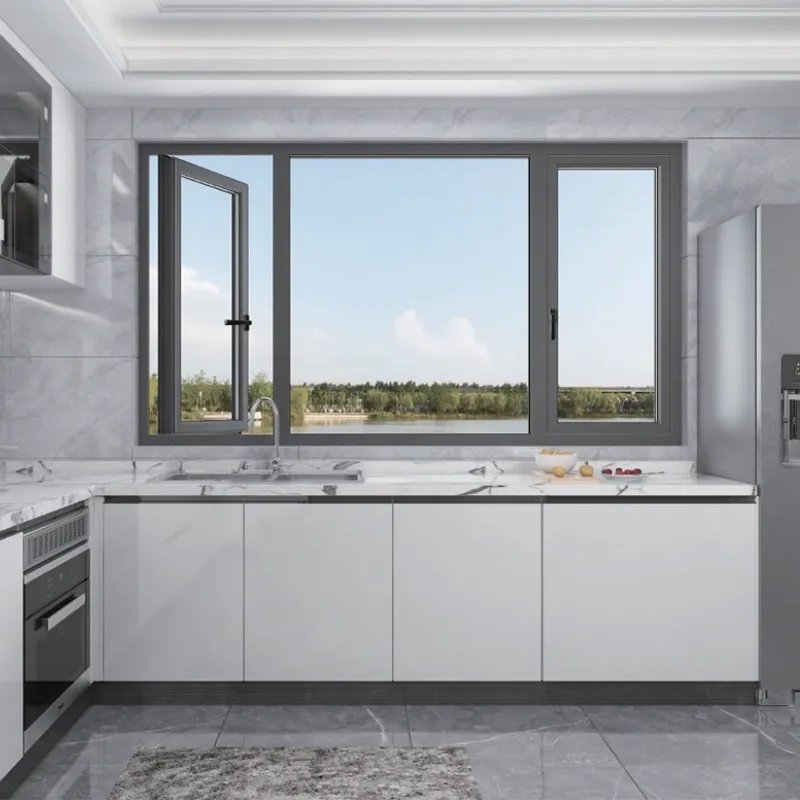
Casement windows have a side-hinged sash that opens outward. Their design can deliver strong ventilation and a clear view, but the outward swing also creates planning requirements. Weigh the benefits against the location, climate, and budget before ordering.
When closed, the sash presses into the weather seal, which can help reduce drafts when the unit is correctly installed. When open, the sash catches angled breezes and directs air into the room. The large clear area also gives casement windows a clean view with fewer meeting rails than many sliding designs.
The sash needs exterior clearance, so it may conflict with a walkway, storm shutter, landscaping, or another window. Hardware and hinges are moving parts that need occasional cleaning and adjustment. Large sashes can be heavier and may require stronger operators, reinforced frames, or a different configuration.
Casement windows suit rooms that benefit from controlled ventilation, including kitchens and bedrooms. They are less convenient where a window must remain fully open beside a narrow path or where cleaning the exterior from indoors is difficult. For large openings, compare the required clear width with a custom sliding window layout.
The best choice depends on how the room is used. Casement windows are excellent for airflow and views when the opening path, hardware, and maintenance access are planned from the start.