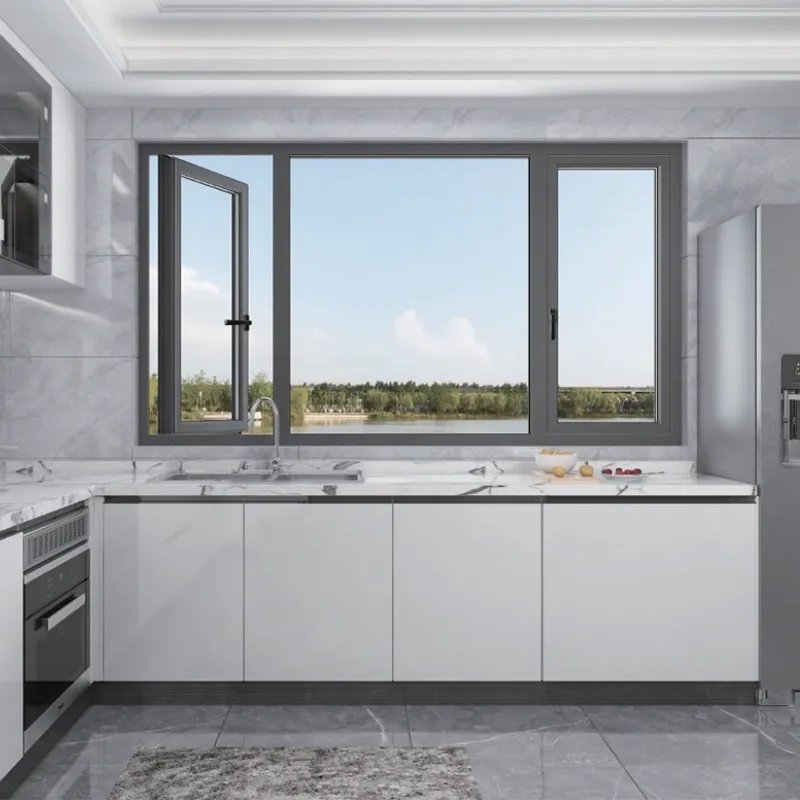
The cost of casement windows depends on the opening size, frame material, glass, hardware, finish, quantity, and installation conditions. A useful budget starts with a complete specification instead of a single price per window.
Size and shape affect the amount of frame, glass, reinforcement, and hardware required. Vinyl is often the most economical frame option, while aluminum, wood, and composite systems vary by profile, finish, and thermal performance. Low-E, laminated, acoustic, or decorative glass adds cost but may solve a specific comfort or safety need.
Replacement work can require removal, disposal, sill repair, trim, flashing, and adjustment of an opening that is not square. New construction may have easier access but still needs correct rough-opening dimensions and installation details. Ask the installer to separate product, delivery, labor, and repair allowances.
For a second benchmark, compare the quote with a custom aluminum window option when the opening is wide or a slimmer frame is desired.
Measure carefully, approve a shop drawing, and request the same specification from more than one supplier. Avoid comparing a basic window-only price with an installed package. A clear scope makes it easier to see where a higher price buys better glass, hardware, weather performance, or service.
The final cost is specific to the project, but a complete written quote will show which choices are driving it and reduce surprises during installation.