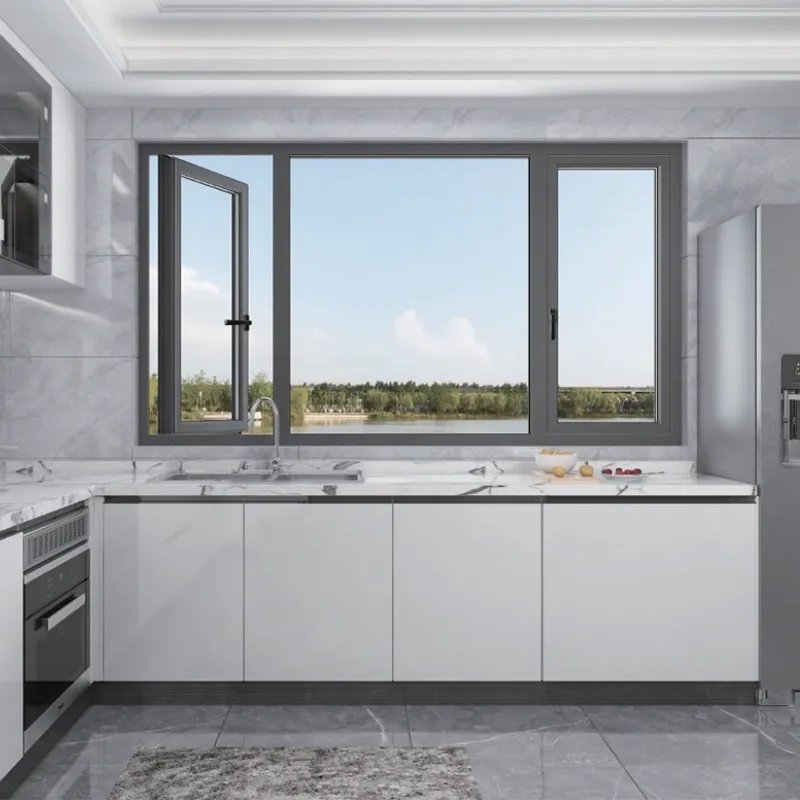
Choosing between a casement and a sliding window depends on the room, opening size, ventilation goal, and exterior clearance. A casement window hinges outward. A sliding window moves horizontally within its frame. Neither style is universally better; each solves a different set of constraints.
Casements can direct air into the room because the open sash acts like a small scoop. They also provide a broad uninterrupted view when closed. Sliding windows open without projecting outside, but only part of the frame is open at one time and the meeting rail remains in the view.
Sliding windows are useful beside walkways, patios, and landscaping because the panels stay within the frame. Casement windows need a clear swing path and should not interfere with shutters or neighboring units. Both can be fitted with handles that support comfortable operation, but the final hardware choice matters.
Sliding units have tracks and rollers that should be kept clean. Casements have operators, hinges, and compression seals that need inspection. Costs vary with material, glass, size, and hardware; compare the complete installed specification rather than a product-only price. Our sliding window cost guide explains the line items that commonly change a quote.
Measure the opening, review the operating path, and compare the glass and frame specifications. That process usually makes the better choice clear.