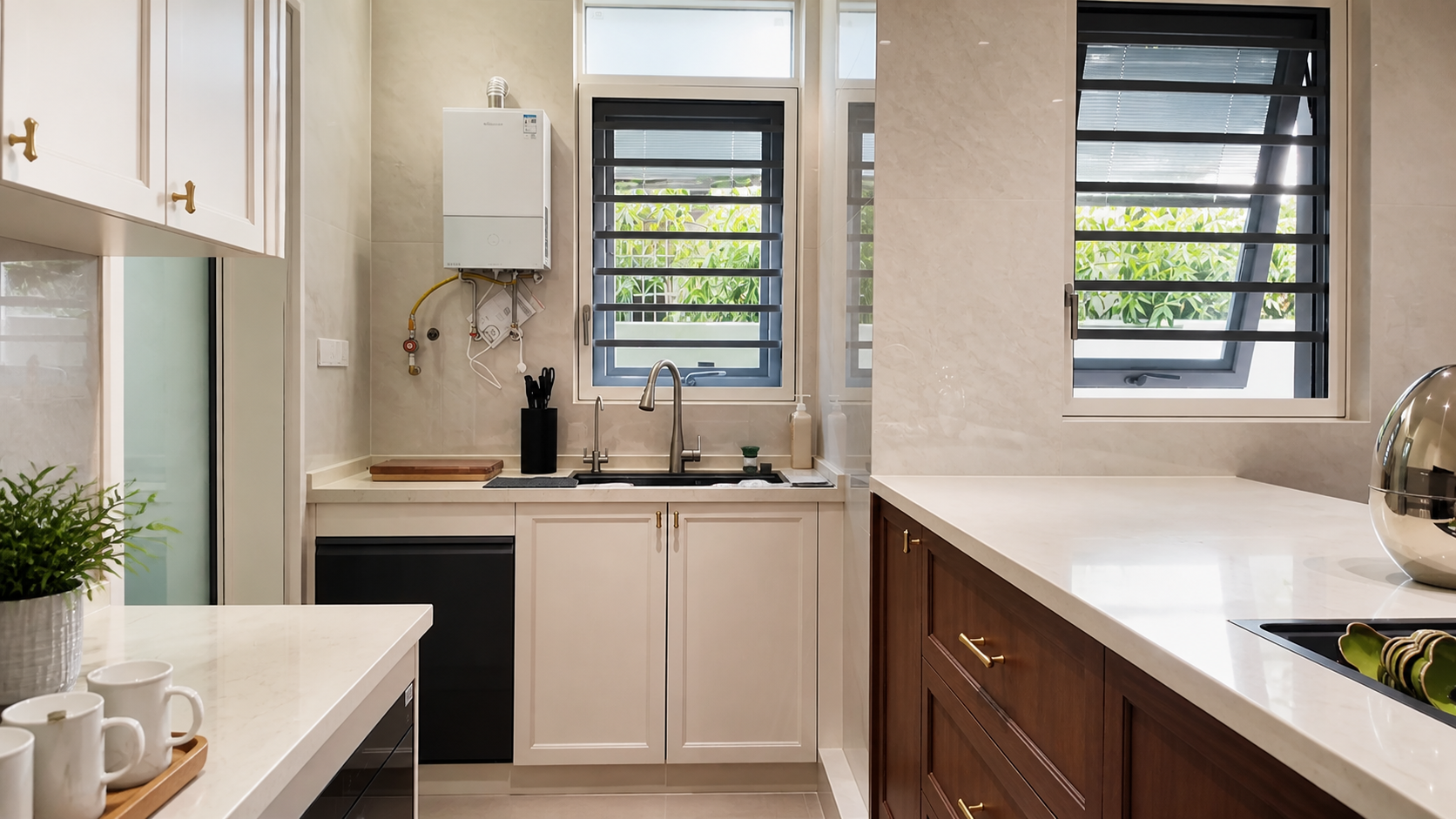
Short answer: Exterior concertina doors work only when the moving panels and the surrounding opening are designed as one weather-exposed system. Check the sill, drainage, wind exposure, panel stack, fixing points, seals and maintenance access before choosing a finish.
Write down whether the opening faces prevailing rain, strong wind, salt air, dust or a sheltered courtyard. The same panel layout can behave differently on an exposed balcony and under a deep roof. Note the finished floor, deck or paving level and where water is expected to drain.
Draw the closed opening and the fully folded position. Mark steps, furniture, screens, planting, outdoor kitchens and the space needed to operate the handle. A door that parks into a narrow corner may be difficult to use even when the frame fits the opening.
Do not use a low threshold as a substitute for a complete waterproofing detail. Ask the builder, waterproofing trade and door installer to review the same section before fabrication.
Ask each supplier to state what the quoted system is intended to handle and which site conditions remain the builder’s responsibility. Avoid universal claims such as “weatherproof” without a configuration-specific drawing or evidence. The final result depends on the opening, glass, seals, installation and surrounding construction.
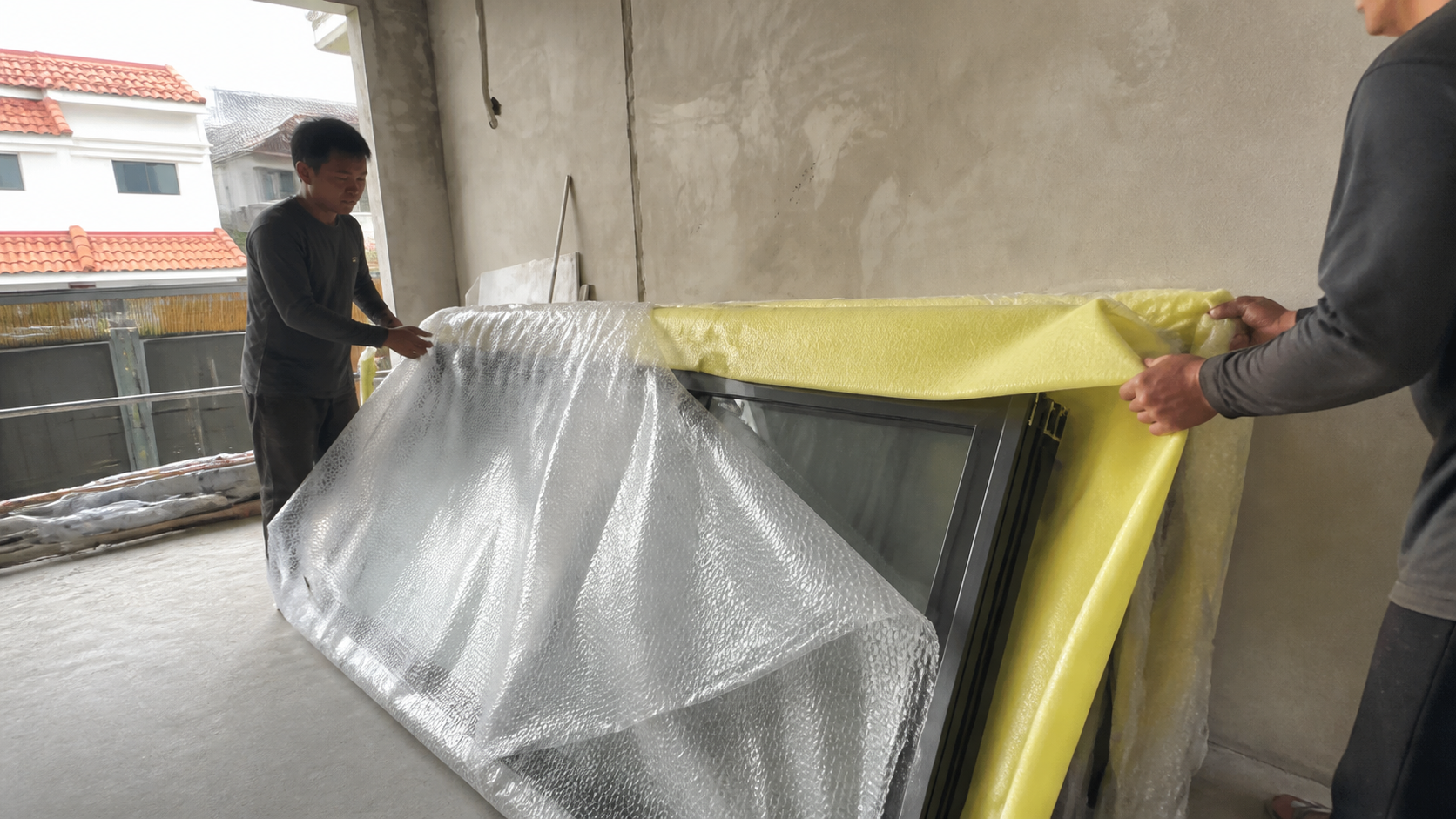
At delivery, inspect the protective packaging, frame, glass and hardware before installation. At handover, operate every panel, check the latch and seals, clear the drainage path and record the care instructions. Coastal or high-humidity projects may need a more frequent cleaning schedule.
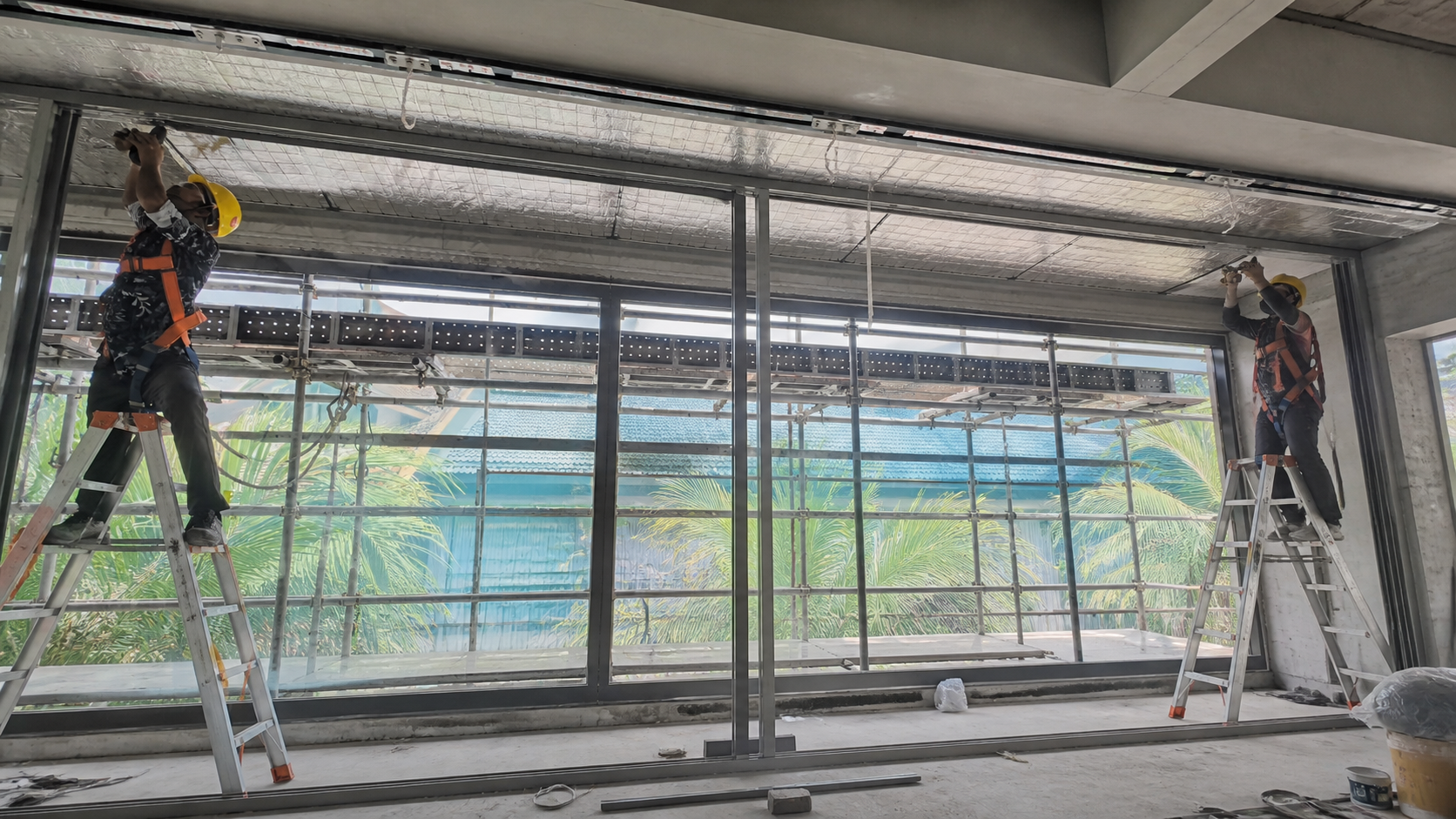
Keep the sill detail, waterproofing notes and installation photographs with the approved drawing. If a threshold, deck level or drainage route changes after the quotation, send the revision back to the supplier before the frame is fabricated. That record is more useful than a generic promise about exterior performance.
On an exposed elevation, agree who owns the waterproofing interface and who checks the sill after the surrounding finish is installed. Note the cleaning route and access to rollers or hinges. A clear maintenance plan protects the door from being treated as a sealed, maintenance-free object after handover.
Sometimes, but the threshold must be coordinated with falls, drainage, waterproofing and accessibility requirements. Review the complete sill detail.
No. Performance depends on the complete system, fixing and opening conditions. Ask for the proposed configuration rather than judging by weight alone.
Check width, height, level, plumb, square, substrate, floor finish, sill height and the space available for the folded stack.
2026-09-02
2026-09-10
2026-09-18
2026-09-26