Homeowners often get conflicting advice here because different quotations assume different scopes. Drawer capacity depends on the exact runner or box system, drawer width and installation—not the cabinet appearance. Use the manufacturer’s declared load for the proposed model and include the drawer’s own weight where the technical document requires it.
The practical way to avoid surprises is to make the assumptions visible before drawings are approved. List heavy contents such as cookware, bottles or files. Avoid assuming every width has the same rating.
Manufacturer information is most useful at model level. Blum and Hettich publish different hinge and drawer families with distinct functions and applications. The offered series, door or drawer load, installation and adjustment information should all agree.
| Decision | What to put in writing |
|---|---|
| Identity | Brand, product family, model and finish—not brand alone |
| Application | Door size and weight, drawer width, load and opening frequency |
| Function | Soft close, push to open, full extension, adjustment and removal |
| Evidence | Manufacturer data, cycle/load information and installation instructions |
| Service | Spare parts, adjustment access and written warranty route |
Hardware performance depends on the exact series, load and installation; brand names alone are not a capacity statement. This is why a sample, drawing and quotation should be read together rather than treated as separate approvals.
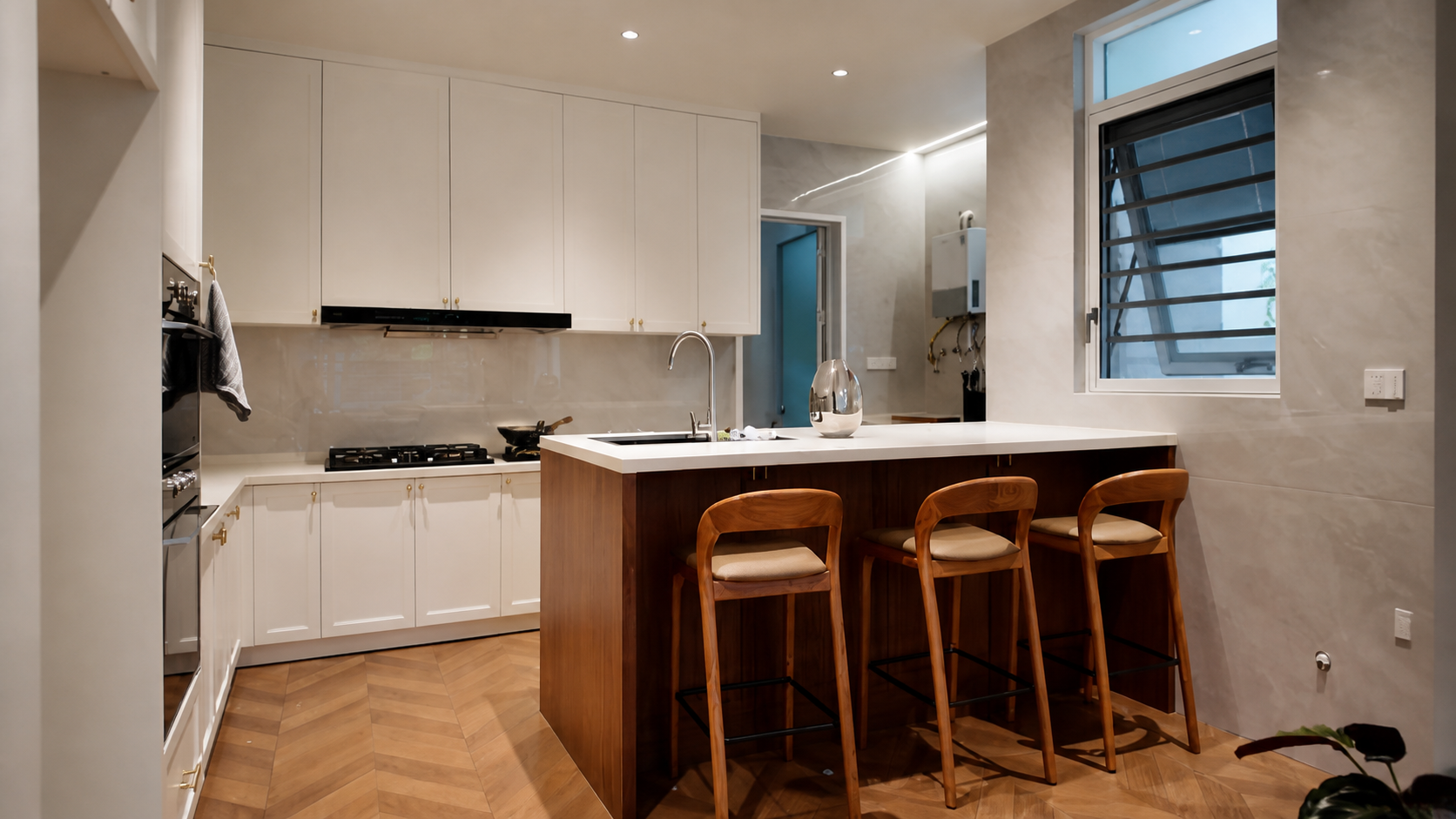
ForgeWin can review the room information through its ForgeWin design process and ForgeWin measurement guide, then connect the approved design to ForgeWin production process. The Kitchen & Wardrobe product range provides visual starting points, but the project is manufactured from approved dimensions, materials and hardware—not from the inspiration image alone.
For a quotation, include the room or floor plan, labelled photographs, ceiling height, appliance models, finish direction, destination and installation expectations. That package makes the reply faster and reduces allowances that later become variations. Contact ForgeWin with the project brief when those basics are ready.
Cabinet doors should not sag when the panel size and weight match the hinge type and quantity, fixing material and installation. Tall, wide, glass or heavy doors need particular attention. Minor movement can often be corrected through hinge adjustment before it becomes damage.
Hardware can usually be upgraded before production if the cabinet drilling, door weight and internal clearances are coordinated. A late change may require different mounting plates, drawer dimensions or door preparation, so the upgrade should be approved with the shop drawings.
Soft-closing drawers can be specified, but the quotation should identify the runner or box system rather than say only “soft close.” Drawer width, load, alignment and installation quality determine how smoothly the feature performs over time.
Last reviewed: 29 August 2026. Project requirements, local regulations and manufacturer data can change; confirm the current documents for the destination and exact specification.