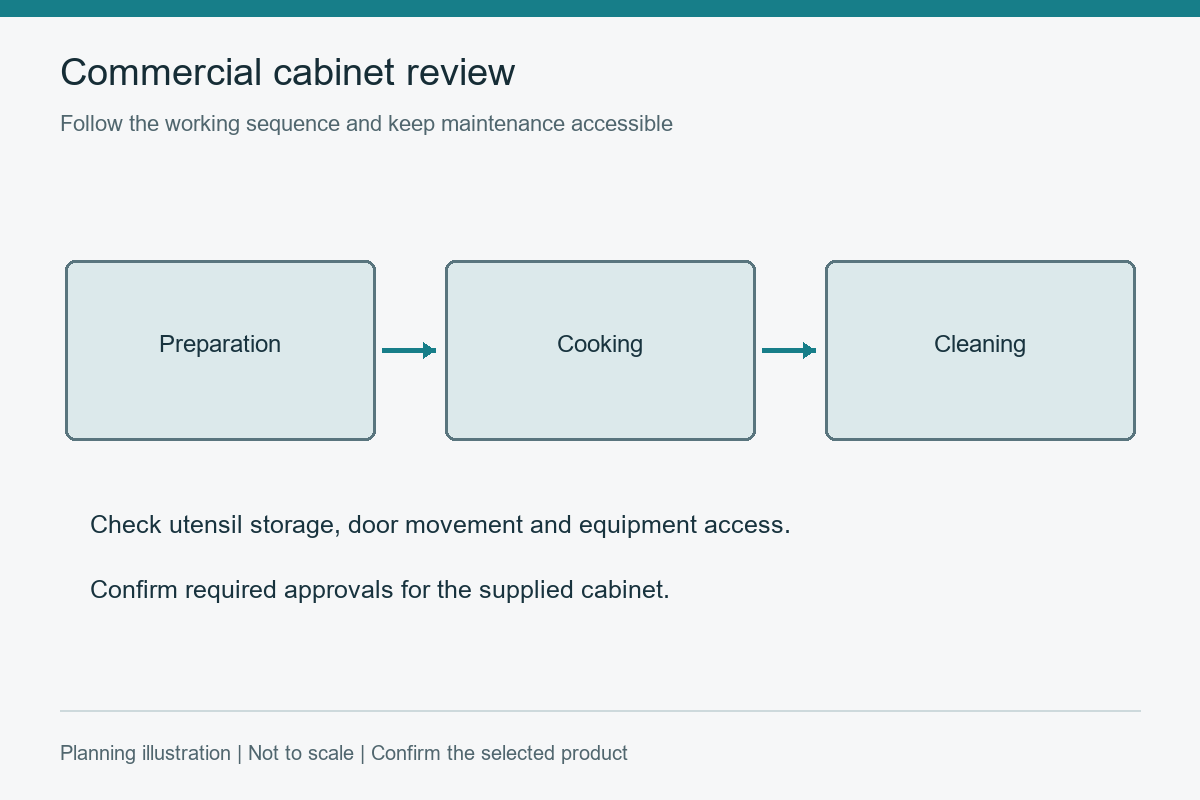
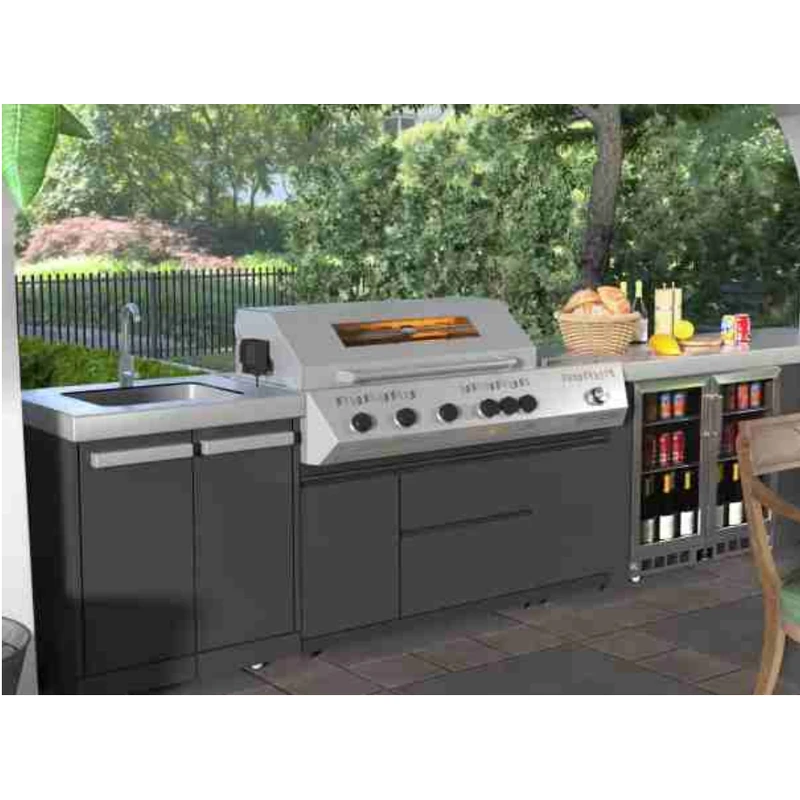
Plan stainless steel storage cupboards from the items they must hold. Measure the largest routine item, decide how often it is used and check the usable internal space after hinges, drawers and services are included. Outside cabinet dimensions alone do not describe storage capacity.
Count containers, tools or supplies and measure the largest pieces. Allow handling space rather than filling the theoretical volume. Adjustable shelves help when inventory changes.
State uniformly distributed and point loads, lock type and who needs access. Hazardous chemicals may require specialized cabinets and should not be placed in a general stainless cupboard by assumption.
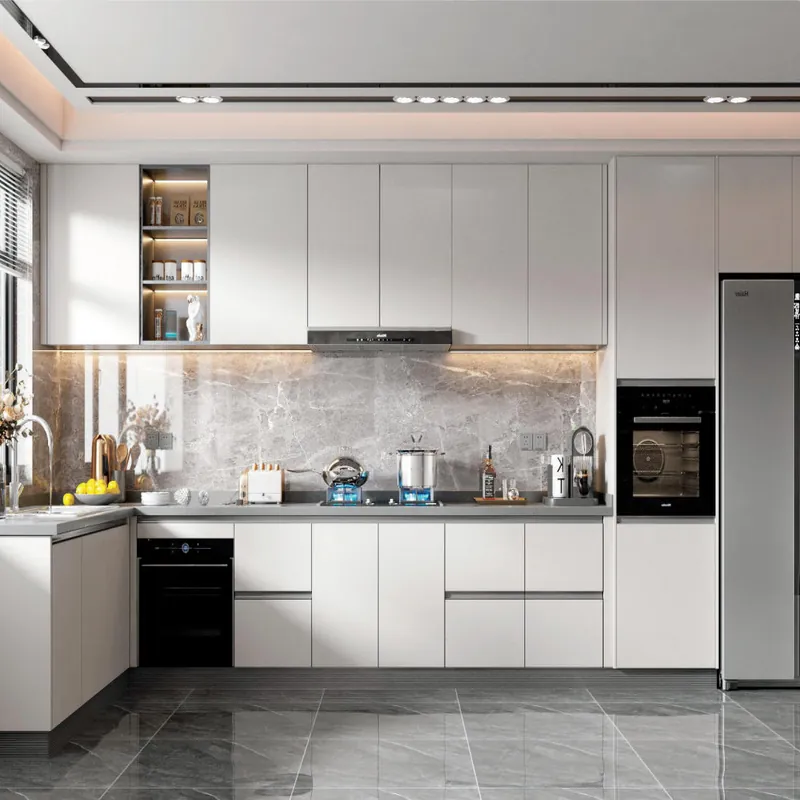
A related layout to review is FW-MK-001 cabinet layout. Use the product page to discuss the proposed dimensions and configuration.
Keep floors, wall junctions and top surfaces cleanable. Decide whether the unit is sealed, raised, wall-mounted or mobile, and ensure the choice matches the facility’s cleaning method.
Measure the largest items and total load, then set shelf spacing and count. Food, chemicals, tools and linen may need different separation, ventilation or security.
Floor-standing, wall-mounted and mobile cupboards create different load paths and cleaning access. Confirm wall backing, anchors, legs, casters or plinth details before ordering.
Check door swing, handles, locks, shelf adjustment and sharp-edge control. Request replaceable hardware and a cleaning method suited to the finish.
For a cabinet holding trays and small appliances, place the actual items on a table before choosing shelves. A stack of trays may fit a shallow drawer while an appliance needs more height and a clear lifting route. Sketch both arrangements, then check where the hinges and handles intrude. This simple trial often reveals a better layout than filling every space with another accessory.
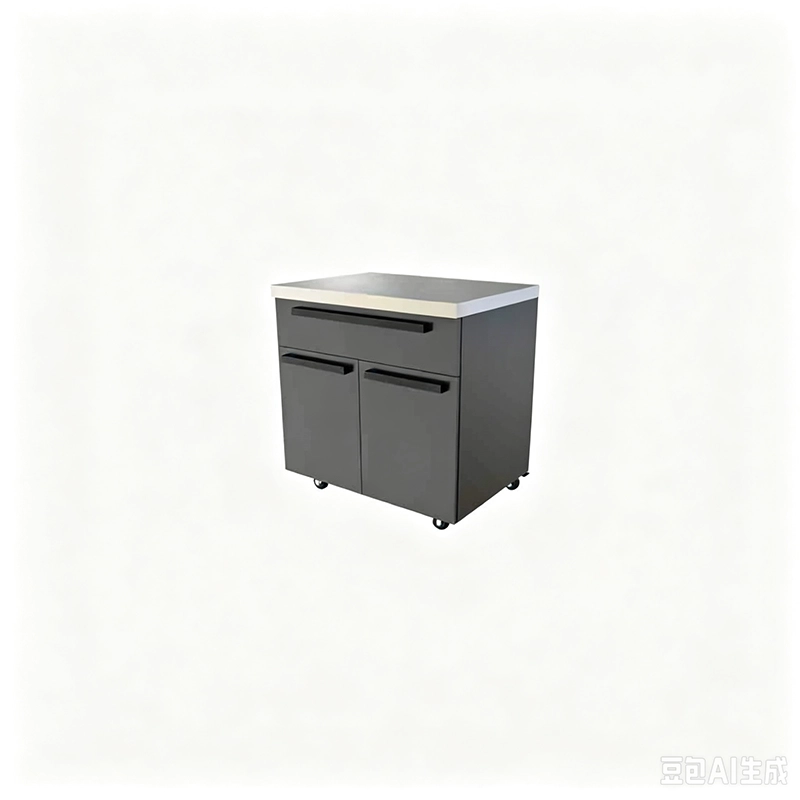
A related layout to review is GP-M04 outdoor cabinet. Use the product page to discuss the proposed dimensions and configuration.
Drawers improve access to some contents, while shelves suit taller items and flexible arrangements. Compare the usable space, lifting motion and hardware requirements for your inventory. Neither option is universally better.
Use the checks above to mark the unresolved items on your drawing or quotation. Send that marked-up version with the selected product reference so the next discussion can focus on the actual configuration.