Most permanent outdoor kitchens benefit from planned drainage. The floor should not pond against cabinet bases, and sink or appliance wastewater must discharge through a lawful drainage system—not onto the patio. Cabinet drain holes manage incidental water; they do not replace site drainage. Confirm slopes, drain locations and access for cleaning before the slab or tiles are finished.
The decision becomes clearer once the kitchen is treated as a small building-services project, not a single cabinet purchase. Weather resistance belongs to the whole assembly. A sound cabinet can still be let down by a hinge, service hole, appliance vent or worktop joint. Expect water to arrive, direct it away and leave enough airflow for hidden areas to dry.
On a real project, for “Do I need drainage for my outdoor kitchen?”, treat this as a coordination question. Record the exposure, appliance models, finished dimensions and the party responsible for each service. Local fire, gas, electrical, plumbing and structural requirements still need review in the destination jurisdiction. It also leaves a record that the installer can check instead of reconstructing decisions on site.
| Decision | What to examine | What to record |
|---|---|---|
| Exposure | Rain direction, sun, salt and seasonal extremes | Site exposure note |
| Shelter | Roof, screen or appliance cover | Ventilated protection plan |
| Drainage | Worktop, cabinet and floor water | Slopes, drips and drains |
| Maintenance | Cleaning, inspections and winterisation | Owner care schedule |
Use this list before accepting a design, price or product recommendation:
Evidence boundary: Use these checks to prepare the brief, then verify the final drawing against model-specific manuals and local requirements. No general article can approve a service connection or safety clearance for an unseen site.
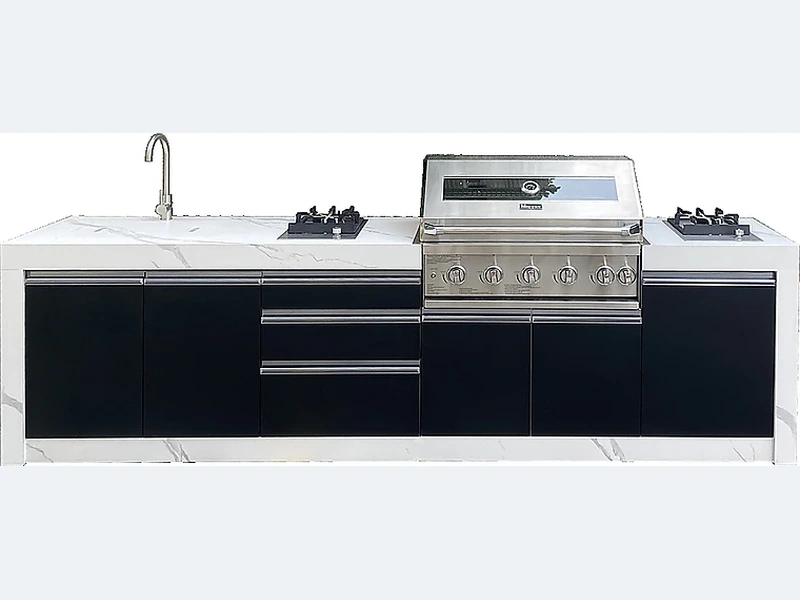
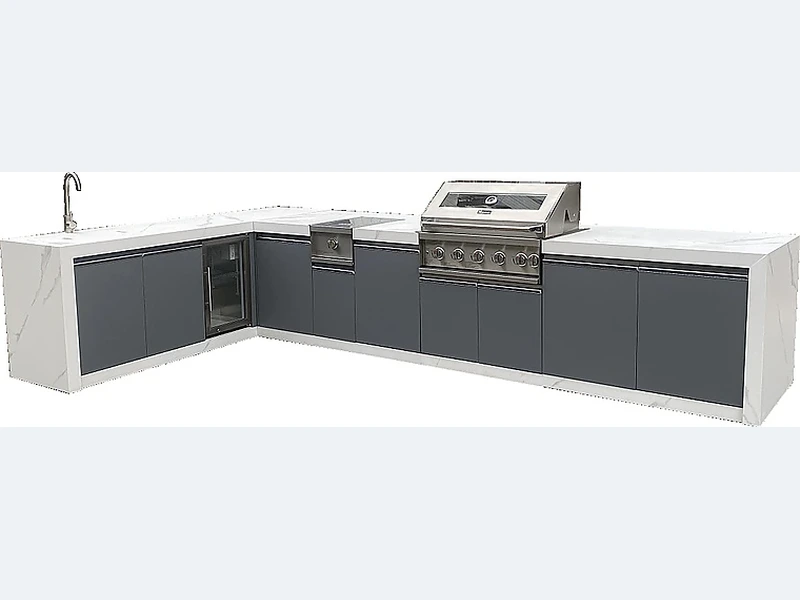
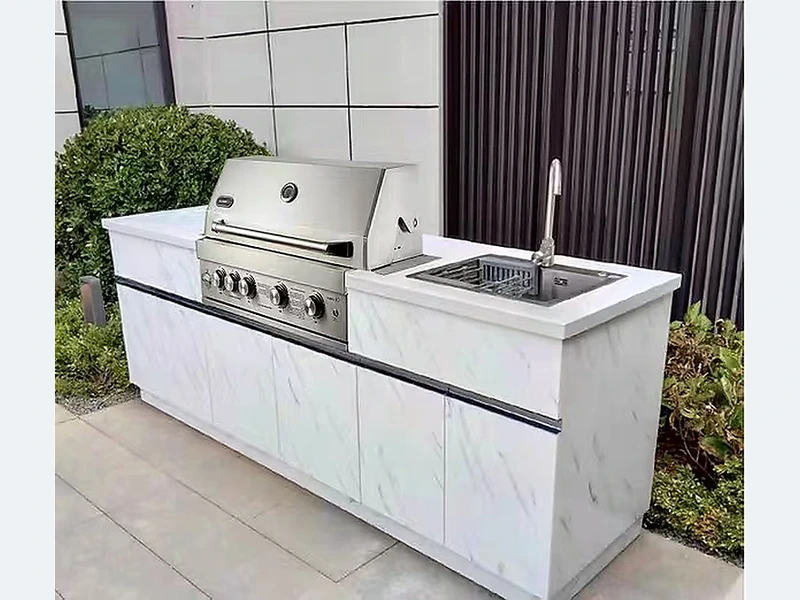
For a visual and dimensional reference, compare the stainless steel outdoor kitchen with grill and sink together with the broader ForgeWin outdoor-kitchen range. Treat both as configuration references, then submit the measured site, appliance schedule, finish direction and delivery location for a project review.
ForgeWin can coordinate cabinet modules, finish direction and appliance openings from drawings. The local team should verify finished dimensions, structural support, fire separation and code-controlled services. Keeping those roles visible prevents a product drawing from being mistaken for a site approval.
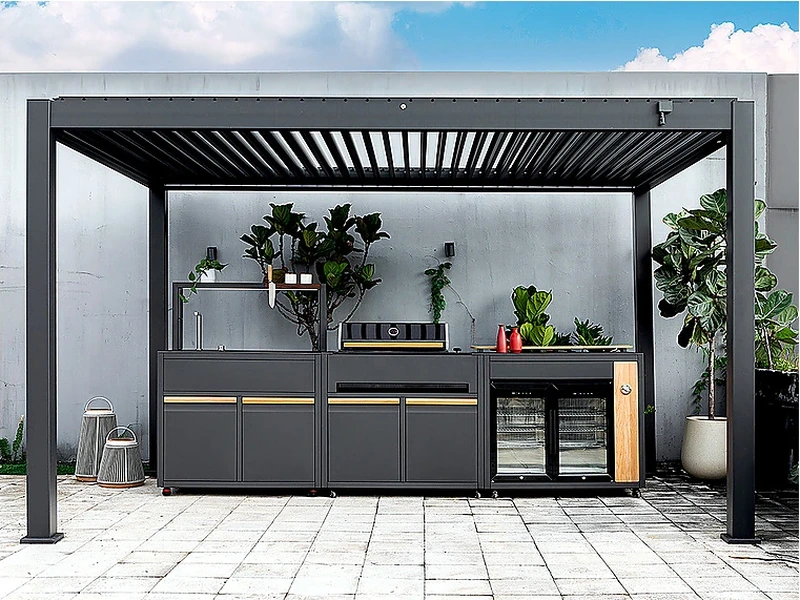
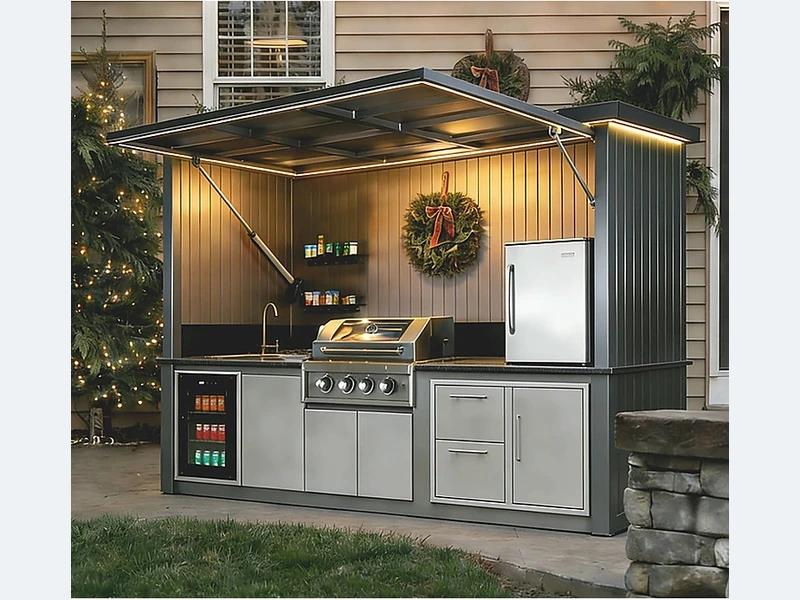
Reduce water entry with drip edges, folded or sealed cabinet tops, protected door reveals, gaskets where appropriate, raised thresholds and sealed service penetrations. Keep vents required by appliances or gas storage open; do not seal them in the name of waterproofing. If wind-driven rain remains severe, add a screen, canopy or better-sheltered storage zone for dry goods.
Outdoor kitchens should be described as weather resistant, not completely waterproof. Rain can enter through door gaps, vents, appliance openings and service penetrations, and wind can drive water uphill. Durable designs manage water with sloped tops, drip edges, raised bases, drain holes, sealed joints and protected storage. Any supplier claiming “100% waterproof” should explain the test method and exclusions.
Outdoor kitchens can survive winter when materials suit freeze-thaw exposure and services are winterised. Shut down and drain vulnerable water lines, follow appliance storage instructions, keep snow and ice from blocking vents or drains and repair failed sealant before freezing weather. Cabinets may remain outside, but ice makers, taps, filters and pumps often need more specific protection.
For “Do I need drainage for my outdoor kitchen?”, keep the solution simple until the fixed constraints are known. Once site, weather, equipment and services are recorded, the remaining choices can be priced without forcing late changes. Send ForgeWin the dimensions, photos and model numbers so unresolved items can be marked before production.
2026-08-31
2026-09-08
2026-09-24
2026-10-02
2026-10-10