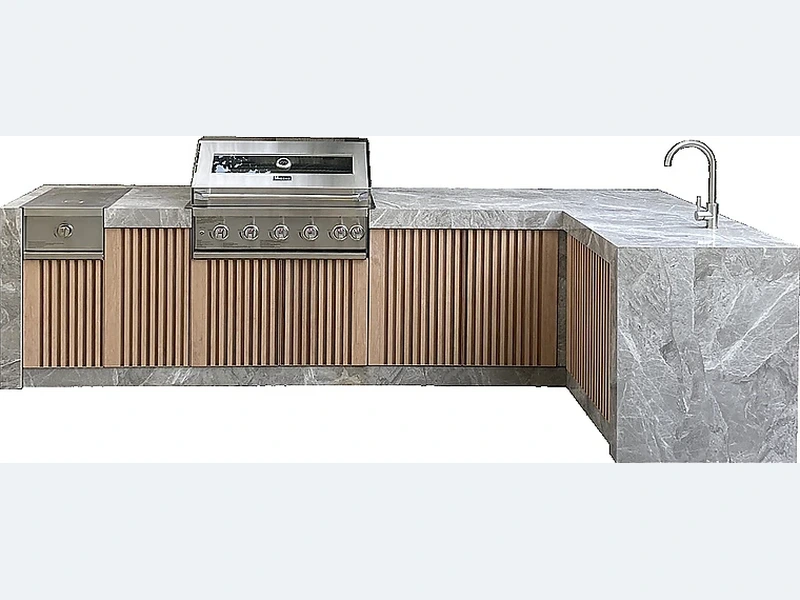
Yes, stainless steel cabinets are well suited to many outdoor kitchens because they are non-porous, cleanable and tolerant of heat and moisture. The specification still matters. Confirm the stainless grade, surface finish, weld treatment, fasteners, hinges and internal construction, and use a more chloride-resistant solution for coastal exposure. Stainless steel can stain or corrode if salt deposits and contamination are ignored.
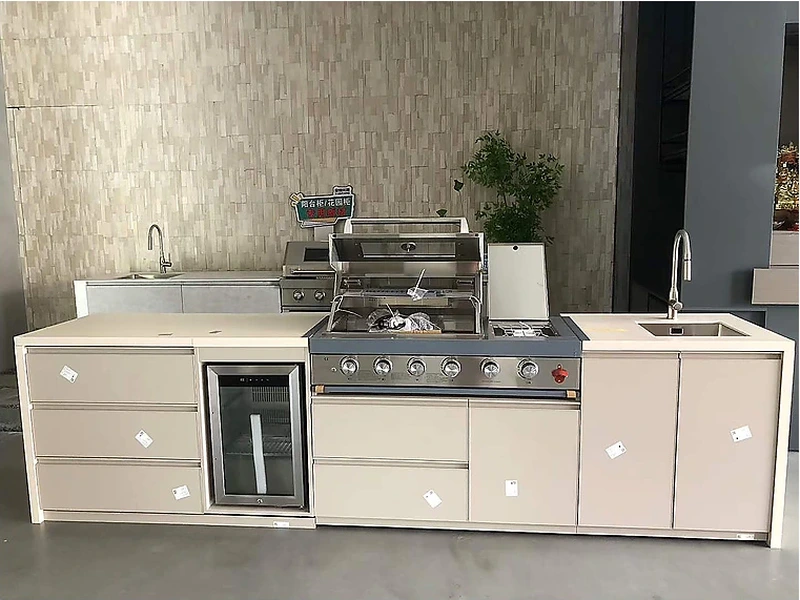
A useful way to approach this question is to separate the visible product from the site conditions around it. Material names are only the first line of a specification. Alloy or grade, thickness, finish, fabrication, fasteners and water-shedding details decide how the assembly behaves. Describe whether the site is covered, coastal, shaded or fully exposed before comparing samples.
In practical terms, for “Are stainless steel cabinets good for outdoor kitchens?”, treat this as a coordination question. Record the exposure, appliance models, finished dimensions and the party responsible for each service. Local fire, gas, electrical, plumbing and structural requirements still need review in the destination jurisdiction. It turns a broad question into a list of decisions that can be checked before production.
| Decision | What to examine | What to record |
|---|---|---|
| Cabinet body | Alloy or grade, thickness and construction | Written material schedule |
| Finish | UV, salt, heat and cleaning exposure | Code, sample and care method |
| Hardware | Hinges, runners, handles and fasteners | Material and load rating |
| Water management | Seams, edges, vents and base details | Drain and drying path |
Use this list before accepting a design, price or product recommendation:
Evidence boundary: Project evidence should close the remaining gaps. Keep the manufacturer data, site measurement and local trade approvals with the drawing before treating a general recommendation as buildable.
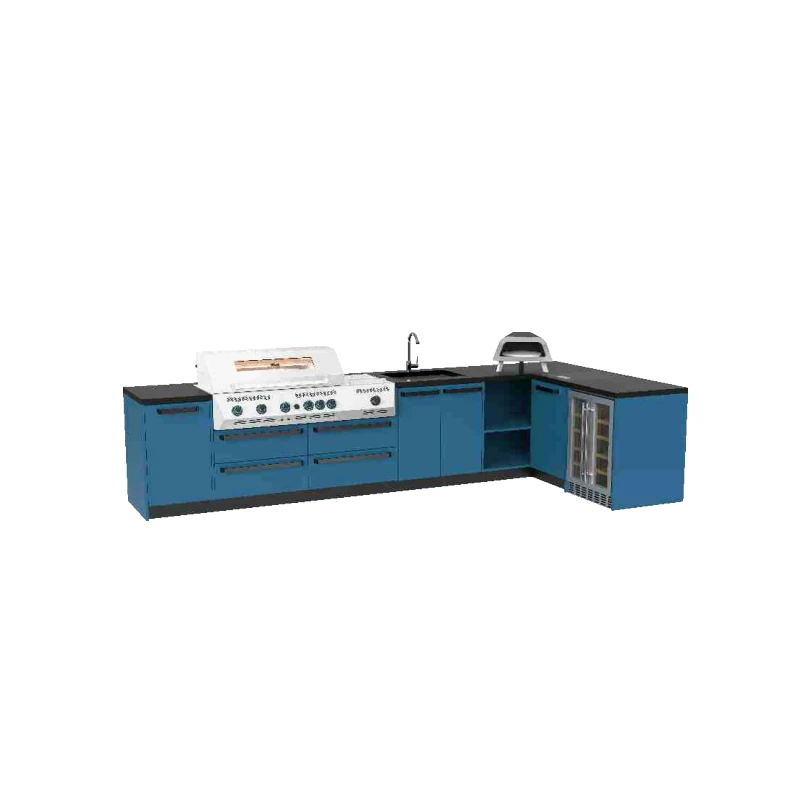
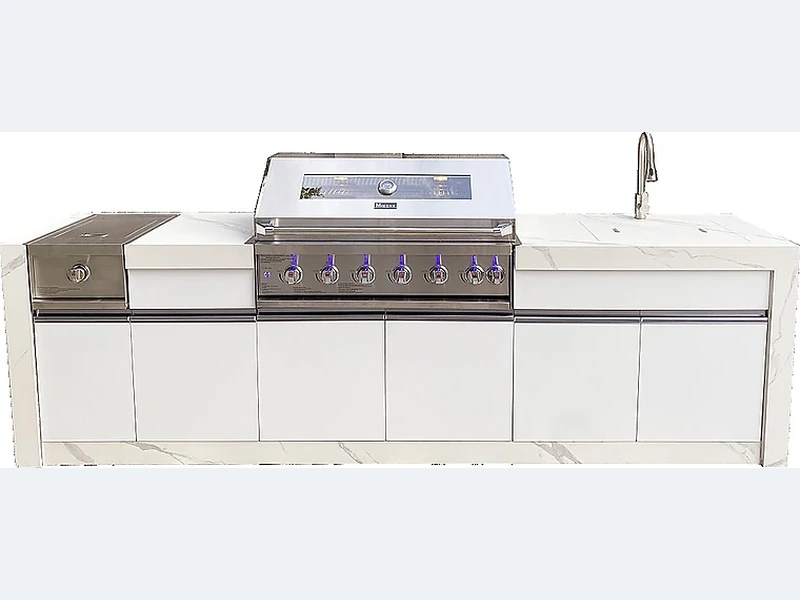
For a visual and dimensional reference, compare the straight outdoor kitchen design collection together with the broader ForgeWin outdoor-kitchen range. Treat both as configuration references, then submit the measured site, appliance schedule, finish direction and delivery location for a project review.
Use the ForgeWin proposal to coordinate modules and cut-outs, then return site and trade comments on the same drawing. This two-way check is especially important where worktops, fuel, drainage or existing construction fix the available dimensions.
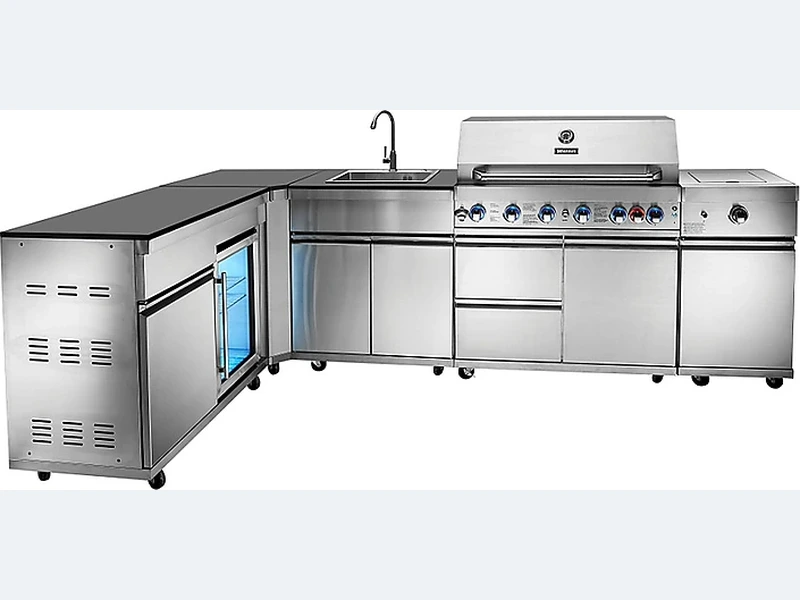
Outdoor cabinets can rust or develop corrosion staining if the material, finish or maintenance does not suit the environment. Prevention starts with the correct alloy and compatible fasteners, then adds drainage, isolation from dissimilar metals, regular fresh-water rinsing and prompt removal of salt or iron contamination. “Stainless” means corrosion resistant, not corrosion proof—especially near the sea or around pool chemicals.
Yes, aluminium can be a good outdoor-cabinet material because it is light and does not form red rust. It still needs the right alloy, coating or anodising, compatible fasteners and isolation from dissimilar metals. Thin panels can dent and poorly prepared coatings can fail, so assess cabinet construction and finish warranty—not just the fact that the cabinet is aluminium.
Only cabinets designed for outdoor exposure should stay in the rain. Indoor particleboard or standard kitchen joinery can swell, delaminate or trap moisture. Outdoor cabinets still should not be described as watertight: use sloped surfaces, sealed or folded seams, drain paths, corrosion-resistant hardware and covered appliance openings. A roof or cover reduces maintenance even when the cabinet material is weather resistant.
For “Are stainless steel cabinets good for outdoor kitchens?”, good outdoor-kitchen decisions are specific. They name the product, exposure, interface and person who will verify it. That discipline matters more than adding another feature to the rendering. Send ForgeWin the dimensions, photos and model numbers so unresolved items can be marked before production.
2026-08-30
2026-09-15
2026-10-01
2026-10-09