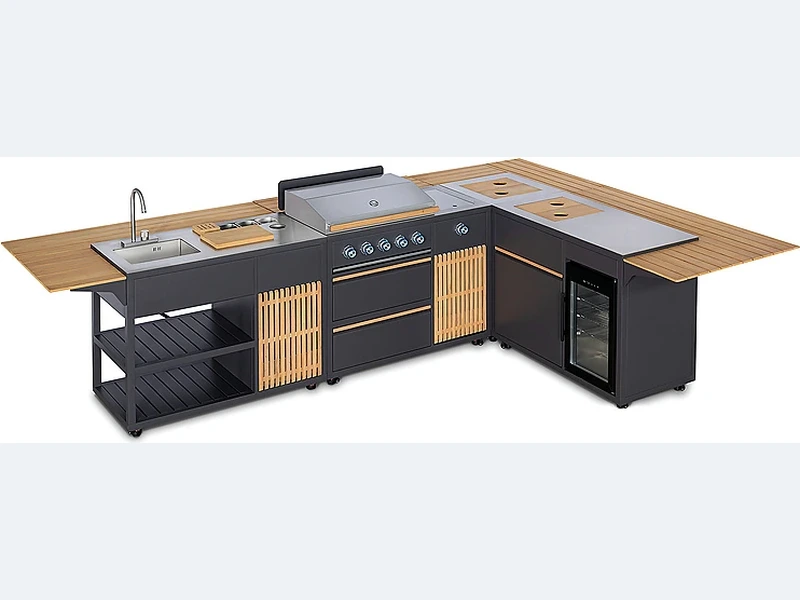
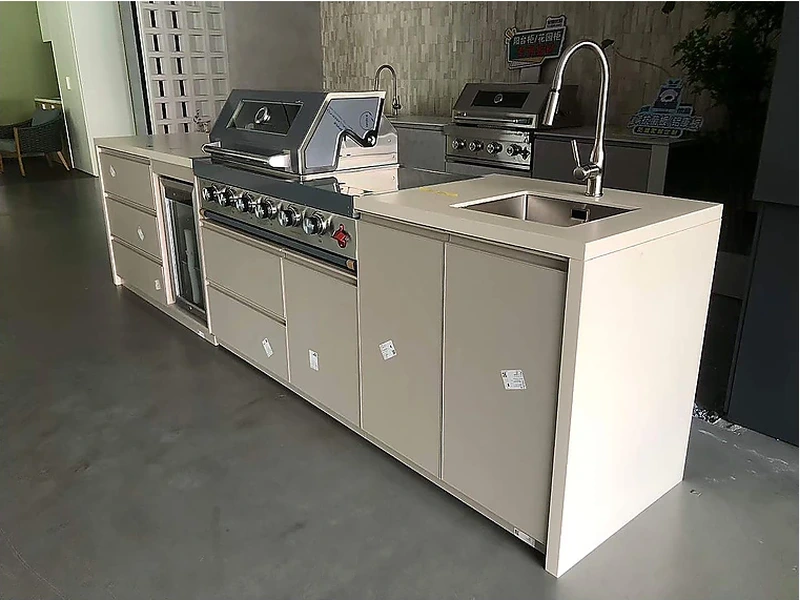
Outdoor kitchens should be described as weather resistant, not completely waterproof. Rain can enter through door gaps, vents, appliance openings and service penetrations, and wind can drive water uphill. Durable designs manage water with sloped tops, drip edges, raised bases, drain holes, sealed joints and protected storage. Any supplier claiming “100% waterproof” should explain the test method and exclusions.
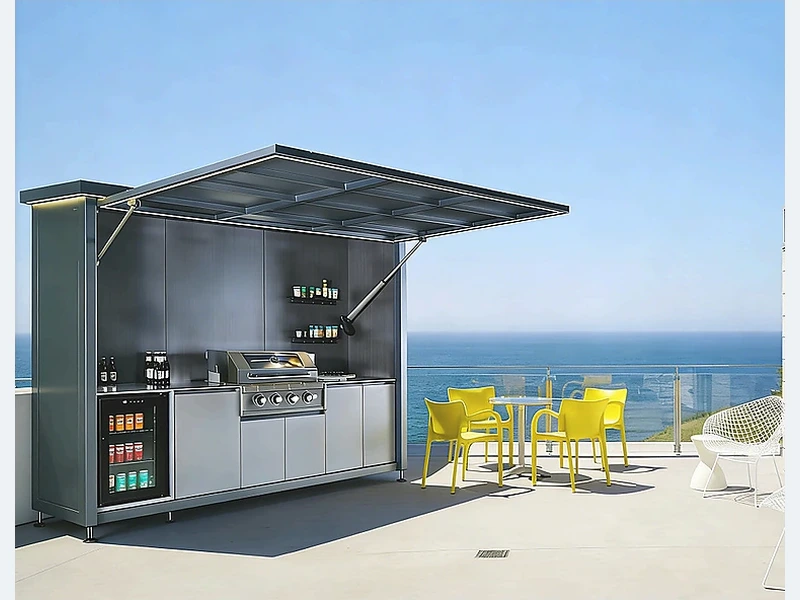
The practical answer lies in the details that a catalogue photo cannot show. Shelter lowers exposure but does not erase it. Wind can push rain through door gaps, sunlight heats dark finishes and salt settles beneath roofs. Detail drip edges, raised bases, clear vents and inspectable joints before relying on a cover.
When the site is measured, for “Is an outdoor kitchen really waterproof?”, ask who will verify each input before production. The supplier can coordinate modules and openings, while local trades confirm structure and controlled services. The answer should appear in the project record, not be left to the installation day. The result is usually simpler, safer and easier to price than adding features one at a time.
| Decision | What to examine | What to record |
|---|---|---|
| Exposure | Rain direction, sun, salt and seasonal extremes | Site exposure note |
| Shelter | Roof, screen or appliance cover | Ventilated protection plan |
| Drainage | Worktop, cabinet and floor water | Slopes, drips and drains |
| Maintenance | Cleaning, inspections and winterisation | Owner care schedule |
Use this list before accepting a design, price or product recommendation:
Evidence boundary: This is planning guidance, not a replacement for the selected appliance manual, a finished site measurement or local approval. Confirm clearances, environmental ratings and regulated trade work for the exact project.
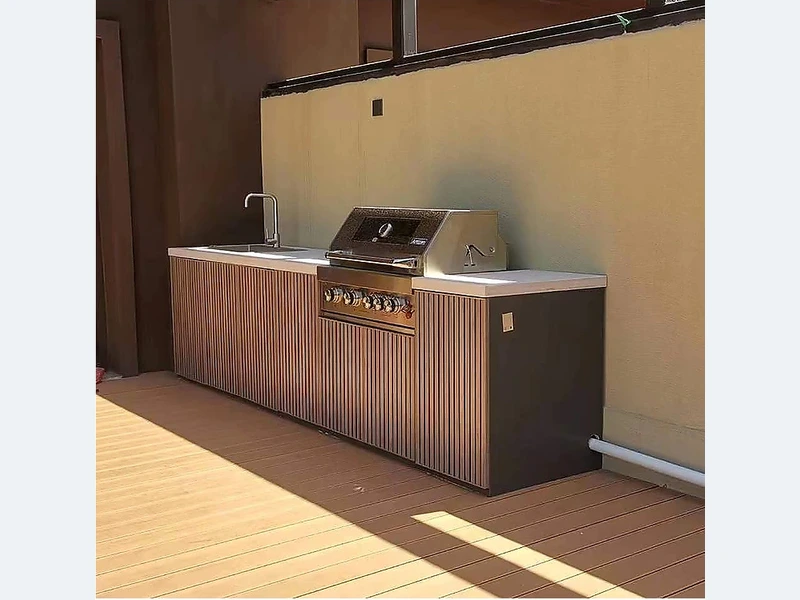
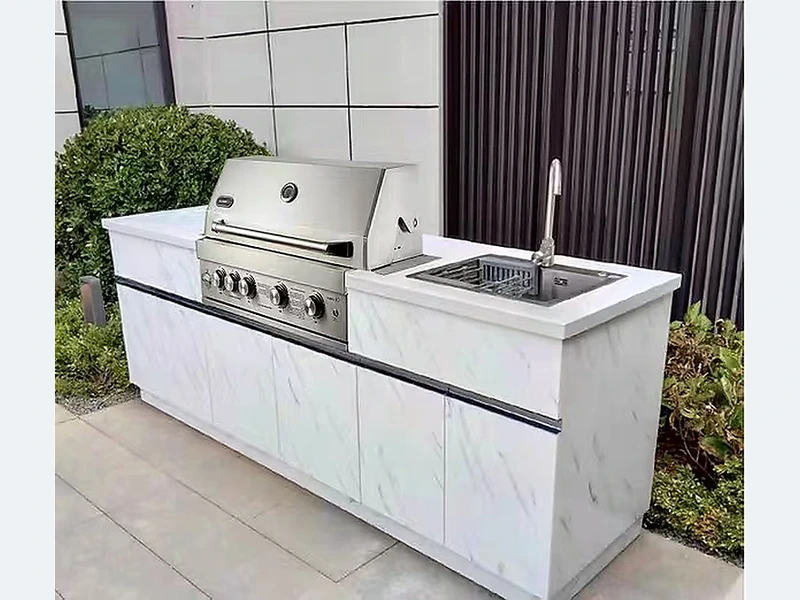
To turn the discussion into modules and dimensions, review the stainless steel outdoor kitchen with grill and sink together with the broader ForgeWin outdoor-kitchen range. Treat both as configuration references, then submit the measured site, appliance schedule, finish direction and delivery location for a project review.
Responsibility should be written beside the drawing: ForgeWin for the quoted cabinet scope, the buyer or surveyor for site dimensions, and local professionals for structure and controlled services. Clear ownership is a practical quality check.
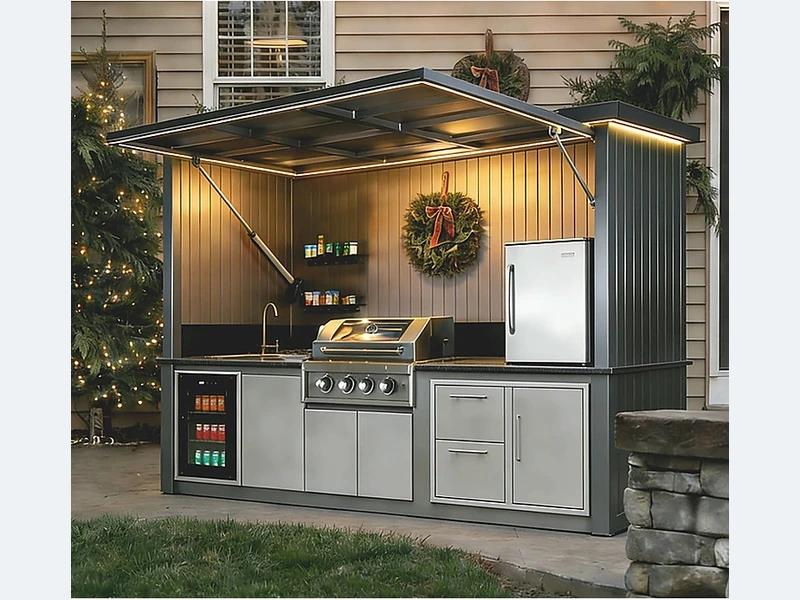
A well-designed outdoor kitchen sheds rain and dries without trapping water. Poorly detailed units can collect water behind doors, around worktop joints or beneath appliances, leading to staining, mould, electrical risk or corrosion. After heavy rain, check cabinet interiors, clear drainage, dry soft goods and inspect covers. Repeated water entry is a detailing fault to correct, not normal maintenance.
Year-round use is possible when the kitchen is designed for the local climate and winter or storm procedures are documented. Hot climates need shade and appliance ventilation; freezing climates need drain-down and frost protection; coastal sites need salt control. The limiting item is often a service or appliance—not the cabinet—so review water lines, refrigeration and gas equipment separately.
A roof is not mandatory for every outdoor kitchen, but it usually improves comfort and reduces weathering. It must not create a poorly ventilated enclosure around a grill. Roof height, hood requirements, fire clearance and smoke movement depend on the appliance and local rules. Treat the roof, grill and exhaust strategy as one design decision rather than adding a canopy after the cabinets are installed.
For “Is an outdoor kitchen really waterproof?”, keep the solution simple until the fixed constraints are known. Once site, weather, equipment and services are recorded, the remaining choices can be priced without forcing late changes. Send ForgeWin the dimensions, photos and model numbers so unresolved items can be marked before production.
2026-09-10
2026-10-04