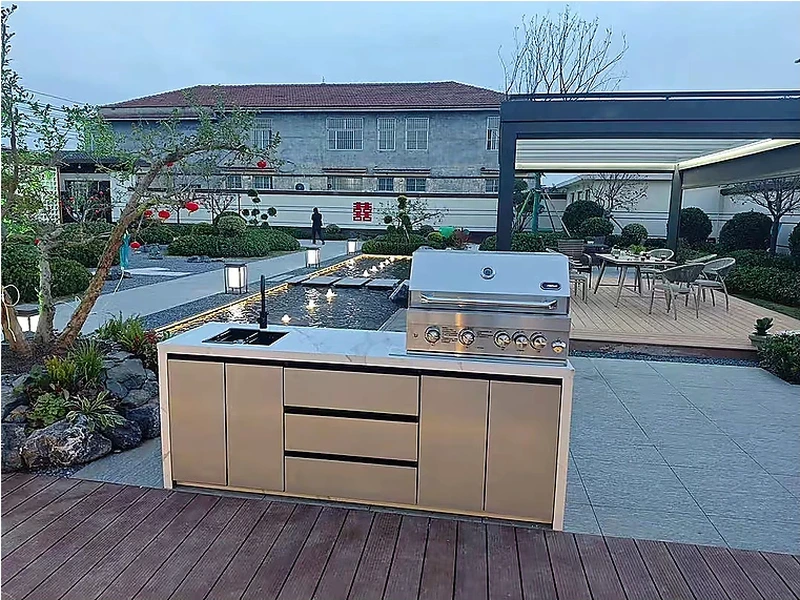
Wood cabinets can be used outdoors when the species, substrate, joinery, finish and ventilation are designed for exterior service. They normally need more maintenance than metal cabinets and should be kept away from standing water and intense grill heat. Wood-look metal or compact-laminate panels can provide a warmer appearance with less seasonal movement, but their edges and fixings still need outdoor detailing.
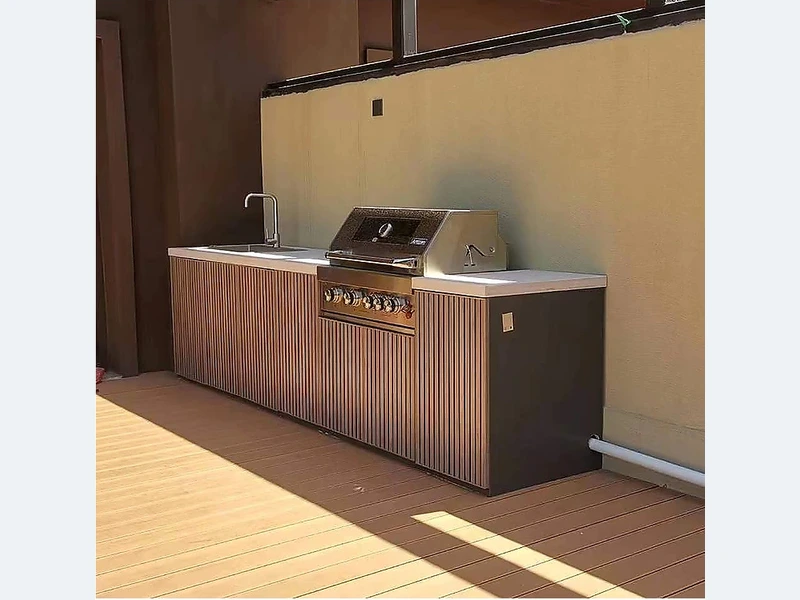
The decision becomes clearer once the kitchen is treated as a small building-services project, not a single cabinet purchase. Long life depends on compatible parts and a route for moisture to leave. Record the body material, hardware, finish system, worktop and care method separately. This makes it possible to upgrade a coastal fastener or UV-sensitive surface without changing the entire design.
On a real project, for “Can wood cabinets be used outside?”, ask who will verify each input before production. The supplier can coordinate modules and openings, while local trades confirm structure and controlled services. The answer should appear in the project record, not be left to the installation day. It turns a broad question into a list of decisions that can be checked before production.
| Decision | What to examine | What to record |
|---|---|---|
| Cabinet body | Alloy or grade, thickness and construction | Written material schedule |
| Finish | UV, salt, heat and cleaning exposure | Code, sample and care method |
| Hardware | Hinges, runners, handles and fasteners | Material and load rating |
| Water management | Seams, edges, vents and base details | Drain and drying path |
Use this list before accepting a design, price or product recommendation:
Evidence boundary: Project evidence should close the remaining gaps. Keep the manufacturer data, site measurement and local trade approvals with the drawing before treating a general recommendation as buildable.
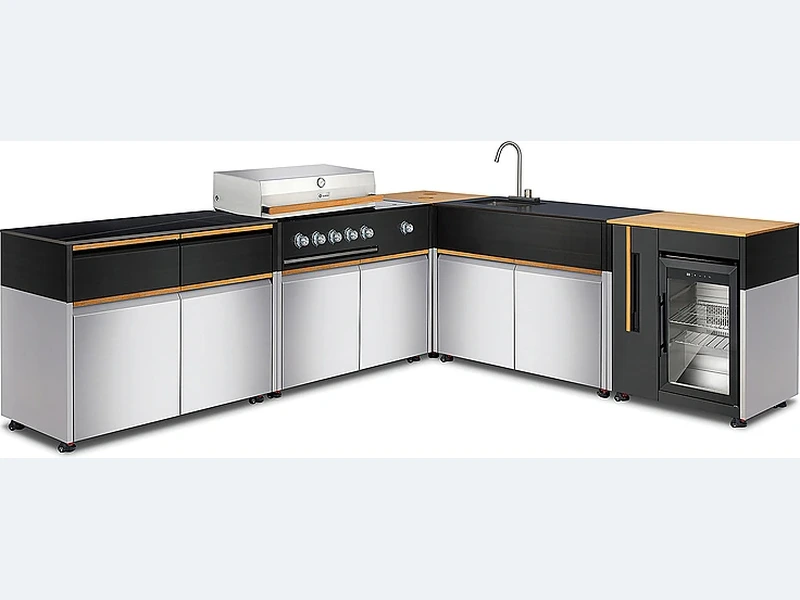
To turn the discussion into modules and dimensions, review the straight outdoor kitchen design collection together with the broader ForgeWin outdoor-kitchen range. Treat both as configuration references, then submit the measured site, appliance schedule, finish direction and delivery location for a project review.
The factory drawing can define cabinetry, interfaces and finishes; it cannot inspect the destination site. Local installers and licensed trades should sign off measurements, structure and regulated connections before manufacture or commissioning.
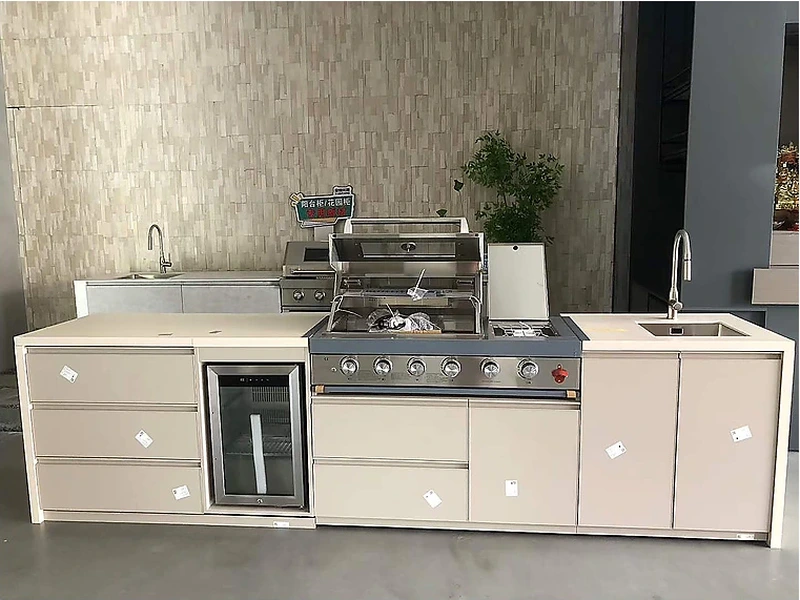
The best outdoor countertop balances UV stability, heat, staining, movement and local maintenance. Dense natural granite and exterior-rated porcelain are common starting points; stainless steel can suit a technical look. Engineered quartz should be used only when the specific product is approved for outdoor exposure. Confirm slab support, joints, edge details and hot-appliance clearances before choosing by appearance alone.
Some outdoor countertops and finishes can fade, yellow or heat up in direct sun. UV-sensitive resins, dyes and coatings carry more risk than through-body porcelain, suitable natural stone or bare stainless steel. Ask for exterior-use approval and a colour-stability warranty for the exact product. Dark surfaces may remain colourfast yet become uncomfortable to touch in intense sunlight.
Choose stainless steel when heat tolerance, stiffness and a food-service look are priorities; choose marine-grade aluminium when low weight and broad corrosion resistance are more important. Both can work outdoors. Stainless grade, aluminium alloy, coating system, fasteners and galvanic isolation decide performance. Near salt water, compare a properly specified 316 stainless system with a marine-grade coated aluminium system rather than comparing generic labels.
For “Can wood cabinets be used outside?”, the useful conclusion is a short decision record: what was selected, why it suits the site, what remains to be checked and who owns that check. Carry it into drawings, quotation and installation. Send ForgeWin the dimensions, photos and model numbers so unresolved items can be marked before production.
2026-09-18
2026-09-26
2026-10-04
2026-10-12