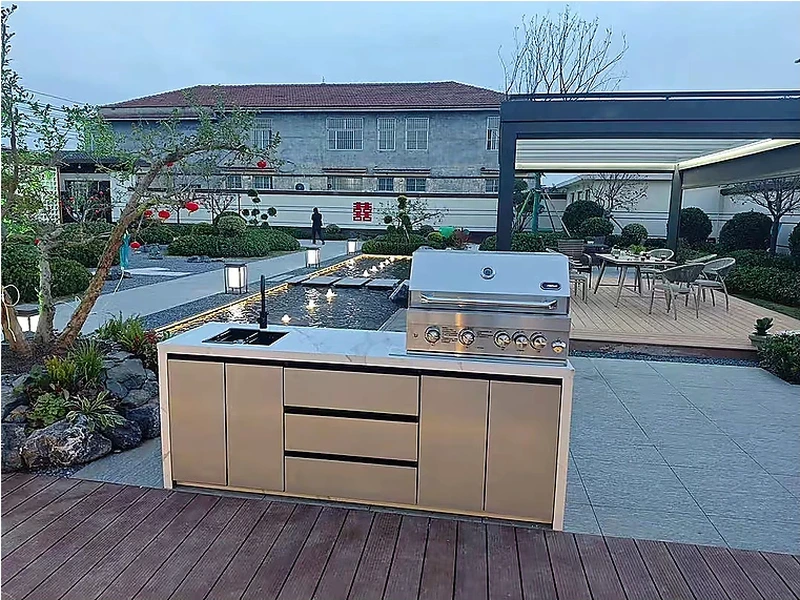
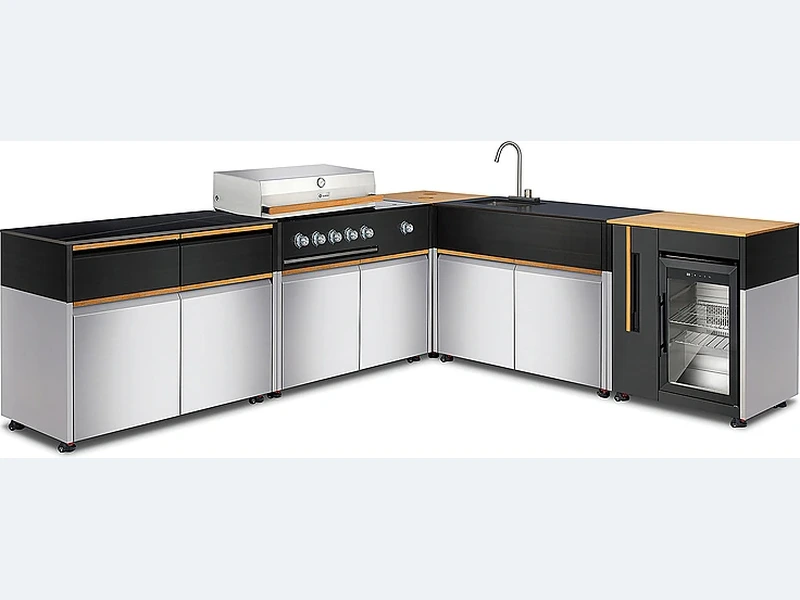
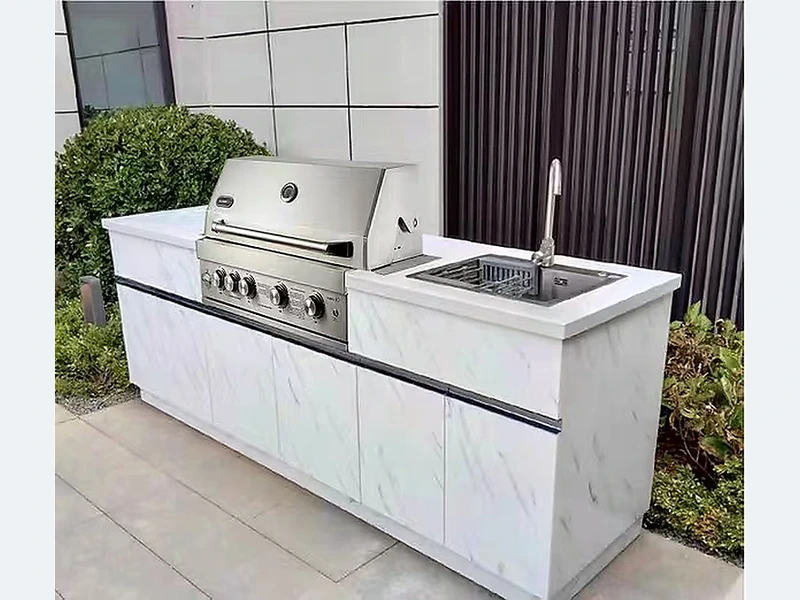
Outdoor kitchens often need protected power for refrigeration, ignition, lighting and small appliances. Use outdoor-rated outlets and enclosures, appropriate RCD/GFCI or local equivalent protection, dedicated circuits where required and accessible isolation. A licensed electrician should size and position the work for the site’s wet zones and appliance loads. Extension leads are not a permanent outdoor-kitchen wiring plan.
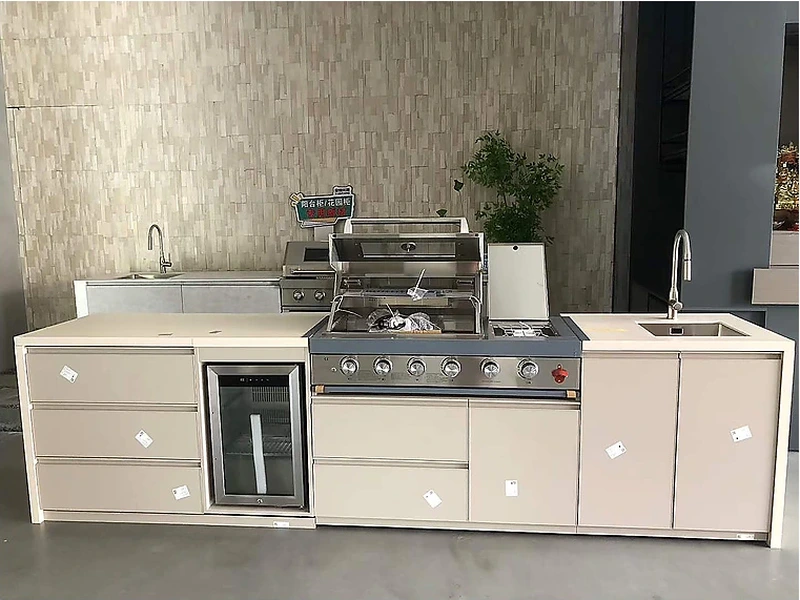
The decision becomes clearer once the kitchen is treated as a small building-services project, not a single cabinet purchase. Draw supply and waste routes in section as well as plan. Levels determine drainage; cabinet backs determine access; appliance data determines connection points. A brief rough-in inspection before delivery is cheaper than moving finished stone.
On a real project, for “Do I need outdoor power outlets?”, separate facts from choices. Site dimensions and model numbers are facts; finish and optional modules are choices; local approvals are external checks. Keeping those groups visible makes revisions easier to price and approve. This is where a dimensioned drawing is more valuable than another inspiration image.
| Decision | What to examine | What to record |
|---|---|---|
| Water | Potable supply, isolation and freeze strategy | Plumber-approved route |
| Drainage | Trap, fall, venting and discharge | Lawful wastewater connection |
| Gas | Fuel, sizing, shut-off and ventilation | Tested licensed installation |
| Power | Load, protection, enclosure and isolation | Electrician-approved circuit |
Use this list before accepting a design, price or product recommendation:
Evidence boundary: Project evidence should close the remaining gaps. Keep the manufacturer data, site measurement and local trade approvals with the drawing before treating a general recommendation as buildable.
One useful configuration reference is the straight outdoor kitchen design collection together with the broader ForgeWin outdoor-kitchen range. Treat both as configuration references, then submit the measured site, appliance schedule, finish direction and delivery location for a project review.
Responsibility should be written beside the drawing: ForgeWin for the quoted cabinet scope, the buyer or surveyor for site dimensions, and local professionals for structure and controlled services. Clear ownership is a practical quality check.
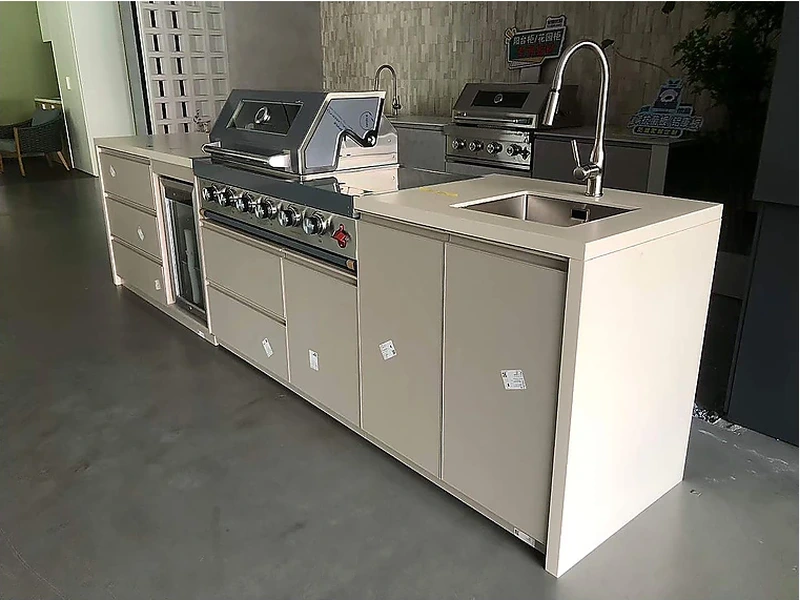
Outdoor kitchens often need protected power for refrigeration, ignition, lighting and small appliances. Use outdoor-rated outlets and enclosures, appropriate RCD/GFCI or local equivalent protection, dedicated circuits where required and accessible isolation. A licensed electrician should size and position the work for the site’s wet zones and appliance loads. Extension leads are not a permanent outdoor-kitchen wiring plan.
ForgeWin can supply coordinated outdoor-kitchen cabinets and project information, while installation scope should be confirmed for the destination and quotation. Some projects use a local installer and licensed trades; others require a broader managed service. The contract should state who measures, receives goods, assembles cabinets, installs worktops, connects services, tests appliances and handles local approvals.
Natural gas suits frequent cooking and avoids cylinder changes when a correctly sized connection is available. LPG is more flexible and can suit sites without gas service, but cylinders need compliant storage, ventilation and safe replacement access. Appliance output and jets must match the chosen fuel. Compare installation cost, fuel availability and local rules rather than assuming one burns universally “better”.
For “Do I need outdoor power outlets?”, keep the solution simple until the fixed constraints are known. Once site, weather, equipment and services are recorded, the remaining choices can be priced without forcing late changes. Send ForgeWin the dimensions, photos and model numbers so unresolved items can be marked before production.
2026-09-14
2026-09-22