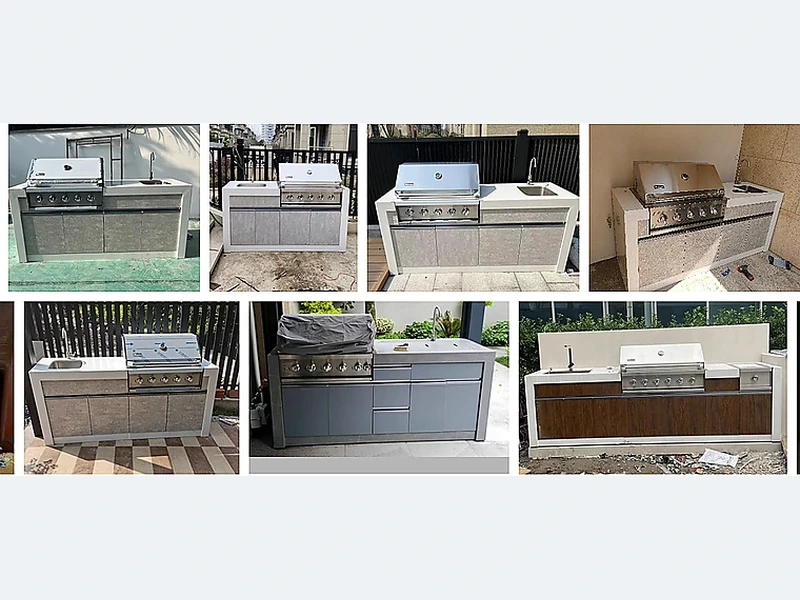
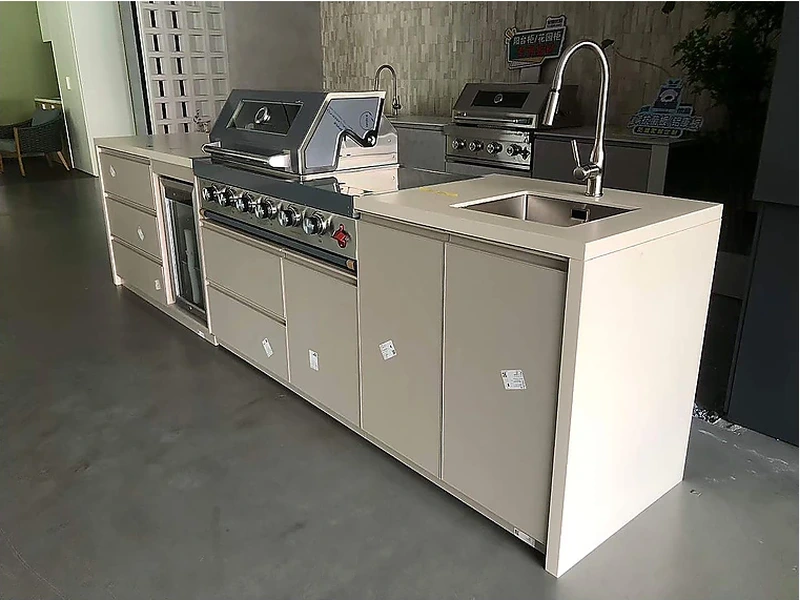
Outdoor kitchens can work near the sea, but salt deposits make specification and cleaning more demanding. Use chloride-resistant metals and compatible fasteners, avoid crevices that hold salt water, isolate dissimilar metals and rinse surfaces with fresh water on a site-appropriate schedule. 316 stainless is commonly considered for harsher chloride exposure, yet it still needs cleaning and careful fabrication.
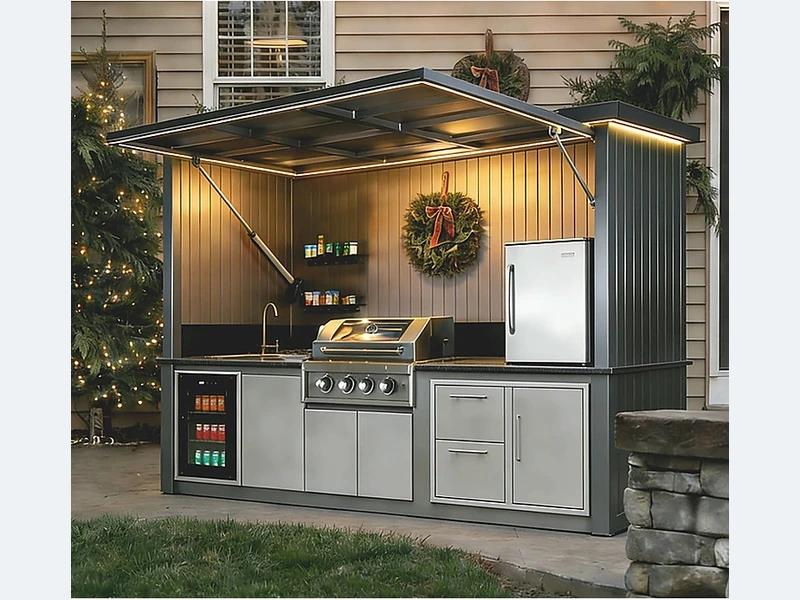
The decision becomes clearer once the kitchen is treated as a small building-services project, not a single cabinet purchase. Weather resistance belongs to the whole assembly. A sound cabinet can still be let down by a hinge, service hole, appliance vent or worktop joint. Expect water to arrive, direct it away and leave enough airflow for hidden areas to dry.
On a real project, for “What outdoor kitchen material is best for coastal areas?”, treat this as a coordination question. Record the exposure, appliance models, finished dimensions and the party responsible for each service. Local fire, gas, electrical, plumbing and structural requirements still need review in the destination jurisdiction. The result is usually simpler, safer and easier to price than adding features one at a time.
| Decision | What to examine | What to record |
|---|---|---|
| Exposure | Rain direction, sun, salt and seasonal extremes | Site exposure note |
| Shelter | Roof, screen or appliance cover | Ventilated protection plan |
| Drainage | Worktop, cabinet and floor water | Slopes, drips and drains |
| Maintenance | Cleaning, inspections and winterisation | Owner care schedule |
Use this list before accepting a design, price or product recommendation:
Evidence boundary: This is planning guidance, not a replacement for the selected appliance manual, a finished site measurement or local approval. Confirm clearances, environmental ratings and regulated trade work for the exact project.
A product reference makes the planning choices easier to see; start with the coastal outdoor kitchen with retractable canopy together with the broader ForgeWin outdoor-kitchen range. Treat both as configuration references, then submit the measured site, appliance schedule, finish direction and delivery location for a project review.
Use the ForgeWin proposal to coordinate modules and cut-outs, then return site and trade comments on the same drawing. This two-way check is especially important where worktops, fuel, drainage or existing construction fix the available dimensions.
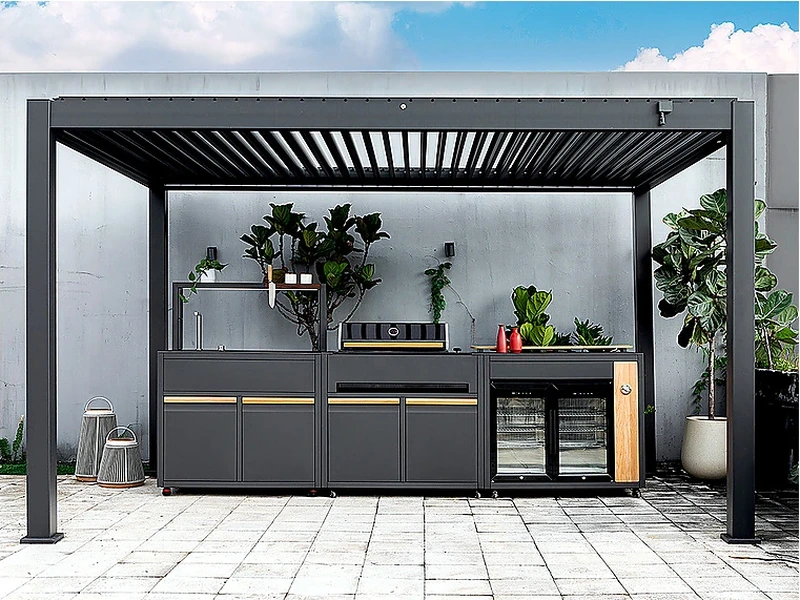
Outdoor kitchens can work near the sea, but salt deposits make specification and cleaning more demanding. Use chloride-resistant metals and compatible fasteners, avoid crevices that hold salt water, isolate dissimilar metals and rinse surfaces with fresh water on a site-appropriate schedule. 316 stainless is commonly considered for harsher chloride exposure, yet it still needs cleaning and careful fabrication.
Most permanent outdoor kitchens benefit from planned drainage. The floor should not pond against cabinet bases, and sink or appliance wastewater must discharge through a lawful drainage system—not onto the patio. Cabinet drain holes manage incidental water; they do not replace site drainage. Confirm slopes, drain locations and access for cleaning before the slab or tiles are finished.
Outdoor kitchens can work near the sea, but salt deposits make specification and cleaning more demanding. Use chloride-resistant metals and compatible fasteners, avoid crevices that hold salt water, isolate dissimilar metals and rinse surfaces with fresh water on a site-appropriate schedule. 316 stainless is commonly considered for harsher chloride exposure, yet it still needs cleaning and careful fabrication.
For “What outdoor kitchen material is best for coastal areas?”, the safest next step is to replace assumptions with project inputs. Finished measurements, appliance data and a responsibility list make the recommendation buildable and the quotation comparable. Send ForgeWin the dimensions, photos and model numbers so unresolved items can be marked before production.
2026-09-12
2026-09-20
2026-09-28
2026-10-06