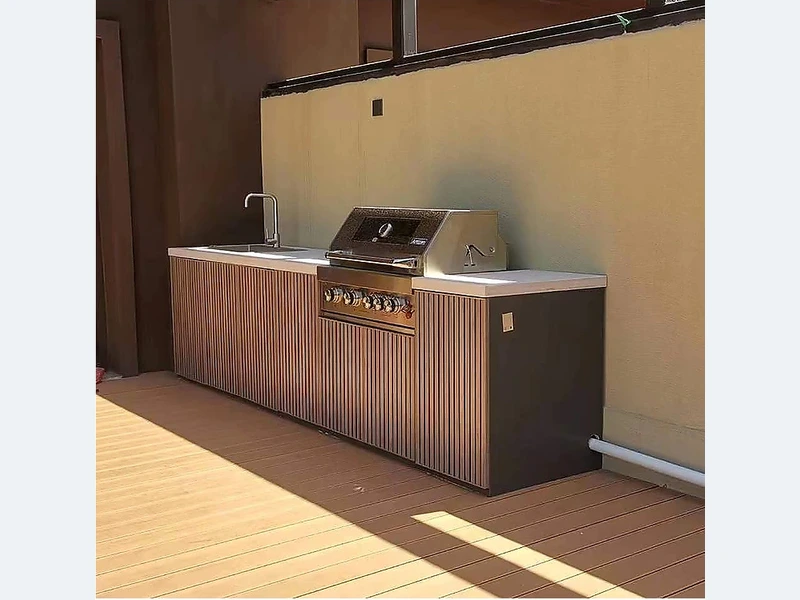
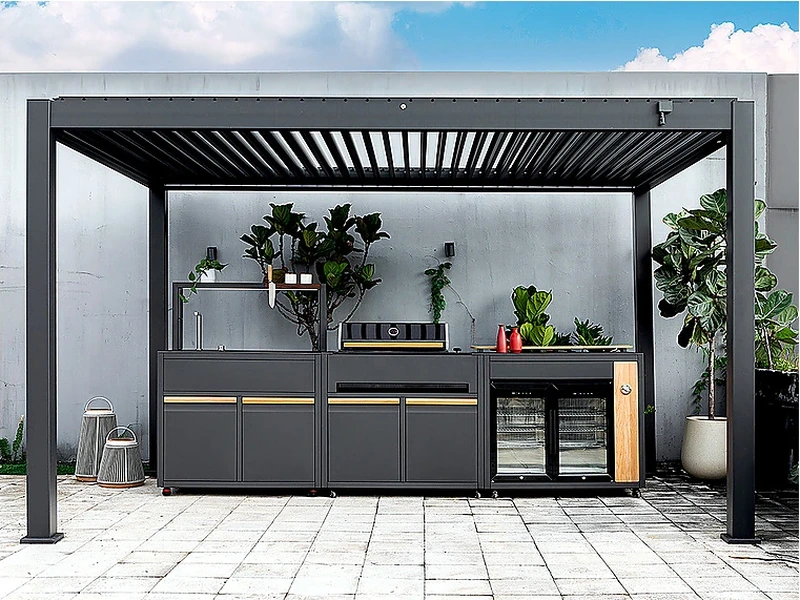
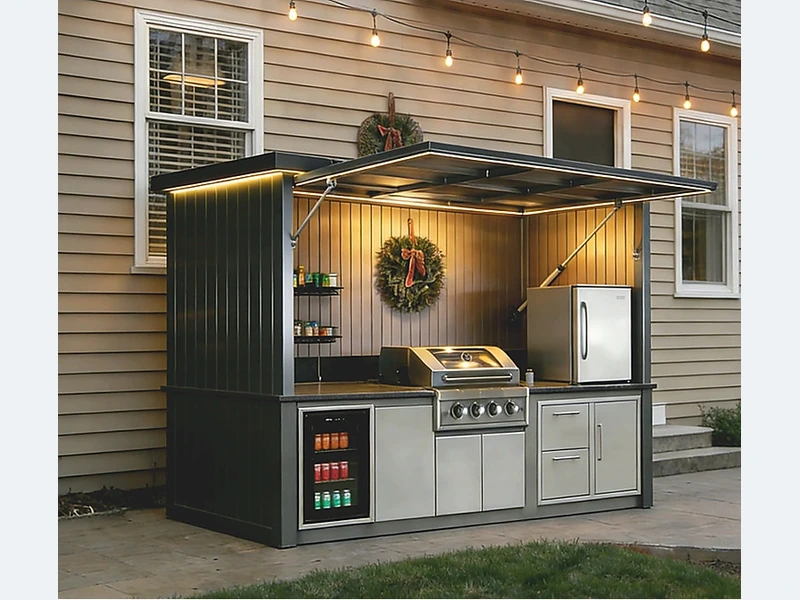
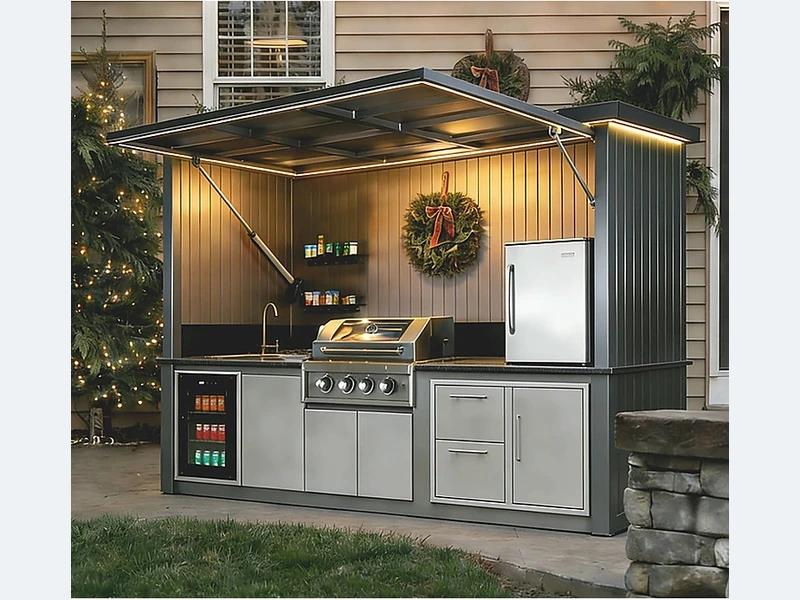
An ice maker can be added if the model is approved for outdoor use and the kitchen provides potable water, drainage, protected power, ventilation and winterisation where required. Ice equipment needs regular cleaning and should not sit beside strong grill heat. Confirm filter access and the route for drain water before the cabinets are manufactured; these details are harder to improvise after installation.
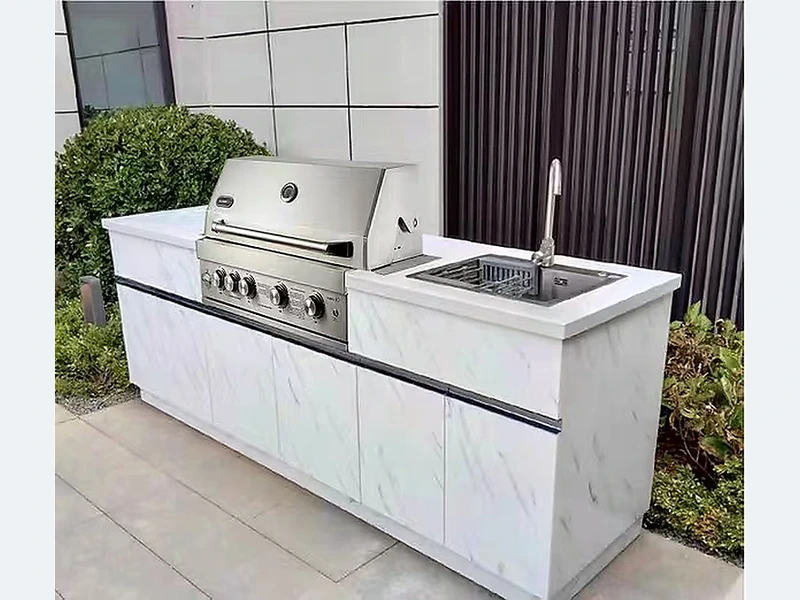
The decision becomes clearer once the kitchen is treated as a small building-services project, not a single cabinet purchase. Outdoor approval, ambient temperature, fuel or voltage and local warranty support belong on the appliance schedule. The cabinetry then provides support and access without changing the tested installation. Late substitutions must be checked as new products, not assumed equivalent.
On a real project, for “Can I add an ice maker?”, ask who will verify each input before production. The supplier can coordinate modules and openings, while local trades confirm structure and controlled services. The answer should appear in the project record, not be left to the installation day. This is where a dimensioned drawing is more valuable than another inspiration image.
| Decision | What to examine | What to record |
|---|---|---|
| Approval | Outdoor use and destination requirements | Data plate and technical sheet |
| Opening | Cut-out, support and insulation jacket | Manufacturer drawing |
| Airflow | Combustion or condenser ventilation | Unblocked free-air path |
| Service | Isolation, cleaning and removal | Accessible panels and connections |
Use this list before accepting a design, price or product recommendation:
Evidence boundary: This is planning guidance, not a replacement for the selected appliance manual, a finished site measurement or local approval. Confirm clearances, environmental ratings and regulated trade work for the exact project.
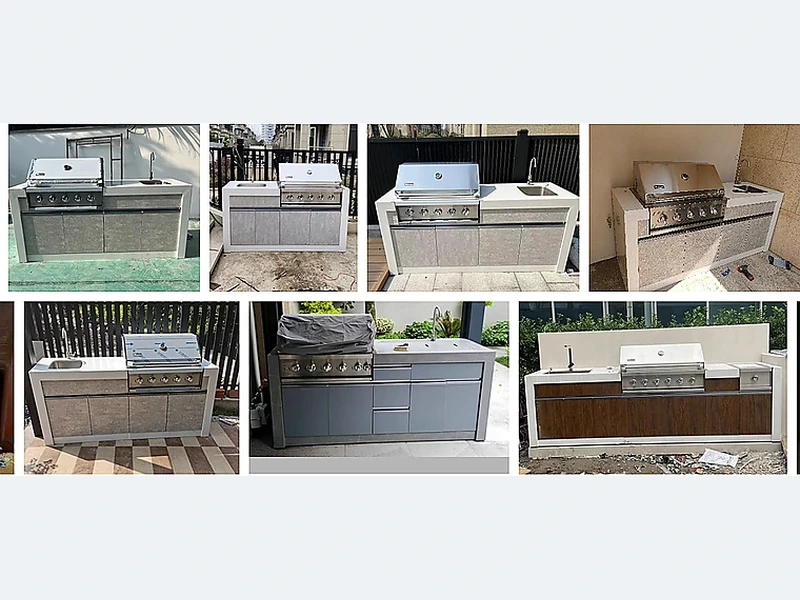
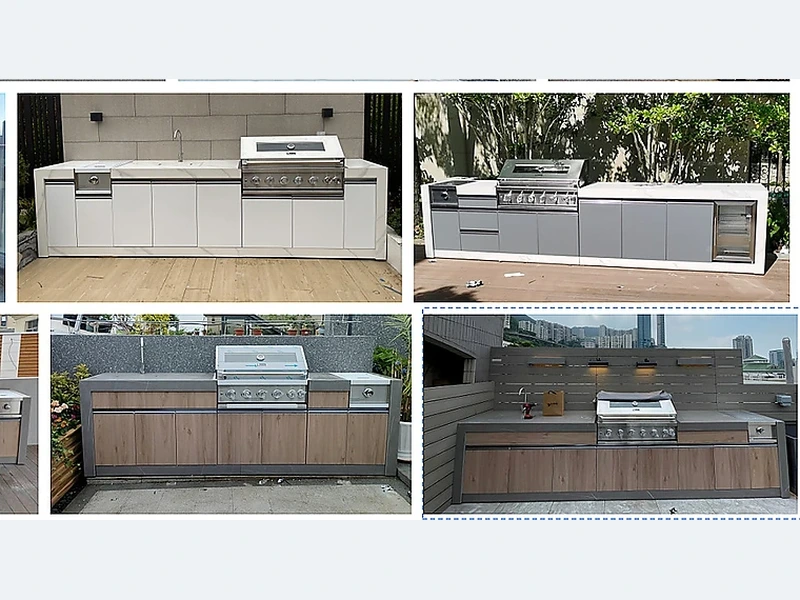
To turn the discussion into modules and dimensions, review the straight outdoor kitchen design collection together with the broader ForgeWin outdoor-kitchen range. Treat both as configuration references, then submit the measured site, appliance schedule, finish direction and delivery location for a project review.
Responsibility should be written beside the drawing: ForgeWin for the quoted cabinet scope, the buyer or surveyor for site dimensions, and local professionals for structure and controlled services. Clear ownership is a practical quality check.
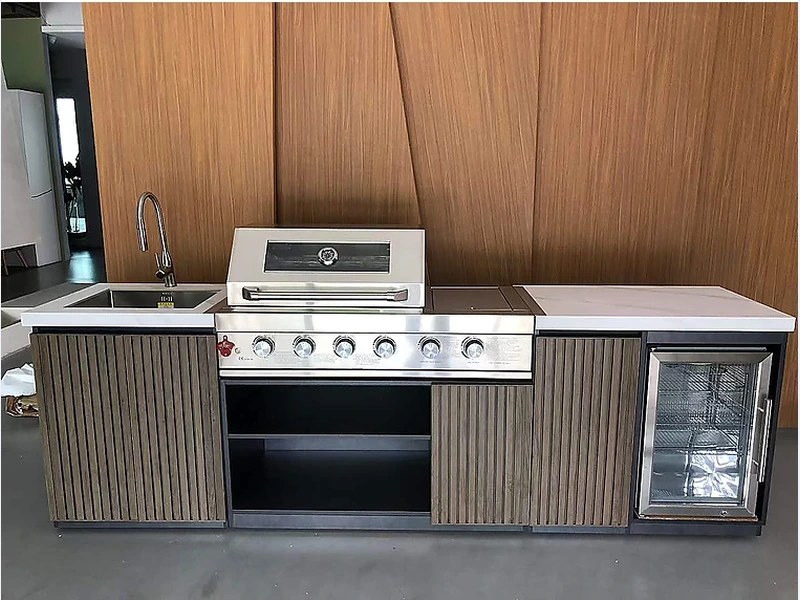
An outdoor dishwasher is possible only with a model approved for the location and a complete plan for hot water, drainage, electrical protection, ventilation and freeze protection. In many homes it adds considerable complexity for limited use. Compare that cost and maintenance with a well-placed sink and carrying dishes inside before reserving a full cabinet bay.
A BBQ’s clearance from cabinets is set by the exact appliance manual, the cabinet material and any approved insulation jacket. There is no safe universal gap. Use the manufacturer’s cut-out and clearance drawing, confirm combustible and overhead conditions, and have the local installer review the plan. Never reduce a stated clearance because the visible exterior of the grill feels cool.
Yes, but a smoker needs a deliberate smoke path, non-combustible clearance, stable support and access for fuel, ash and cleaning. Built-in appearance should not obstruct air controls or the lid. Place it where prevailing wind will not send smoke into doors, seating or neighbouring properties, and follow the exact appliance instructions rather than using a generic grill opening.
For “Can I add an ice maker?”, the safest next step is to replace assumptions with project inputs. Finished measurements, appliance data and a responsibility list make the recommendation buildable and the quotation comparable. Send ForgeWin the dimensions, photos and model numbers so unresolved items can be marked before production.
2026-09-03
2026-09-27
2026-10-05
2026-10-13