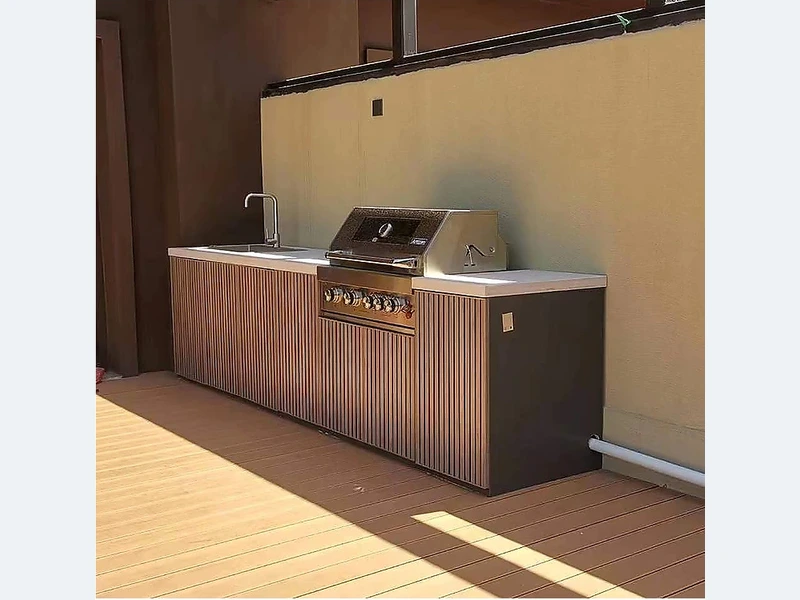
An existing BBQ can be incorporated only when its exact model is approved for built-in installation or can remain genuinely freestanding without the cabinets blocking clearance, vents or service access. Many cart-style grills are not intended to be boxed in. Check the manufacturer’s manual and data plate first; then design the opening, non-combustible surround and landing space around those requirements.
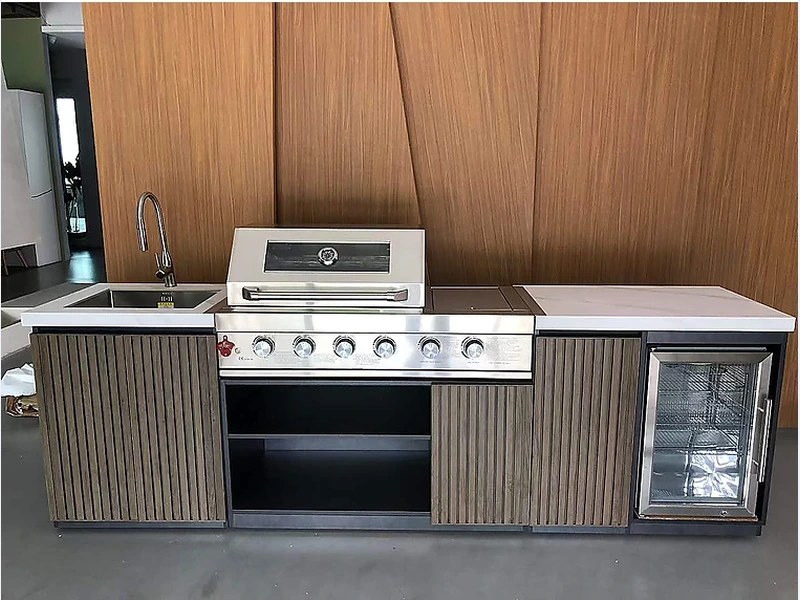
Most disappointing outdoor kitchens fail at an interface: cabinet to appliance, worktop to weather, or service line to site. Outdoor approval, ambient temperature, fuel or voltage and local warranty support belong on the appliance schedule. The cabinetry then provides support and access without changing the tested installation. Late substitutions must be checked as new products, not assumed equivalent.
Before approving a quotation, for “Can I install my existing BBQ into the kitchen?”, use one revision-controlled plan for quotation, approval and installation. Note exposure, open appliance doors, service access and unresolved approvals on that sheet so later substitutions can be checked against the same baseline. It also leaves a record that the installer can check instead of reconstructing decisions on site.
| Decision | What to examine | What to record |
|---|---|---|
| Approval | Outdoor use and destination requirements | Data plate and technical sheet |
| Opening | Cut-out, support and insulation jacket | Manufacturer drawing |
| Airflow | Combustion or condenser ventilation | Unblocked free-air path |
| Service | Isolation, cleaning and removal | Accessible panels and connections |
Use this list before accepting a design, price or product recommendation:
Evidence boundary: This is planning guidance, not a replacement for the selected appliance manual, a finished site measurement or local approval. Confirm clearances, environmental ratings and regulated trade work for the exact project.
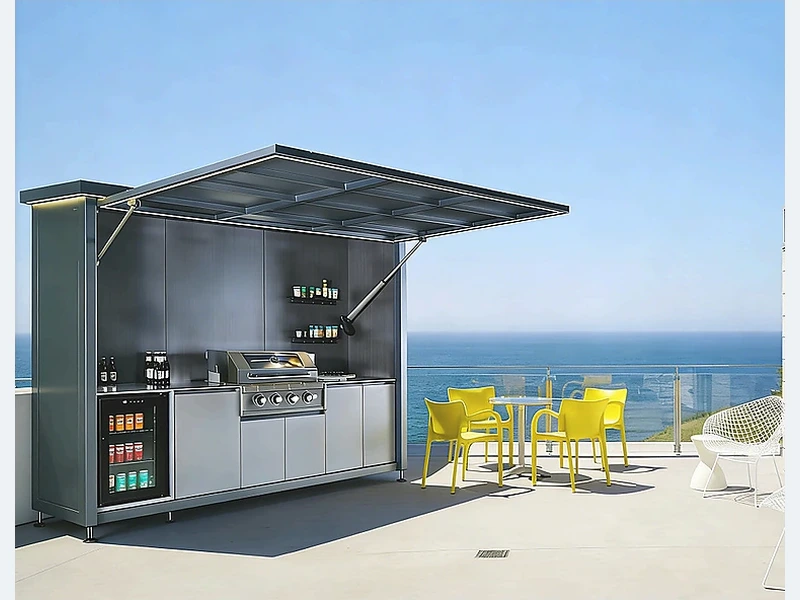
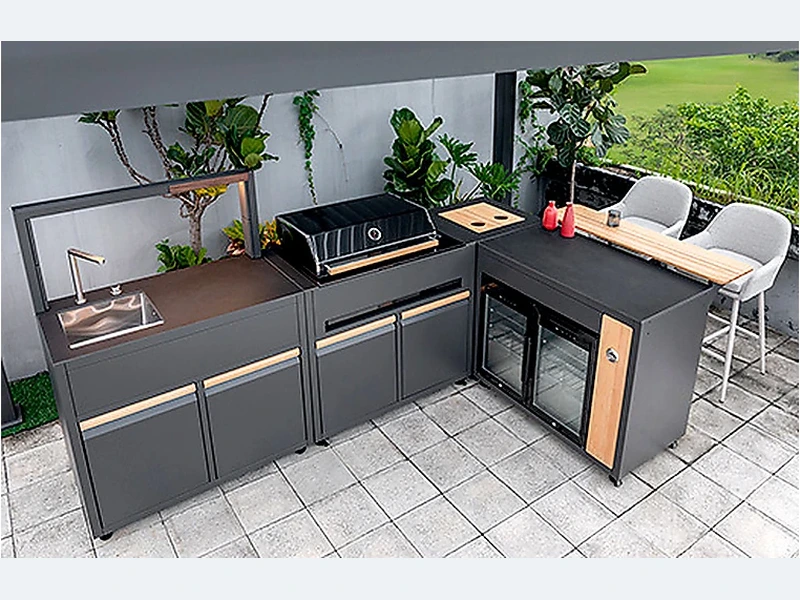
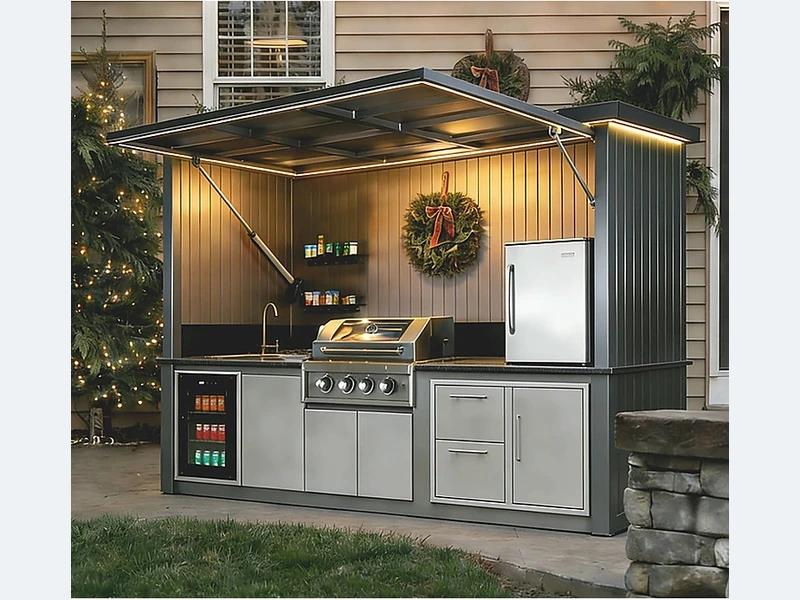
One useful configuration reference is the straight outdoor kitchen design collection together with the broader ForgeWin outdoor-kitchen range. Treat both as configuration references, then submit the measured site, appliance schedule, finish direction and delivery location for a project review.
The factory drawing can define cabinetry, interfaces and finishes; it cannot inspect the destination site. Local installers and licensed trades should sign off measurements, structure and regulated connections before manufacture or commissioning.
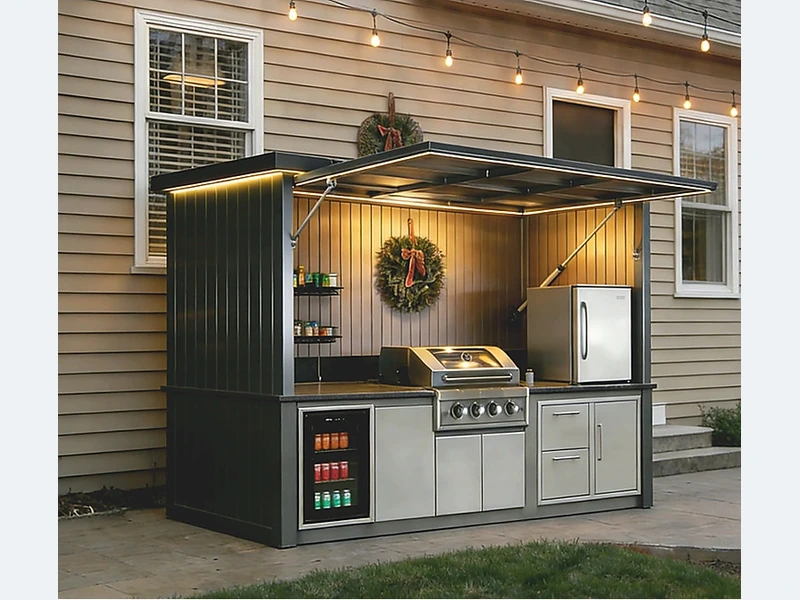
An existing BBQ can be incorporated only when its exact model is approved for built-in installation or can remain genuinely freestanding without the cabinets blocking clearance, vents or service access. Many cart-style grills are not intended to be boxed in. Check the manufacturer’s manual and data plate first; then design the opening, non-combustible surround and landing space around those requirements.
A pizza oven can be integrated when the structure supports its weight and the manufacturer’s side, rear and overhead clearances are maintained. Plan the flue or smoke path, fuel storage, hot landing area and weather cover before fixing the worktop. High surface temperatures can affect adjacent sealants, cladding and refrigerators, so treat the oven as a heat source rather than another countertop appliance.
The best BBQ is the one that matches fuel availability, cooking style, capacity and maintenance. A built-in gas grill gives a clean integrated layout; a freestanding grill is easier to change; charcoal or smokers add flavour but need more space for heat, ash and smoke. Select the exact model before cabinet drawings because cut-outs, clearances, ventilation and service access are model specific.
For “Can I install my existing BBQ into the kitchen?”, the useful conclusion is a short decision record: what was selected, why it suits the site, what remains to be checked and who owns that check. Carry it into drawings, quotation and installation. Send ForgeWin the dimensions, photos and model numbers so unresolved items can be marked before production.
2026-08-30
2026-09-15
2026-10-01
2026-10-09