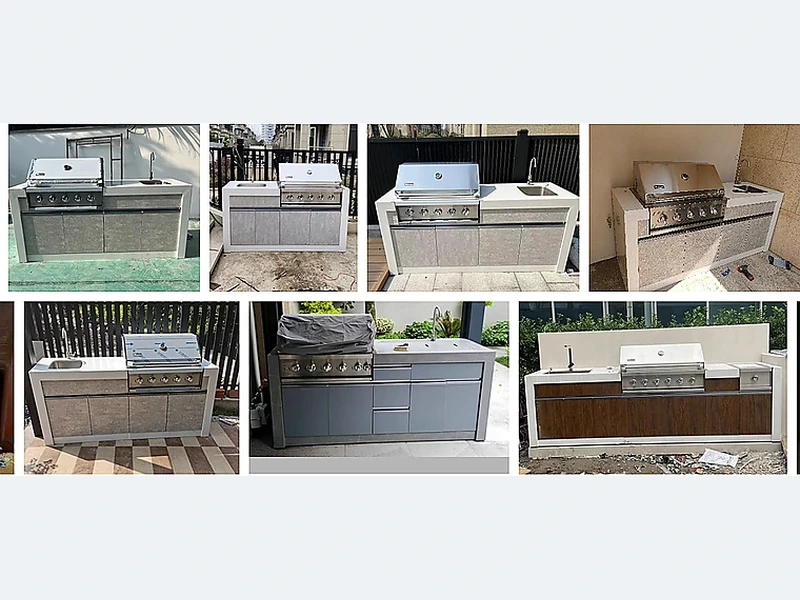
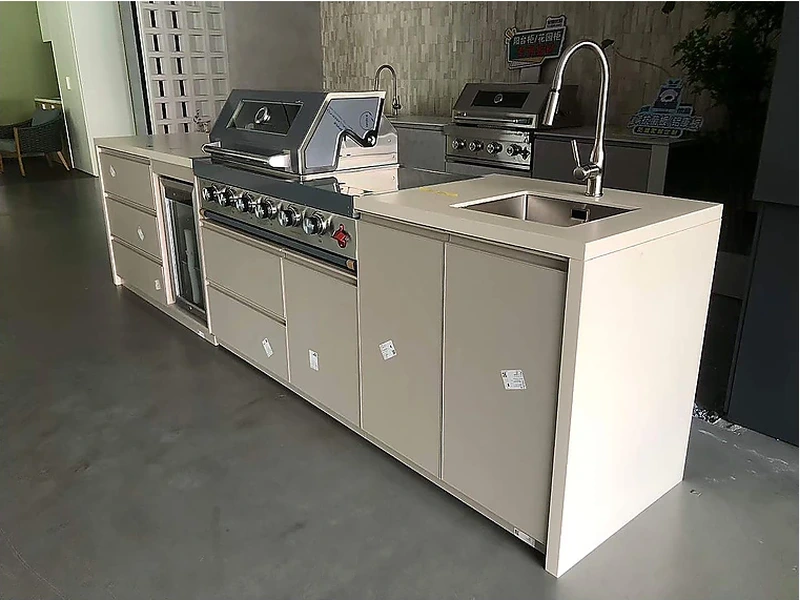
Do not place a normal indoor refrigerator outdoors unless its manufacturer expressly approves that installation. Indoor units may not be designed for rain, humidity, temperature swings or protected outdoor electrical conditions, and their warranty may not apply. Use an outdoor-rated model with the correct built-in ventilation. Even an outdoor refrigerator performs poorly if it sits beside grill heat or in blocked airflow.
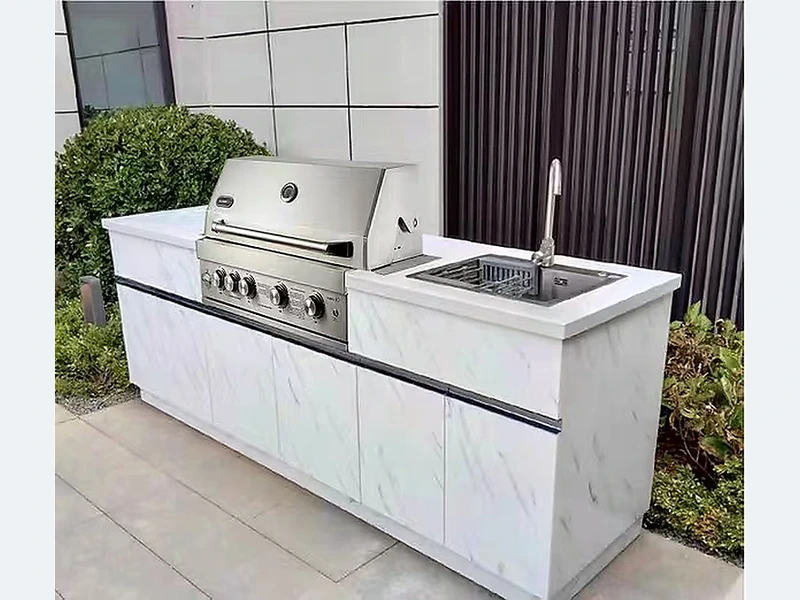
Most disappointing outdoor kitchens fail at an interface: cabinet to appliance, worktop to weather, or service line to site. An outdoor appliance is a model-specific installation, not a generic metal box. Its technical sheet sets the opening, ventilation, services, clearances and sometimes an insulation jacket. Keep those conditions visible after cladding and worktops are finished.
Before approving a quotation, for “Can I use a normal fridge outdoors?”, treat this as a coordination question. Record the exposure, appliance models, finished dimensions and the party responsible for each service. Local fire, gas, electrical, plumbing and structural requirements still need review in the destination jurisdiction. This is where a dimensioned drawing is more valuable than another inspiration image.
| Decision | What to examine | What to record |
|---|---|---|
| Approval | Outdoor use and destination requirements | Data plate and technical sheet |
| Opening | Cut-out, support and insulation jacket | Manufacturer drawing |
| Airflow | Combustion or condenser ventilation | Unblocked free-air path |
| Service | Isolation, cleaning and removal | Accessible panels and connections |
Use this list before accepting a design, price or product recommendation:
Evidence boundary: This is planning guidance, not a replacement for the selected appliance manual, a finished site measurement or local approval. Confirm clearances, environmental ratings and regulated trade work for the exact project.
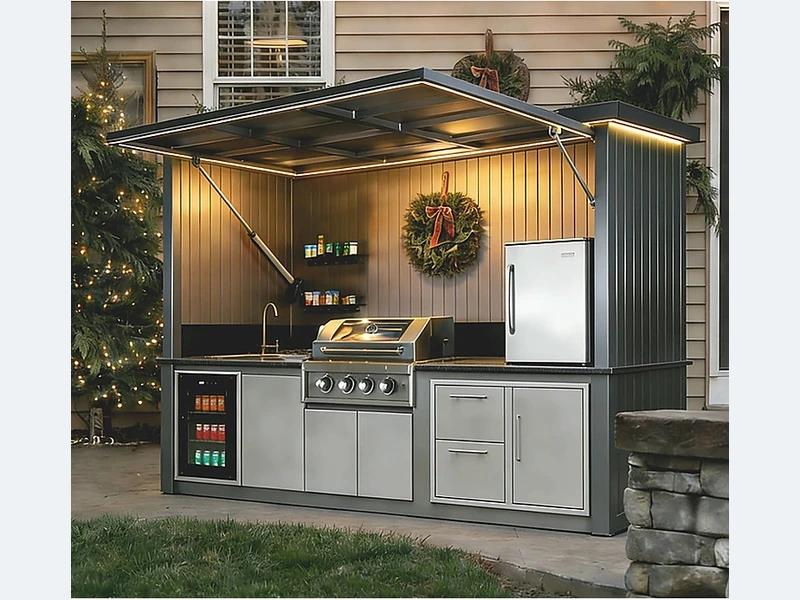
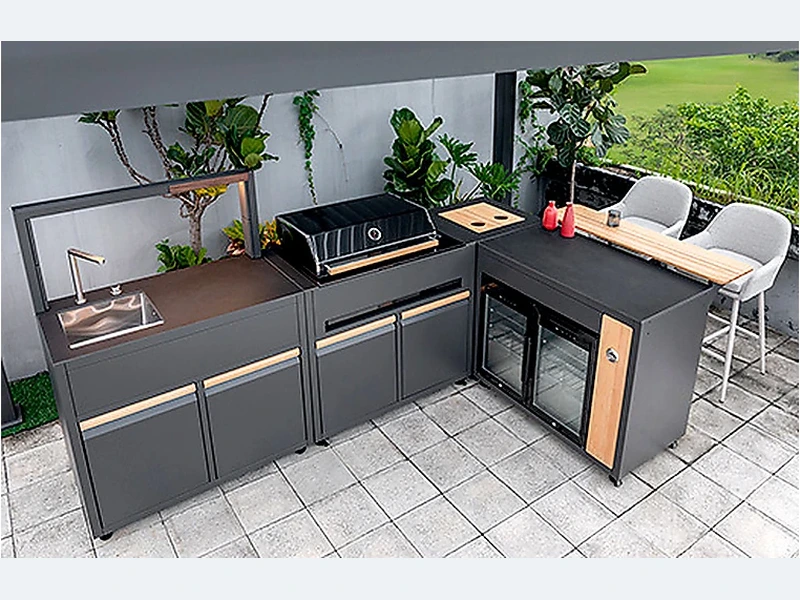
One useful configuration reference is the linear outdoor kitchen with grill and refrigerator together with the broader ForgeWin outdoor-kitchen range. Treat both as configuration references, then submit the measured site, appliance schedule, finish direction and delivery location for a project review.
Use the ForgeWin proposal to coordinate modules and cut-outs, then return site and trade comments on the same drawing. This two-way check is especially important where worktops, fuel, drainage or existing construction fix the available dimensions.
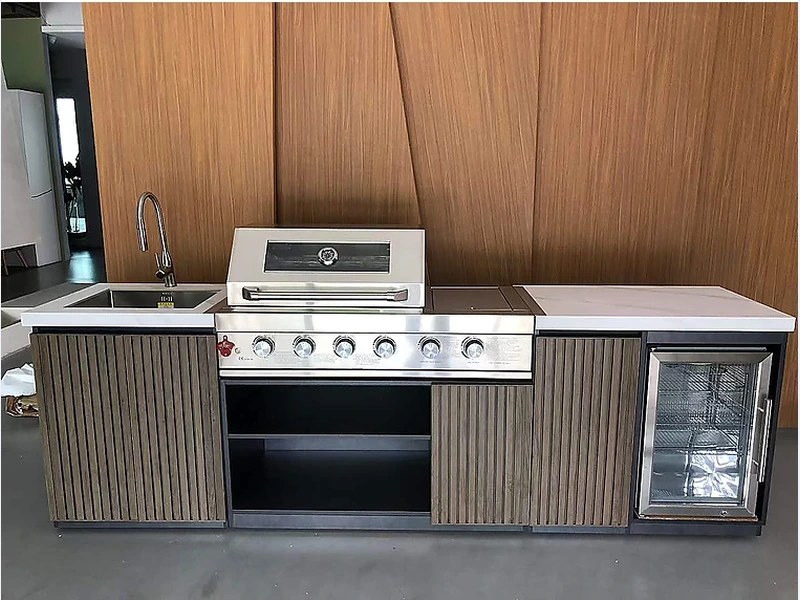
The best BBQ is the one that matches fuel availability, cooking style, capacity and maintenance. A built-in gas grill gives a clean integrated layout; a freestanding grill is easier to change; charcoal or smokers add flavour but need more space for heat, ash and smoke. Select the exact model before cabinet drawings because cut-outs, clearances, ventilation and service access are model specific.
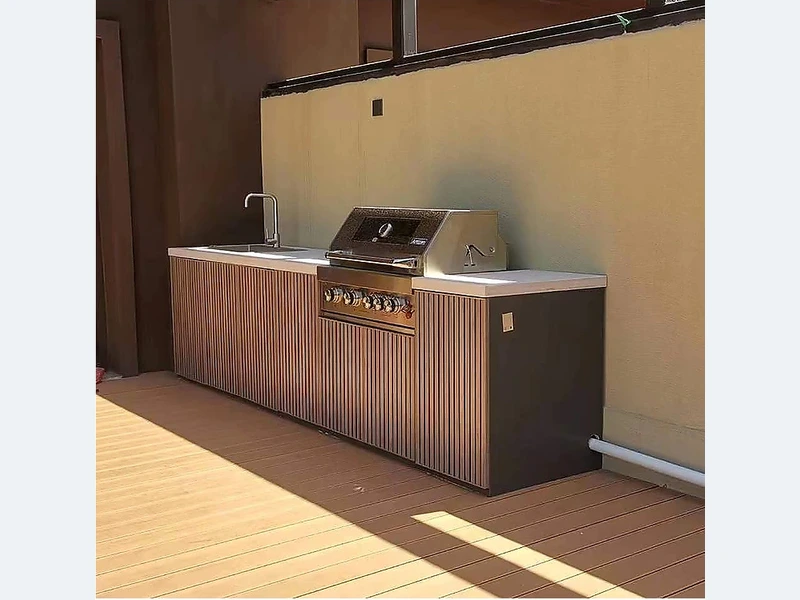
Yes, cabinets can be designed around a built-in gas grill when the exact model, cut-out template, insulation-jacket requirement, ventilation and gas access are known. Do not use nominal grill width as the cabinet opening. The drawing should show clearances, removable access, shut-off location and support independently of the countertop so the appliance can be serviced without dismantling the kitchen.
An outdoor refrigerator is optional. It is valuable when entertaining is frequent, the indoor kitchen is far away or drinks and ingredients need to stay close to the cooking area. If those conditions do not apply, use the space for storage or worktop. When specified, choose a unit listed for outdoor use and provide the ventilation, ambient-temperature range and protected power stated by its manufacturer.
For “Can I use a normal fridge outdoors?”, the safest next step is to replace assumptions with project inputs. Finished measurements, appliance data and a responsibility list make the recommendation buildable and the quotation comparable. Send ForgeWin the dimensions, photos and model numbers so unresolved items can be marked before production.
2026-09-12
2026-09-20
2026-09-28
2026-10-06