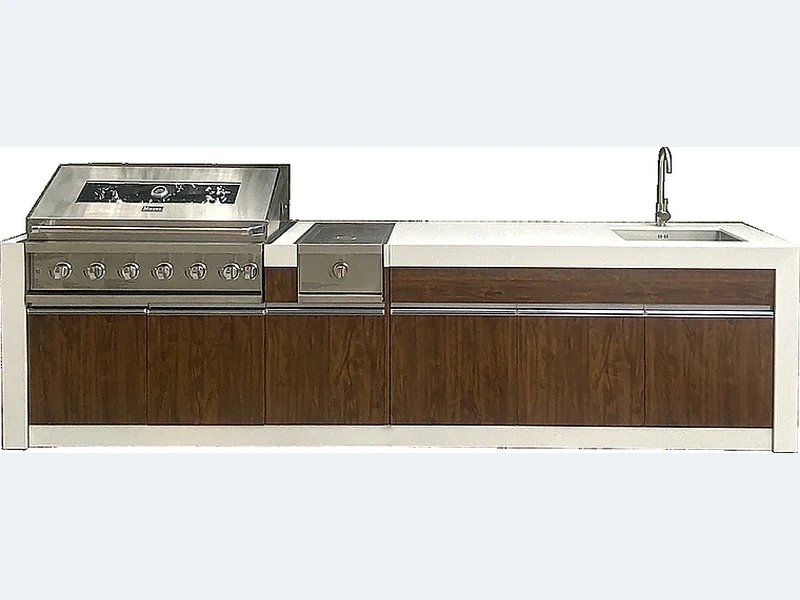
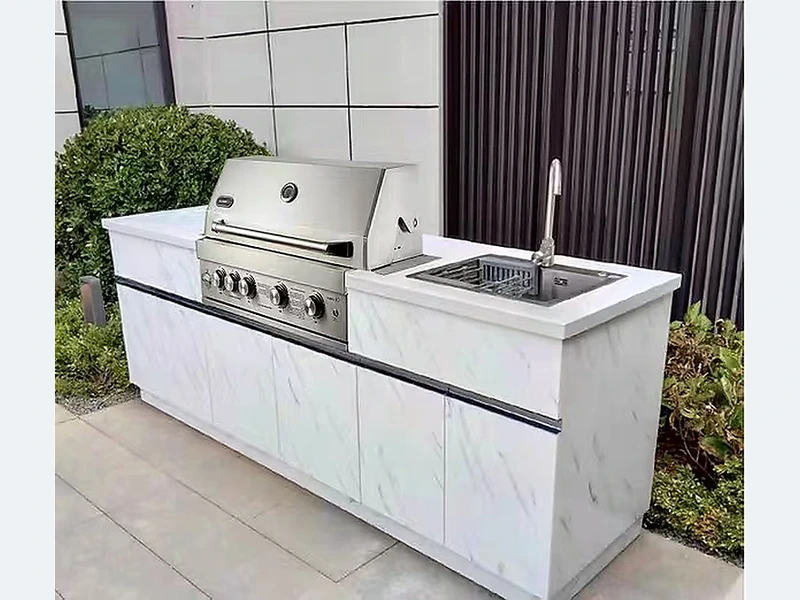
A roof is not mandatory for every outdoor kitchen, but it usually improves comfort and reduces weathering. It must not create a poorly ventilated enclosure around a grill. Roof height, hood requirements, fire clearance and smoke movement depend on the appliance and local rules. Treat the roof, grill and exhaust strategy as one design decision rather than adding a canopy after the cabinets are installed.
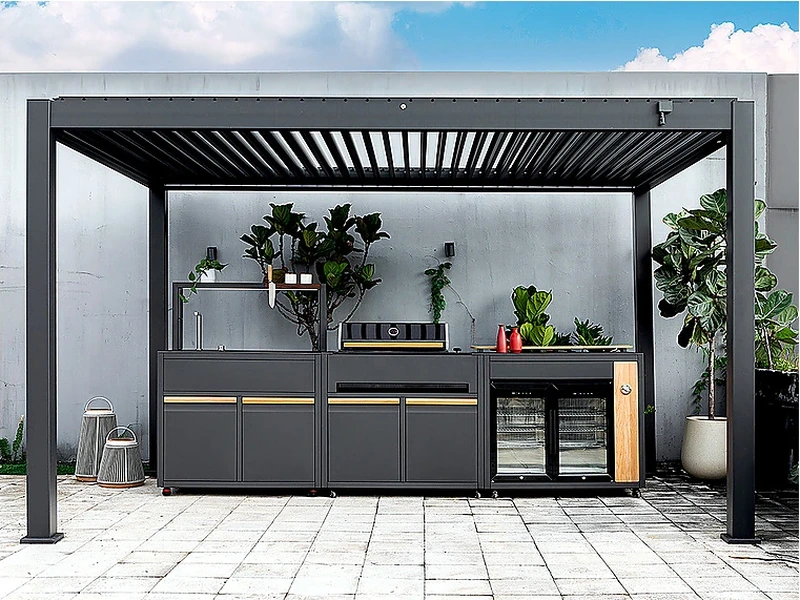
The practical answer lies in the details that a catalogue photo cannot show. Think in terms of wetting and drying cycles. The goal is not an impossible sealed box; it is a kitchen that sheds water, avoids trapped moisture and can be cleaned after storms. Appliance manuals still govern ventilation and covers in the sheltered design.
When the site is measured, for “Does an outdoor kitchen need a roof?”, use one revision-controlled plan for quotation, approval and installation. Note exposure, open appliance doors, service access and unresolved approvals on that sheet so later substitutions can be checked against the same baseline. The result is usually simpler, safer and easier to price than adding features one at a time.
| Decision | What to examine | What to record |
|---|---|---|
| Exposure | Rain direction, sun, salt and seasonal extremes | Site exposure note |
| Shelter | Roof, screen or appliance cover | Ventilated protection plan |
| Drainage | Worktop, cabinet and floor water | Slopes, drips and drains |
| Maintenance | Cleaning, inspections and winterisation | Owner care schedule |
Use this list before accepting a design, price or product recommendation:
Evidence boundary: The recommendation has limits: appliance instructions, measured conditions and destination rules take precedence. Have the relevant local professional check any fire, gas, power, water, drainage or structural detail.
To turn the discussion into modules and dimensions, review the straight outdoor kitchen design collection together with the broader ForgeWin outdoor-kitchen range. Treat both as configuration references, then submit the measured site, appliance schedule, finish direction and delivery location for a project review.
Responsibility should be written beside the drawing: ForgeWin for the quoted cabinet scope, the buyer or surveyor for site dimensions, and local professionals for structure and controlled services. Clear ownership is a practical quality check.
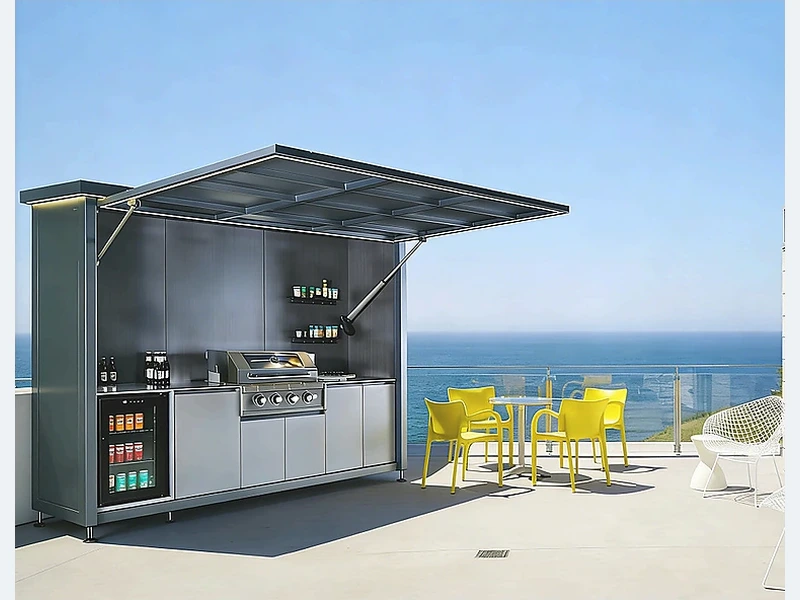
Outdoor kitchens should be described as weather resistant, not completely waterproof. Rain can enter through door gaps, vents, appliance openings and service penetrations, and wind can drive water uphill. Durable designs manage water with sloped tops, drip edges, raised bases, drain holes, sealed joints and protected storage. Any supplier claiming “100% waterproof” should explain the test method and exclusions.
Protect an outdoor kitchen from heavy rain by combining shelter with water-management details: slope horizontal surfaces, add drip edges, seal service penetrations, raise cabinet bases, provide floor drainage and keep appliance covers fitted when cool. Design for wind-driven rain, not only vertical rainfall. A cover should not obstruct required ventilation or be placed over a hot appliance.
An outdoor kitchen can be left uncovered only when every cabinet, worktop, appliance, electrical component and seal is rated for that exposure. Even then, a cover or roof reduces UV, standing water and cleaning. Keep drainage paths open, use appliance covers recommended by the manufacturer and avoid storing moisture-sensitive items in cabinets that receive wind-driven rain.
For “Does an outdoor kitchen need a roof?”, keep the solution simple until the fixed constraints are known. Once site, weather, equipment and services are recorded, the remaining choices can be priced without forcing late changes. Send ForgeWin the dimensions, photos and model numbers so unresolved items can be marked before production.
2026-09-09
2026-09-17
2026-10-11