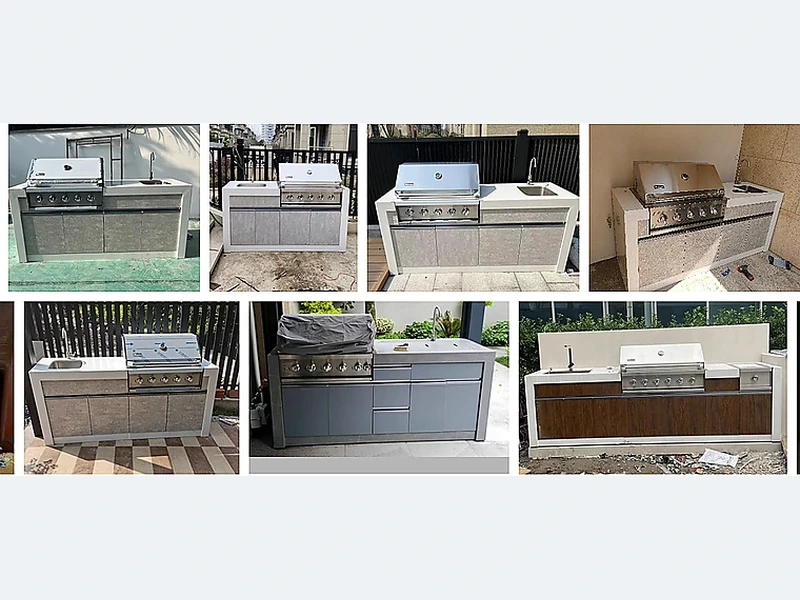
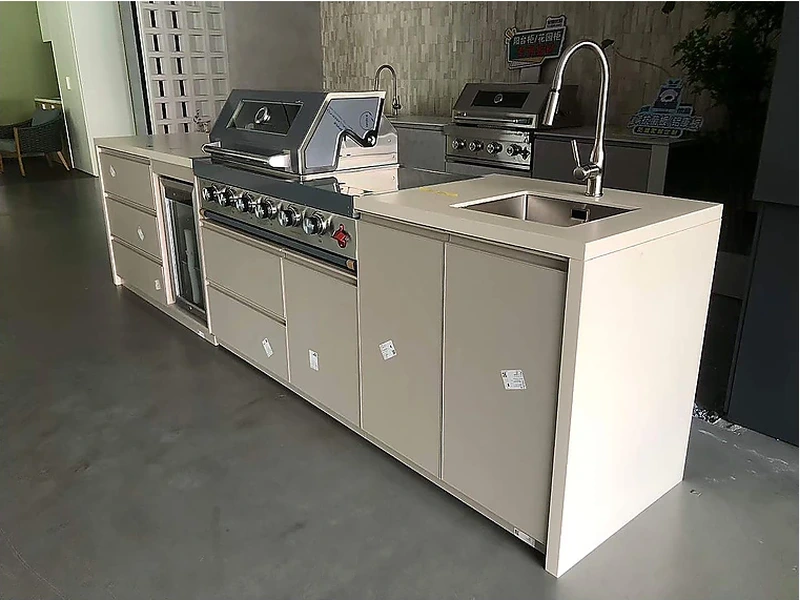
Long service life comes from a matched system rather than one material name. A suitable stainless or aluminium cabinet with compatible hardware, protected edges, drainage and routine cleaning will generally outlast indoor joinery outdoors. In coastal sites, chloride resistance and maintenance become decisive; under strong UV, coating and worktop colour stability matter. Ask for grade, finish and hardware in writing.
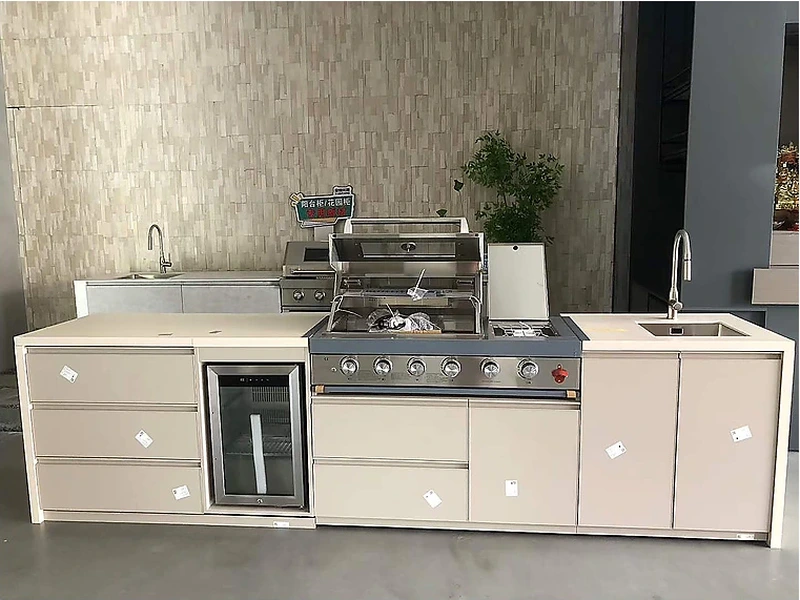
The decision becomes clearer once the kitchen is treated as a small building-services project, not a single cabinet purchase. A cabinet is a collection of metals, coatings, hinges, runners, seams and edges. Its weakest part sets the maintenance burden. Match every component to rain, ultraviolet light, heat, salt and cleaning rather than choosing from a small door sample indoors.
On a real project, for “What material lasts longest outdoors?”, separate facts from choices. Site dimensions and model numbers are facts; finish and optional modules are choices; local approvals are external checks. Keeping those groups visible makes revisions easier to price and approve. It turns a broad question into a list of decisions that can be checked before production.
| Decision | What to examine | What to record |
|---|---|---|
| Cabinet body | Alloy or grade, thickness and construction | Written material schedule |
| Finish | UV, salt, heat and cleaning exposure | Code, sample and care method |
| Hardware | Hinges, runners, handles and fasteners | Material and load rating |
| Water management | Seams, edges, vents and base details | Drain and drying path |
Use this list before accepting a design, price or product recommendation:
Evidence boundary: The recommendation has limits: appliance instructions, measured conditions and destination rules take precedence. Have the relevant local professional check any fire, gas, power, water, drainage or structural detail.
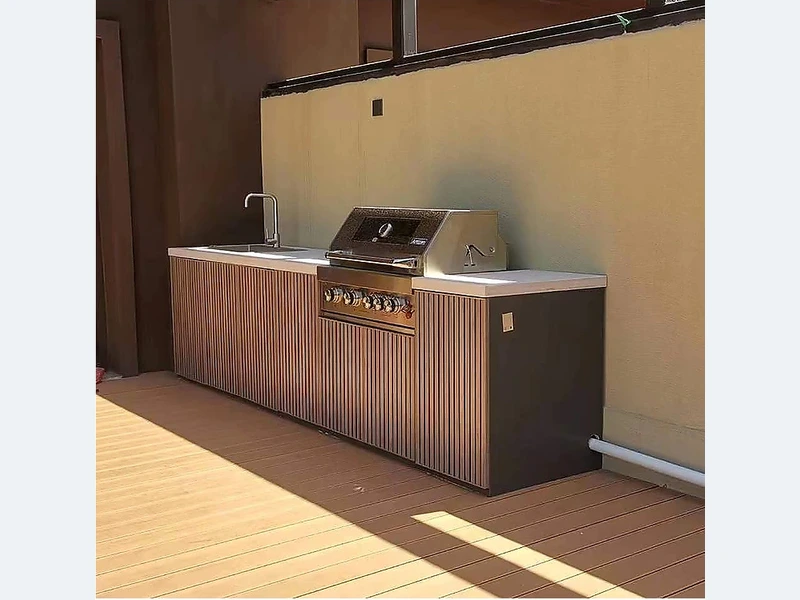
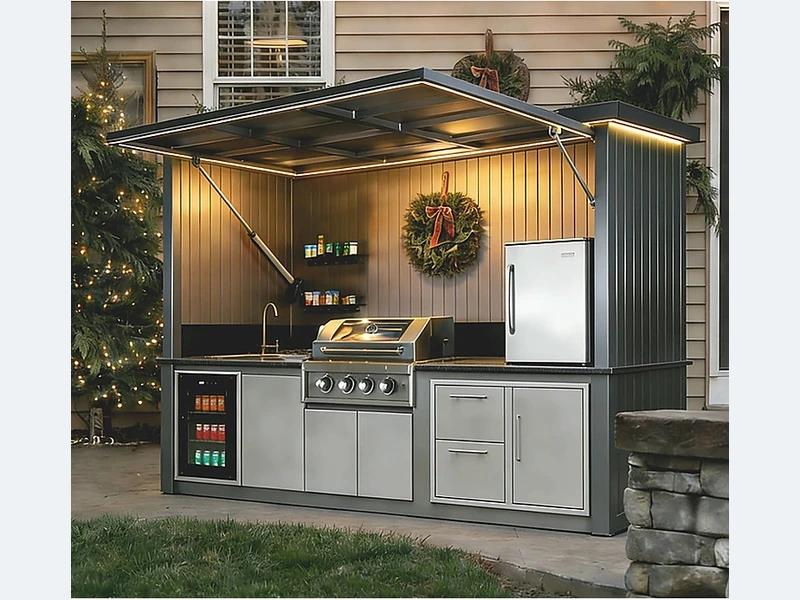
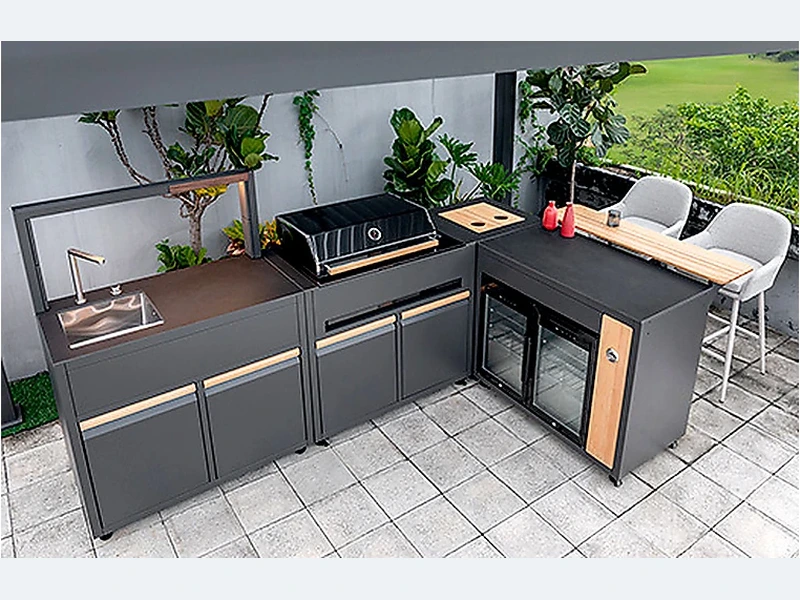
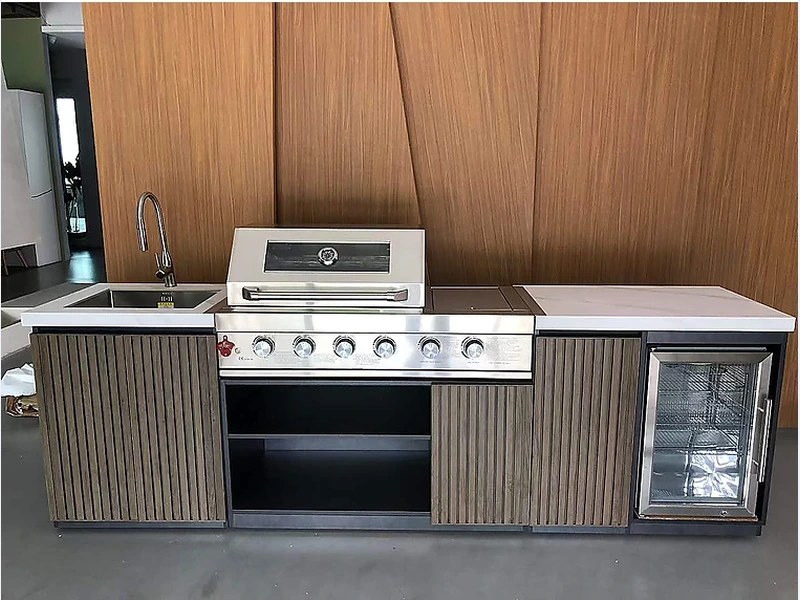
A product reference makes the planning choices easier to see; start with the straight outdoor kitchen design collection together with the broader ForgeWin outdoor-kitchen range. Treat both as configuration references, then submit the measured site, appliance schedule, finish direction and delivery location for a project review.
Use the ForgeWin proposal to coordinate modules and cut-outs, then return site and trade comments on the same drawing. This two-way check is especially important where worktops, fuel, drainage or existing construction fix the available dimensions.
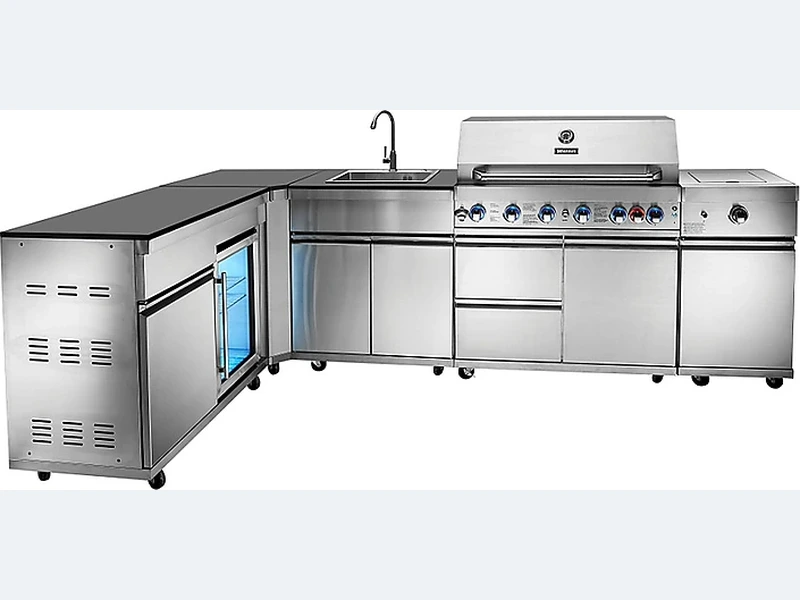
Yes, aluminium can be a good outdoor-cabinet material because it is light and does not form red rust. It still needs the right alloy, coating or anodising, compatible fasteners and isolation from dissimilar metals. Thin panels can dent and poorly prepared coatings can fail, so assess cabinet construction and finish warranty—not just the fact that the cabinet is aluminium.
The best outdoor countertop balances UV stability, heat, staining, movement and local maintenance. Dense natural granite and exterior-rated porcelain are common starting points; stainless steel can suit a technical look. Engineered quartz should be used only when the specific product is approved for outdoor exposure. Confirm slab support, joints, edge details and hot-appliance clearances before choosing by appearance alone.
No cabinet material makes a complete outdoor-kitchen assembly perfectly waterproof. Stainless steel, aluminium, compact laminate and suitable masonry systems can be highly water resistant, but doors, vents, appliance cut-outs and service penetrations remain paths for moisture. Specify weather-resistant construction, raised bases, drain paths and dry storage zones rather than relying on a blanket waterproof claim.
For “What material lasts longest outdoors?”, keep the solution simple until the fixed constraints are known. Once site, weather, equipment and services are recorded, the remaining choices can be priced without forcing late changes. Send ForgeWin the dimensions, photos and model numbers so unresolved items can be marked before production.
2026-09-12
2026-09-20
2026-09-28
2026-10-06