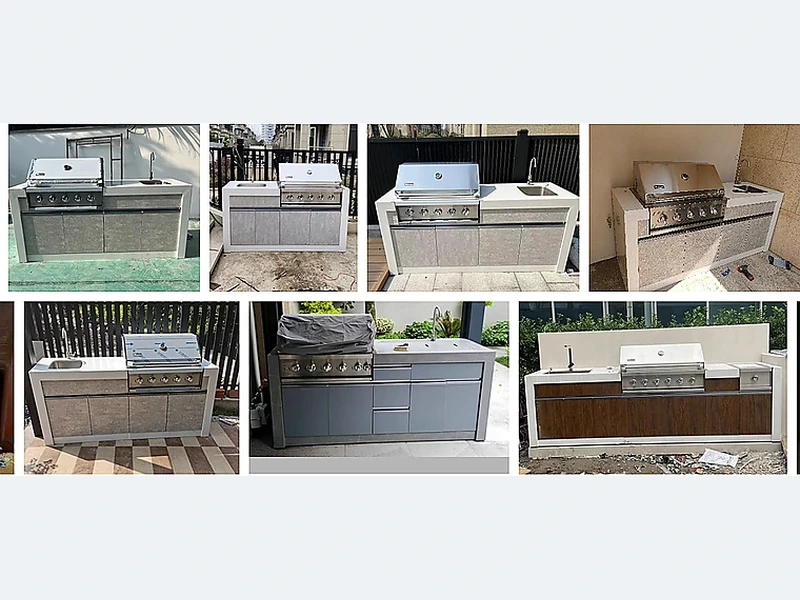
Outdoor cabinets can rust or develop corrosion staining if the material, finish or maintenance does not suit the environment. Prevention starts with the correct alloy and compatible fasteners, then adds drainage, isolation from dissimilar metals, regular fresh-water rinsing and prompt removal of salt or iron contamination. “Stainless” means corrosion resistant, not corrosion proof—especially near the sea or around pool chemicals.
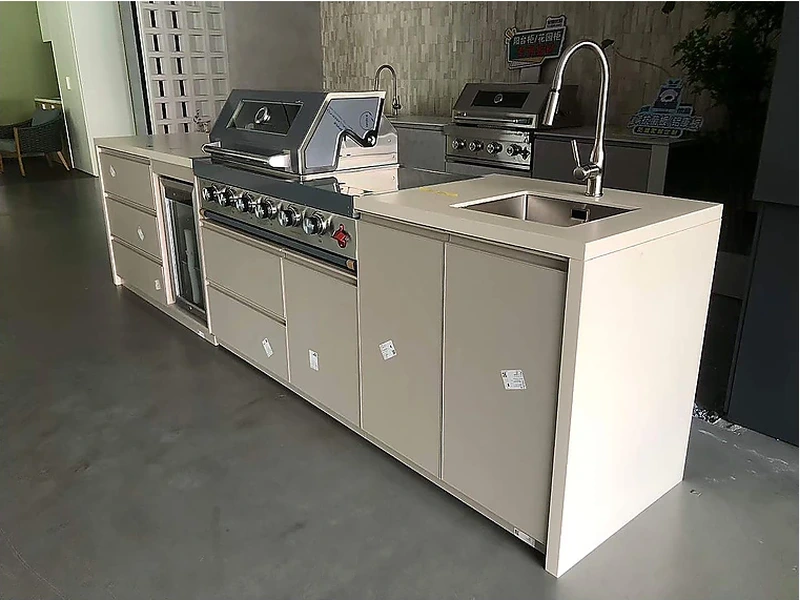
A useful way to approach this question is to separate the visible product from the site conditions around it. Material names are only the first line of a specification. Alloy or grade, thickness, finish, fabrication, fasteners and water-shedding details decide how the assembly behaves. Describe whether the site is covered, coastal, shaded or fully exposed before comparing samples.
In practical terms, for “How do I stop my outdoor kitchen from rusting?”, treat this as a coordination question. Record the exposure, appliance models, finished dimensions and the party responsible for each service. Local fire, gas, electrical, plumbing and structural requirements still need review in the destination jurisdiction. The result is usually simpler, safer and easier to price than adding features one at a time.
| Decision | What to examine | What to record |
|---|---|---|
| Cabinet body | Alloy or grade, thickness and construction | Written material schedule |
| Finish | UV, salt, heat and cleaning exposure | Code, sample and care method |
| Hardware | Hinges, runners, handles and fasteners | Material and load rating |
| Water management | Seams, edges, vents and base details | Drain and drying path |
Use this list before accepting a design, price or product recommendation:
Evidence boundary: The recommendation has limits: appliance instructions, measured conditions and destination rules take precedence. Have the relevant local professional check any fire, gas, power, water, drainage or structural detail.
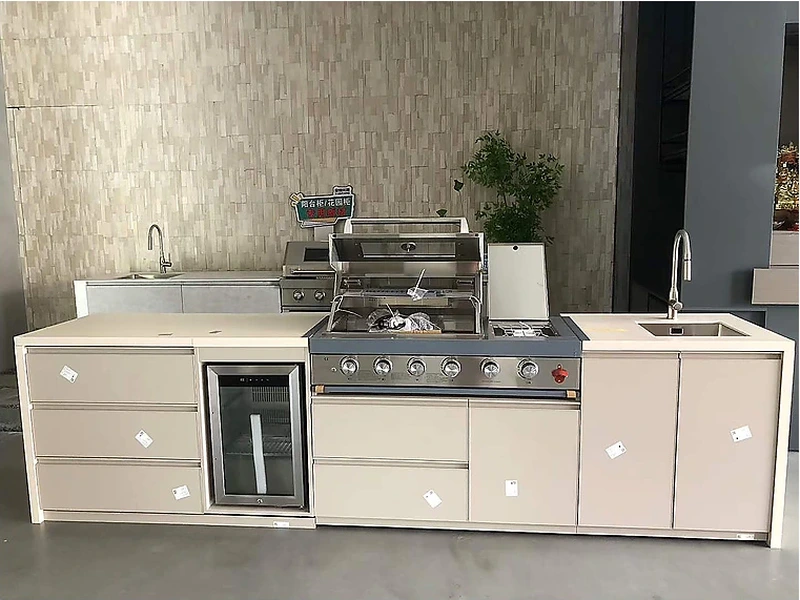
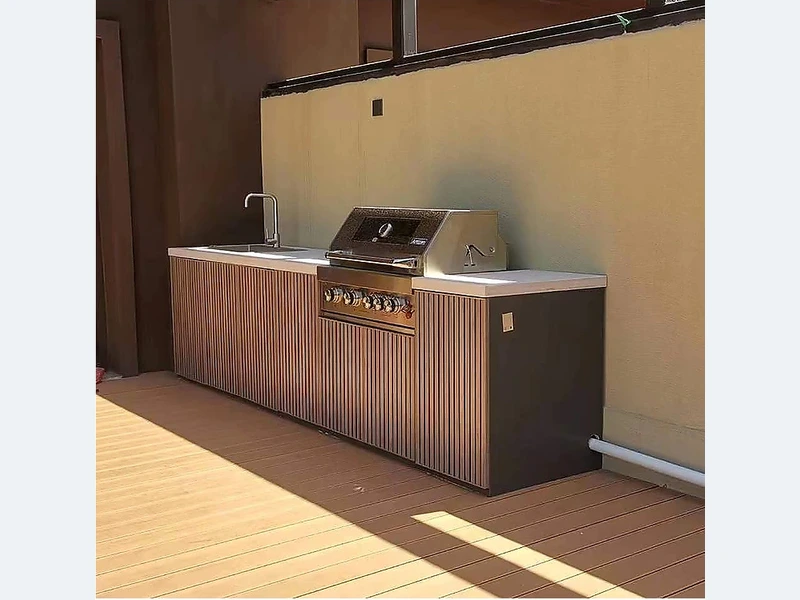
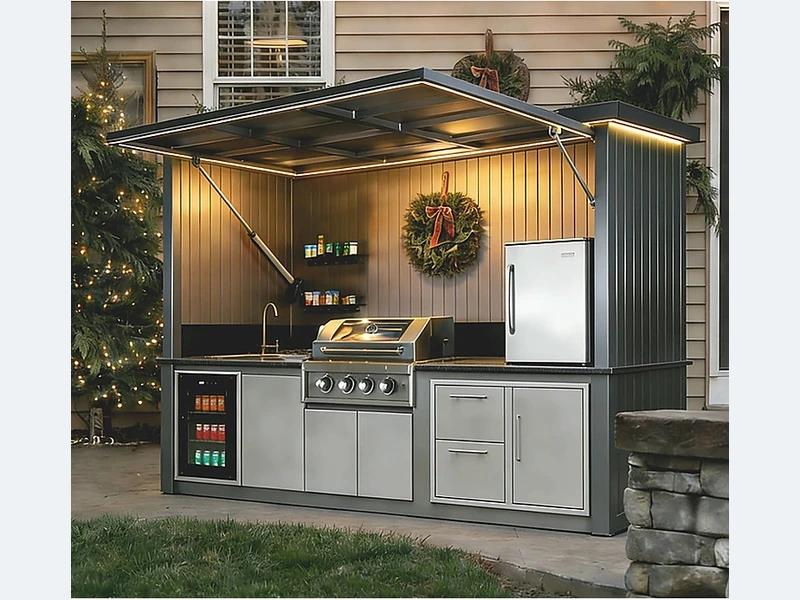
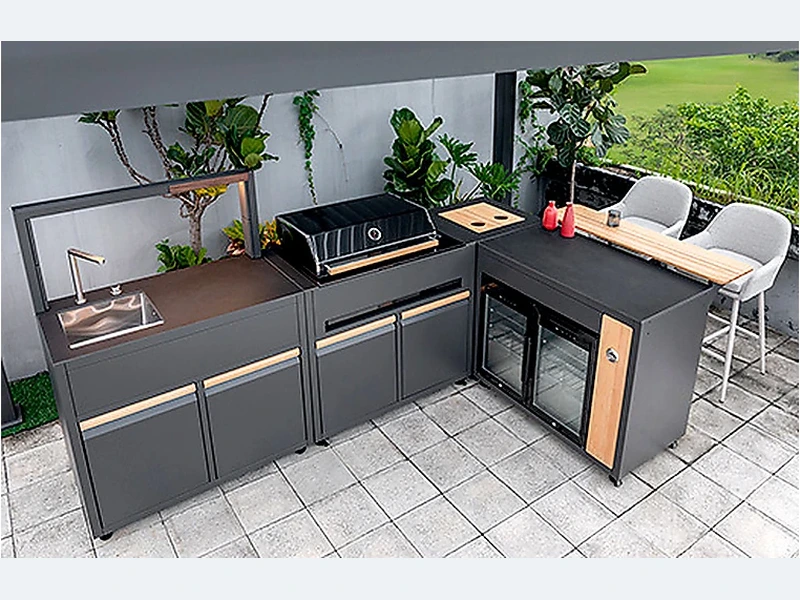
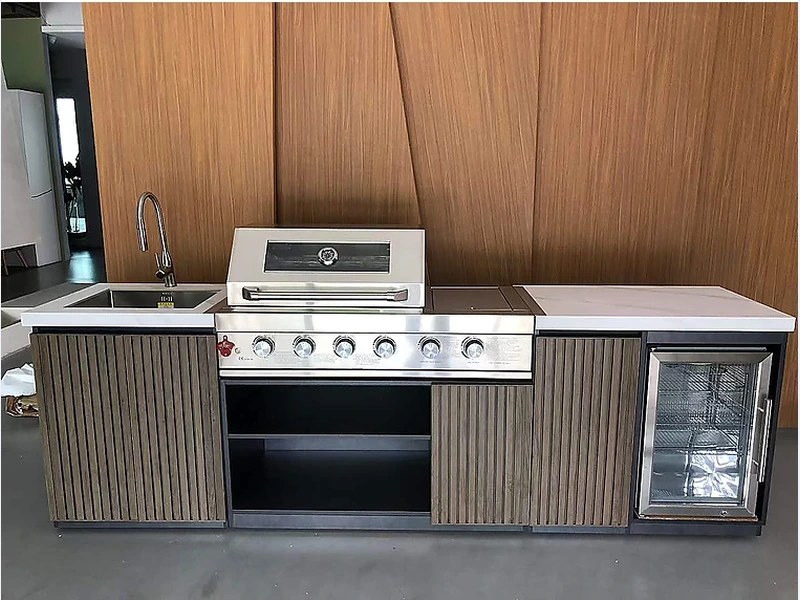
To turn the discussion into modules and dimensions, review the straight outdoor kitchen design collection together with the broader ForgeWin outdoor-kitchen range. Treat both as configuration references, then submit the measured site, appliance schedule, finish direction and delivery location for a project review.
The factory drawing can define cabinetry, interfaces and finishes; it cannot inspect the destination site. Local installers and licensed trades should sign off measurements, structure and regulated connections before manufacture or commissioning.
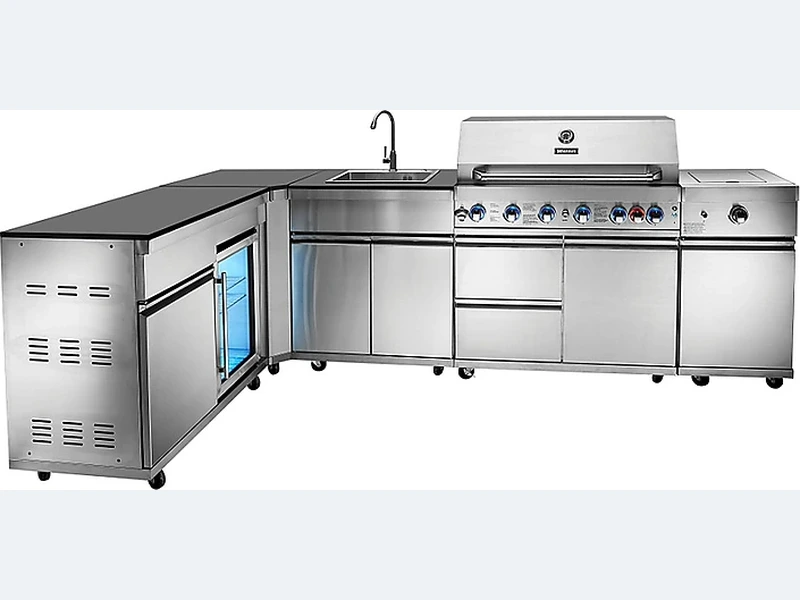
The best cabinet material is the one matched to the actual exposure. Properly specified stainless steel is a strong choice for heat, cleanability and durability; 316 is commonly preferred where chlorides and salt air are severe, while well-finished 304 can suit many non-coastal sites. Marine-grade aluminium can also perform well. Construction, drainage, fasteners and maintenance matter as much as the headline material.
Outdoor cabinets can rust or develop corrosion staining if the material, finish or maintenance does not suit the environment. Prevention starts with the correct alloy and compatible fasteners, then adds drainage, isolation from dissimilar metals, regular fresh-water rinsing and prompt removal of salt or iron contamination. “Stainless” means corrosion resistant, not corrosion proof—especially near the sea or around pool chemicals.
For hot, humid climates, favour non-absorbent cabinets, corrosion-resistant hardware, ventilated appliance bays and worktops approved for UV and heat. Properly specified stainless steel or marine-grade aluminium are common cabinet choices. Include drain paths and airflow so humidity is not trapped. Near the coast, upgrade chloride resistance and plan frequent fresh-water cleaning rather than relying on material grade alone.
For “How do I stop my outdoor kitchen from rusting?”, keep the solution simple until the fixed constraints are known. Once site, weather, equipment and services are recorded, the remaining choices can be priced without forcing late changes. Send ForgeWin the dimensions, photos and model numbers so unresolved items can be marked before production.
2026-09-12
2026-09-20
2026-09-28
2026-10-06