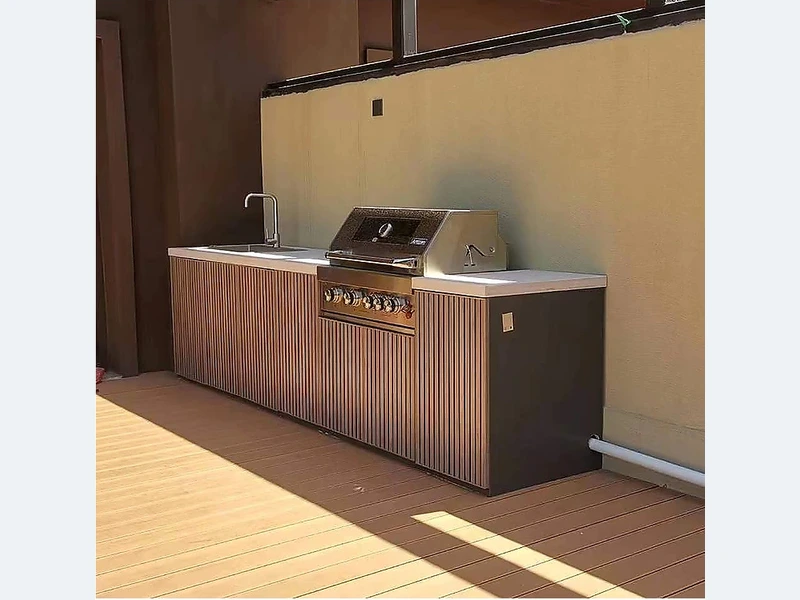
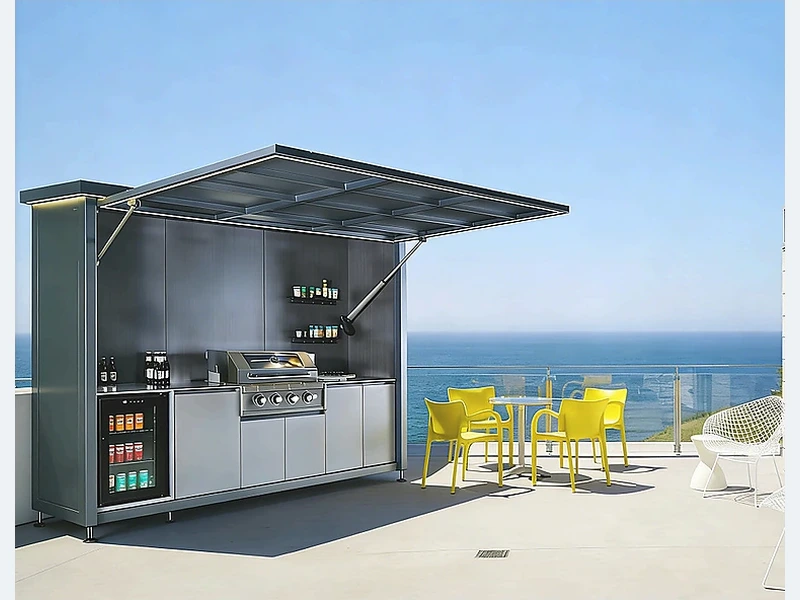
Extreme heat affects people, finishes, sealants and appliances differently. Provide shade, keep refrigerators out of direct sun, preserve condenser airflow and use worktops and coatings approved for the expected surface temperature. Grill heat must be handled through the appliance’s insulation jacket and specified clearances. Do not assume a metal cabinet makes every adjacent component heat safe.
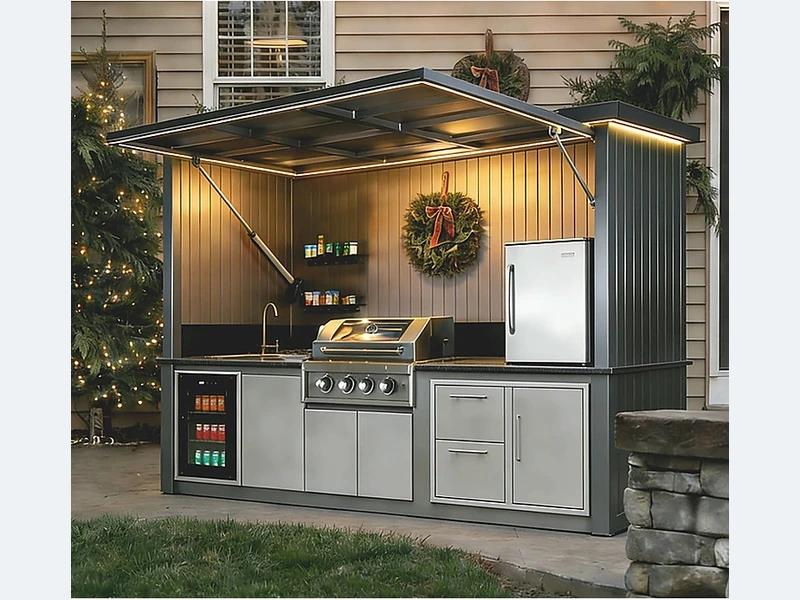
Most disappointing outdoor kitchens fail at an interface: cabinet to appliance, worktop to weather, or service line to site. Shelter lowers exposure but does not erase it. Wind can push rain through door gaps, sunlight heats dark finishes and salt settles beneath roofs. Detail drip edges, raised bases, clear vents and inspectable joints before relying on a cover.
Before approving a quotation, for “How do outdoor kitchens handle extreme heat?”, separate facts from choices. Site dimensions and model numbers are facts; finish and optional modules are choices; local approvals are external checks. Keeping those groups visible makes revisions easier to price and approve. That sequence keeps the design flexible early and precise when money is committed.
| Decision | What to examine | What to record |
|---|---|---|
| Exposure | Rain direction, sun, salt and seasonal extremes | Site exposure note |
| Shelter | Roof, screen or appliance cover | Ventilated protection plan |
| Drainage | Worktop, cabinet and floor water | Slopes, drips and drains |
| Maintenance | Cleaning, inspections and winterisation | Owner care schedule |
Use this list before accepting a design, price or product recommendation:
Evidence boundary: Project evidence should close the remaining gaps. Keep the manufacturer data, site measurement and local trade approvals with the drawing before treating a general recommendation as buildable.
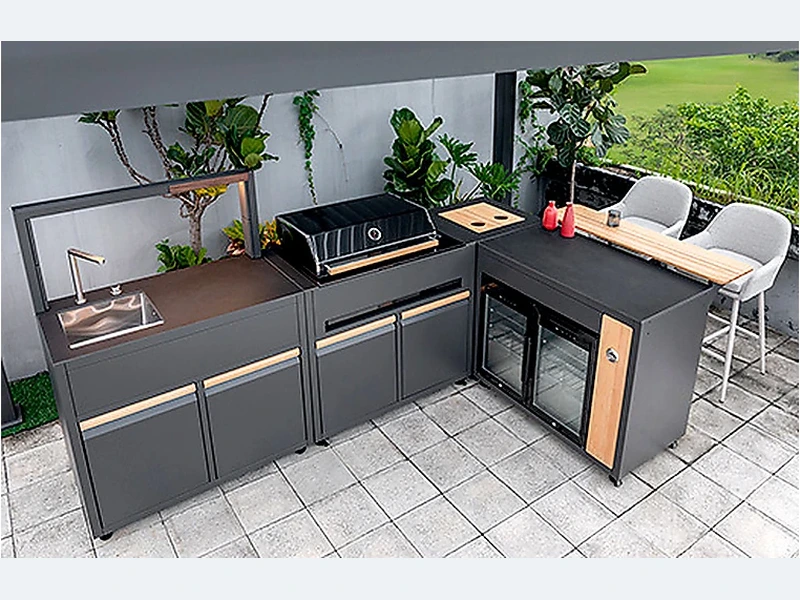
A product reference makes the planning choices easier to see; start with the straight outdoor kitchen design collection together with the broader ForgeWin outdoor-kitchen range. Treat both as configuration references, then submit the measured site, appliance schedule, finish direction and delivery location for a project review.
The factory drawing can define cabinetry, interfaces and finishes; it cannot inspect the destination site. Local installers and licensed trades should sign off measurements, structure and regulated connections before manufacture or commissioning.
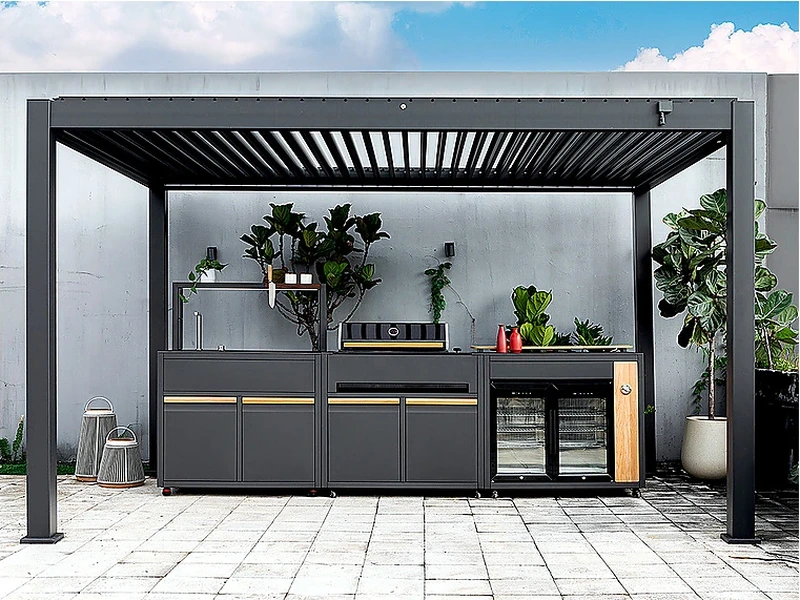
Outdoor kitchens can survive winter when materials suit freeze-thaw exposure and services are winterised. Shut down and drain vulnerable water lines, follow appliance storage instructions, keep snow and ice from blocking vents or drains and repair failed sealant before freezing weather. Cabinets may remain outside, but ice makers, taps, filters and pumps often need more specific protection.
An outdoor kitchen can be left uncovered only when every cabinet, worktop, appliance, electrical component and seal is rated for that exposure. Even then, a cover or roof reduces UV, standing water and cleaning. Keep drainage paths open, use appliance covers recommended by the manufacturer and avoid storing moisture-sensitive items in cabinets that receive wind-driven rain.
Outdoor kitchens can work near the sea, but salt deposits make specification and cleaning more demanding. Use chloride-resistant metals and compatible fasteners, avoid crevices that hold salt water, isolate dissimilar metals and rinse surfaces with fresh water on a site-appropriate schedule. 316 stainless is commonly considered for harsher chloride exposure, yet it still needs cleaning and careful fabrication.
For “How do outdoor kitchens handle extreme heat?”, the useful conclusion is a short decision record: what was selected, why it suits the site, what remains to be checked and who owns that check. Carry it into drawings, quotation and installation. Send ForgeWin the dimensions, photos and model numbers so unresolved items can be marked before production.
2026-08-30
2026-09-15
2026-10-01
2026-10-09