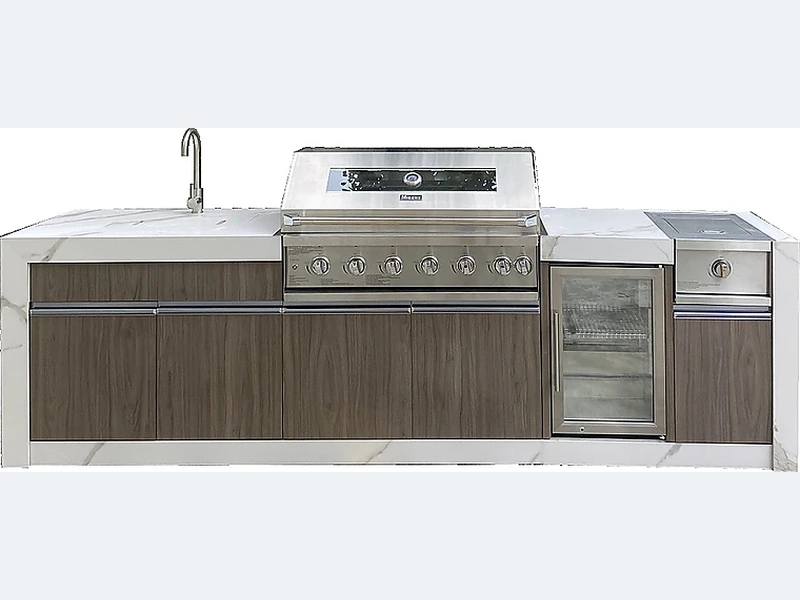
For hot, humid climates, favour non-absorbent cabinets, corrosion-resistant hardware, ventilated appliance bays and worktops approved for UV and heat. Properly specified stainless steel or marine-grade aluminium are common cabinet choices. Include drain paths and airflow so humidity is not trapped. Near the coast, upgrade chloride resistance and plan frequent fresh-water cleaning rather than relying on material grade alone.
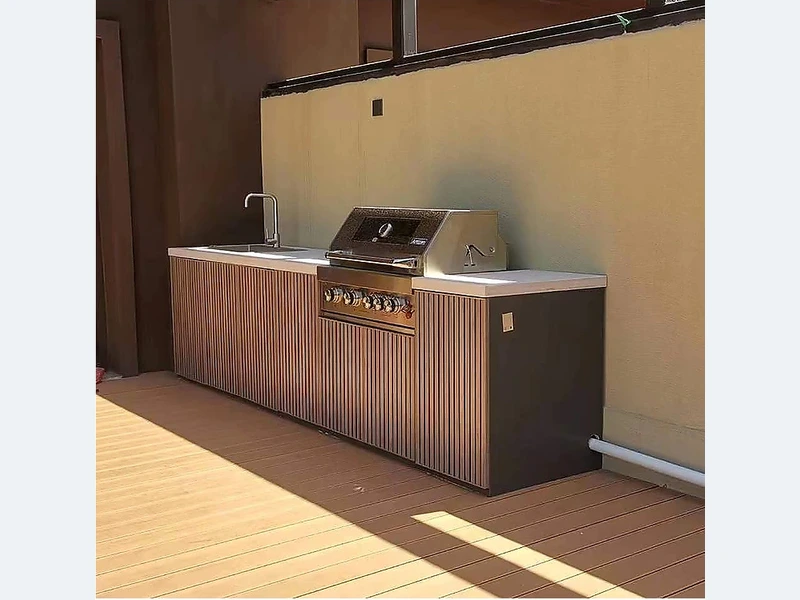
The practical answer lies in the details that a catalogue photo cannot show. Long life depends on compatible parts and a route for moisture to leave. Record the body material, hardware, finish system, worktop and care method separately. This makes it possible to upgrade a coastal fastener or UV-sensitive surface without changing the entire design.
When the site is measured, for “What materials are best for hot and humid climates?”, use one revision-controlled plan for quotation, approval and installation. Note exposure, open appliance doors, service access and unresolved approvals on that sheet so later substitutions can be checked against the same baseline. This is where a dimensioned drawing is more valuable than another inspiration image.
| Decision | What to examine | What to record |
|---|---|---|
| Cabinet body | Alloy or grade, thickness and construction | Written material schedule |
| Finish | UV, salt, heat and cleaning exposure | Code, sample and care method |
| Hardware | Hinges, runners, handles and fasteners | Material and load rating |
| Water management | Seams, edges, vents and base details | Drain and drying path |
Use this list before accepting a design, price or product recommendation:
Evidence boundary: This is planning guidance, not a replacement for the selected appliance manual, a finished site measurement or local approval. Confirm clearances, environmental ratings and regulated trade work for the exact project.
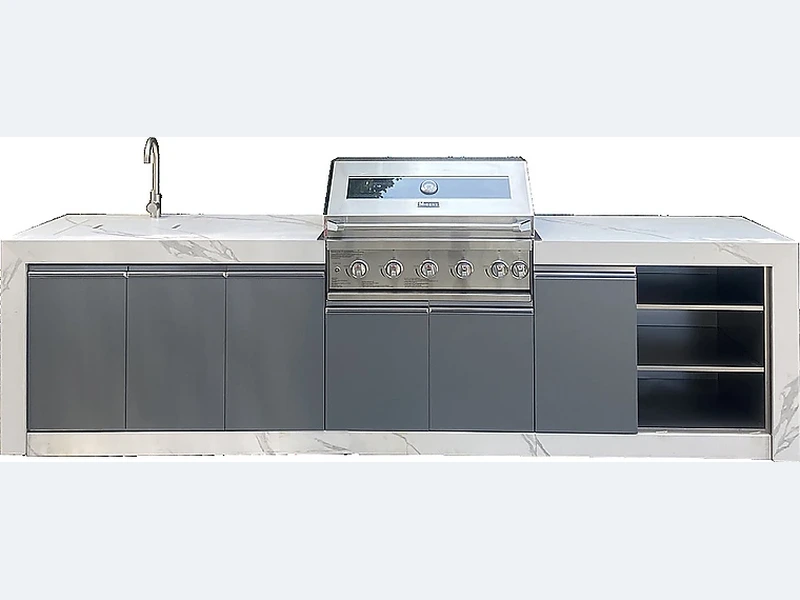
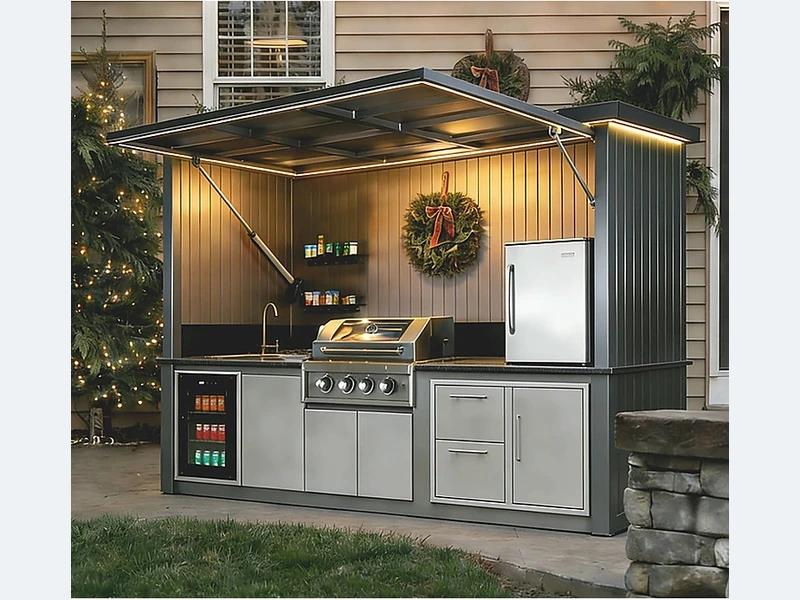
For a concrete starting point, look at the straight outdoor kitchen design collection together with the broader ForgeWin outdoor-kitchen range. Treat both as configuration references, then submit the measured site, appliance schedule, finish direction and delivery location for a project review.
Before production, reconcile the cabinet drawing with the appliance manuals and the local rough-in plan. The supplier, installer and trades should be working from compatible revisions rather than three separate sketches.
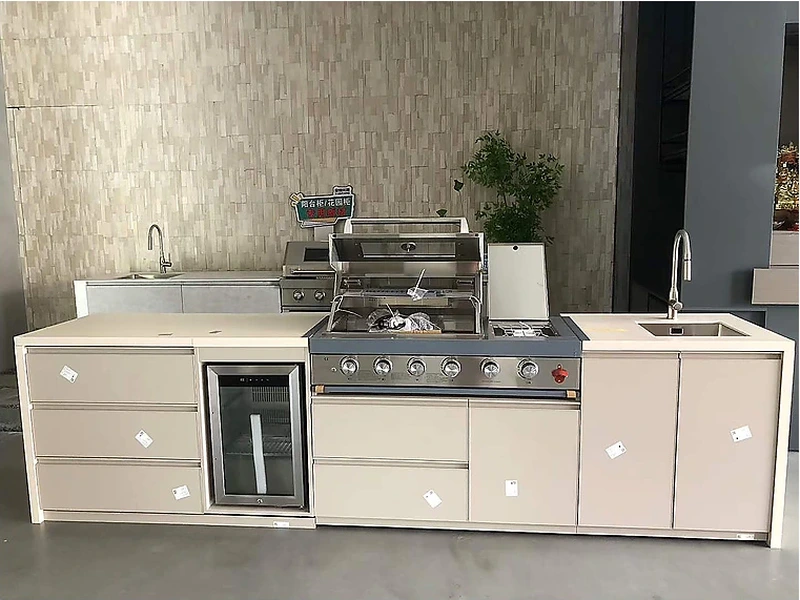
Outdoor cabinets can rust or develop corrosion staining if the material, finish or maintenance does not suit the environment. Prevention starts with the correct alloy and compatible fasteners, then adds drainage, isolation from dissimilar metals, regular fresh-water rinsing and prompt removal of salt or iron contamination. “Stainless” means corrosion resistant, not corrosion proof—especially near the sea or around pool chemicals.
Yes, stainless steel cabinets are well suited to many outdoor kitchens because they are non-porous, cleanable and tolerant of heat and moisture. The specification still matters. Confirm the stainless grade, surface finish, weld treatment, fasteners, hinges and internal construction, and use a more chloride-resistant solution for coastal exposure. Stainless steel can stain or corrode if salt deposits and contamination are ignored.
Some outdoor countertops and finishes can fade, yellow or heat up in direct sun. UV-sensitive resins, dyes and coatings carry more risk than through-body porcelain, suitable natural stone or bare stainless steel. Ask for exterior-use approval and a colour-stability warranty for the exact product. Dark surfaces may remain colourfast yet become uncomfortable to touch in intense sunlight.
For “What materials are best for hot and humid climates?”, keep the solution simple until the fixed constraints are known. Once site, weather, equipment and services are recorded, the remaining choices can be priced without forcing late changes. Send ForgeWin the dimensions, photos and model numbers so unresolved items can be marked before production.
2026-09-03
2026-09-27
2026-10-05
2026-10-13