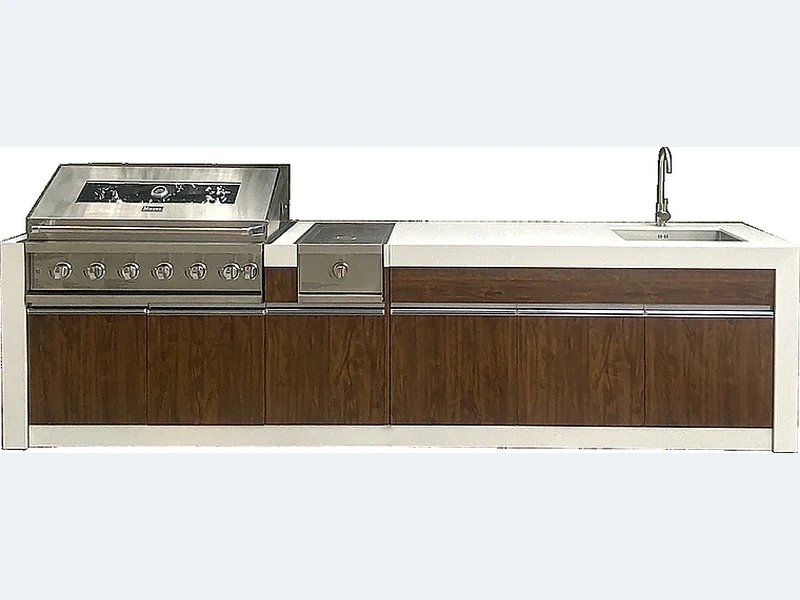
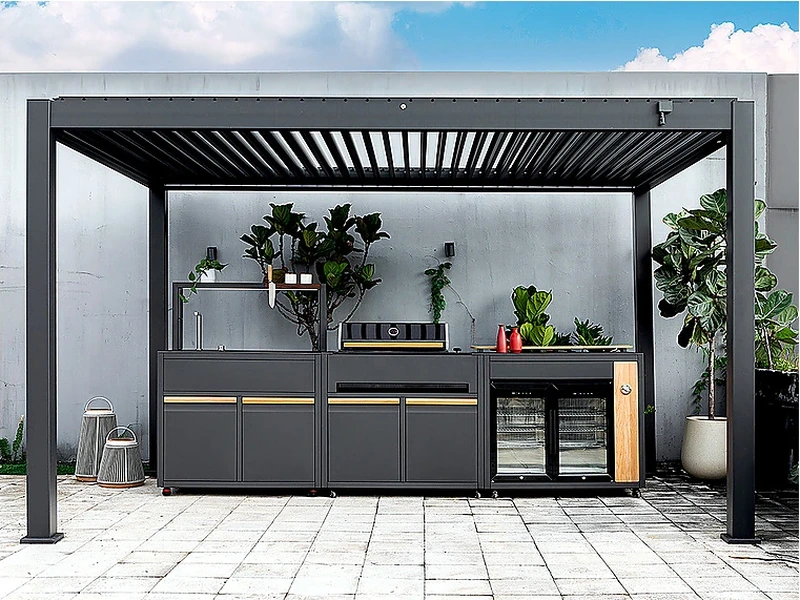
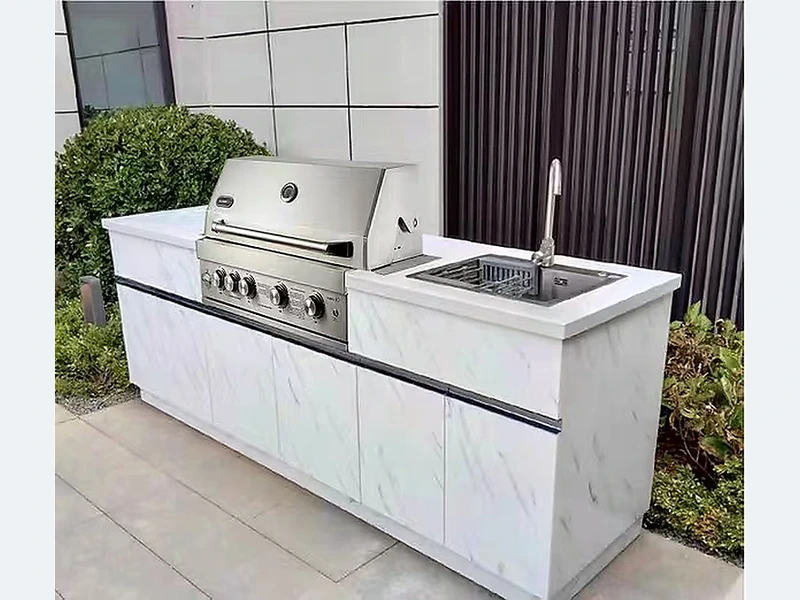
Some outdoor countertops and finishes can fade, yellow or heat up in direct sun. UV-sensitive resins, dyes and coatings carry more risk than through-body porcelain, suitable natural stone or bare stainless steel. Ask for exterior-use approval and a colour-stability warranty for the exact product. Dark surfaces may remain colourfast yet become uncomfortable to touch in intense sunlight.
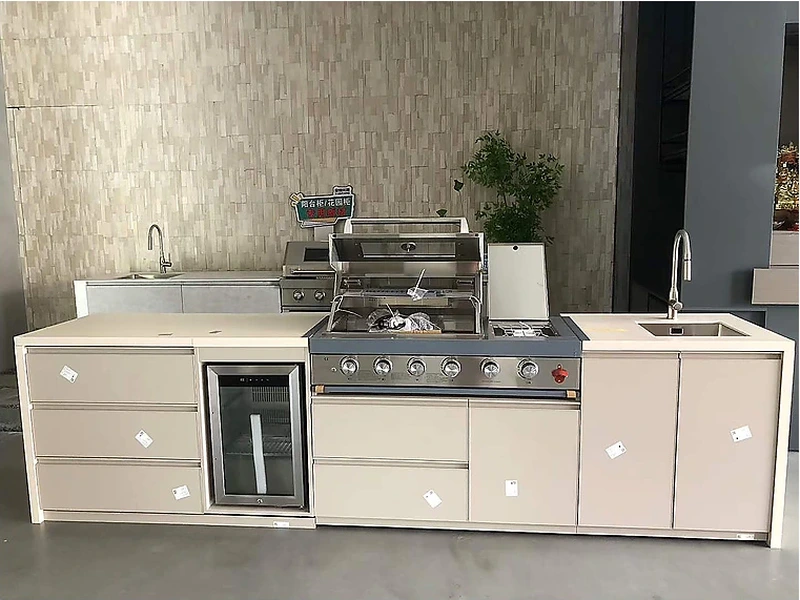
A useful way to approach this question is to separate the visible product from the site conditions around it. Material names are only the first line of a specification. Alloy or grade, thickness, finish, fabrication, fasteners and water-shedding details decide how the assembly behaves. Describe whether the site is covered, coastal, shaded or fully exposed before comparing samples.
In practical terms, for “Will outdoor countertops fade in the sun?”, treat this as a coordination question. Record the exposure, appliance models, finished dimensions and the party responsible for each service. Local fire, gas, electrical, plumbing and structural requirements still need review in the destination jurisdiction. The result is usually simpler, safer and easier to price than adding features one at a time.
| Decision | What to examine | What to record |
|---|---|---|
| Cabinet body | Alloy or grade, thickness and construction | Written material schedule |
| Finish | UV, salt, heat and cleaning exposure | Code, sample and care method |
| Hardware | Hinges, runners, handles and fasteners | Material and load rating |
| Water management | Seams, edges, vents and base details | Drain and drying path |
Use this list before accepting a design, price or product recommendation:
Evidence boundary: This is planning guidance, not a replacement for the selected appliance manual, a finished site measurement or local approval. Confirm clearances, environmental ratings and regulated trade work for the exact project.
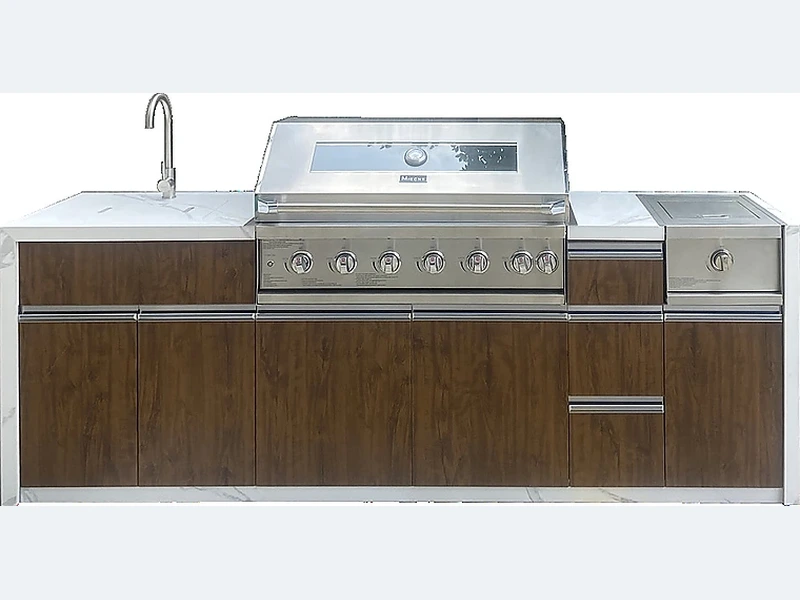
For a visual and dimensional reference, compare the straight outdoor kitchen design collection together with the broader ForgeWin outdoor-kitchen range. Treat both as configuration references, then submit the measured site, appliance schedule, finish direction and delivery location for a project review.
The factory drawing can define cabinetry, interfaces and finishes; it cannot inspect the destination site. Local installers and licensed trades should sign off measurements, structure and regulated connections before manufacture or commissioning.
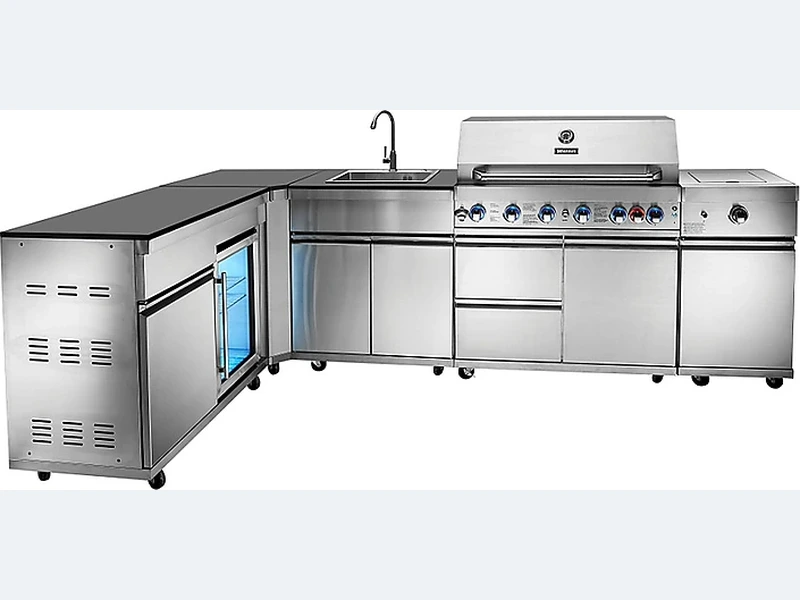
For hot, humid climates, favour non-absorbent cabinets, corrosion-resistant hardware, ventilated appliance bays and worktops approved for UV and heat. Properly specified stainless steel or marine-grade aluminium are common cabinet choices. Include drain paths and airflow so humidity is not trapped. Near the coast, upgrade chloride resistance and plan frequent fresh-water cleaning rather than relying on material grade alone.
Only cabinets designed for outdoor exposure should stay in the rain. Indoor particleboard or standard kitchen joinery can swell, delaminate or trap moisture. Outdoor cabinets still should not be described as watertight: use sloped surfaces, sealed or folded seams, drain paths, corrosion-resistant hardware and covered appliance openings. A roof or cover reduces maintenance even when the cabinet material is weather resistant.
Granite can be a good outdoor worktop when the selected stone is dense, sound and properly supported. It tolerates sun and heat better than many resin-bound surfaces, but porosity, colour, resin repairs and sealing needs vary by slab. Review the actual slab, edge design, joints and support around grill or sink cut-outs; do not assume every stone sold as granite behaves identically.
For “Will outdoor countertops fade in the sun?”, keep the solution simple until the fixed constraints are known. Once site, weather, equipment and services are recorded, the remaining choices can be priced without forcing late changes. Send ForgeWin the dimensions, photos and model numbers so unresolved items can be marked before production.
2026-09-09
2026-09-17
2026-10-11