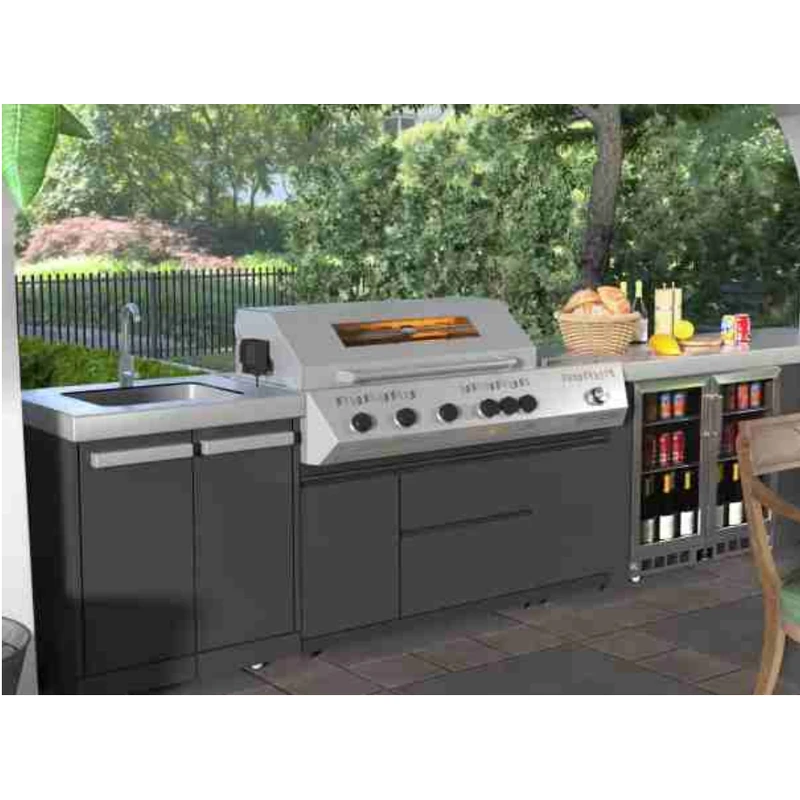
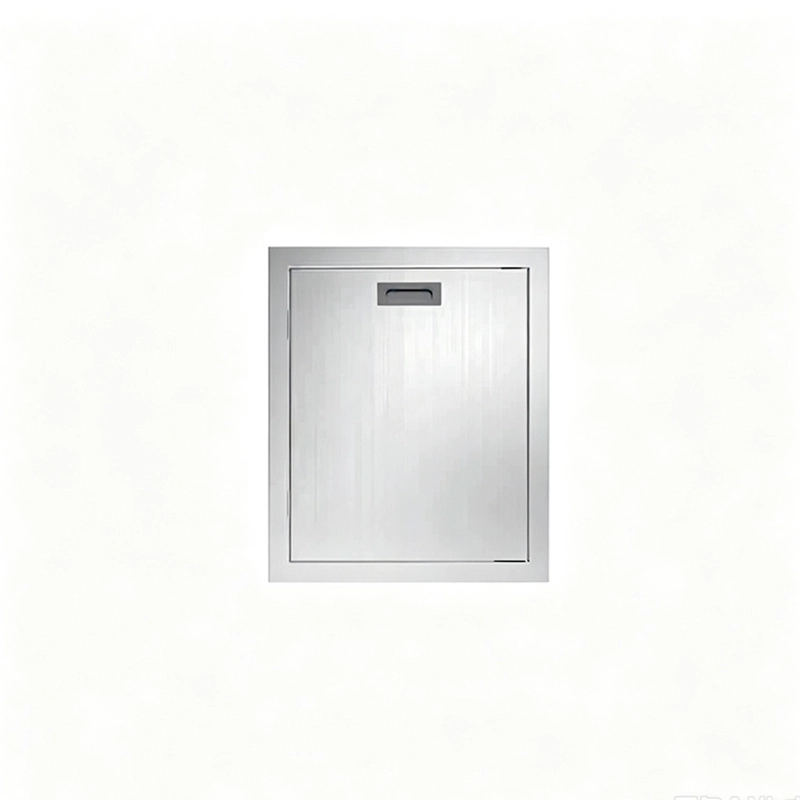
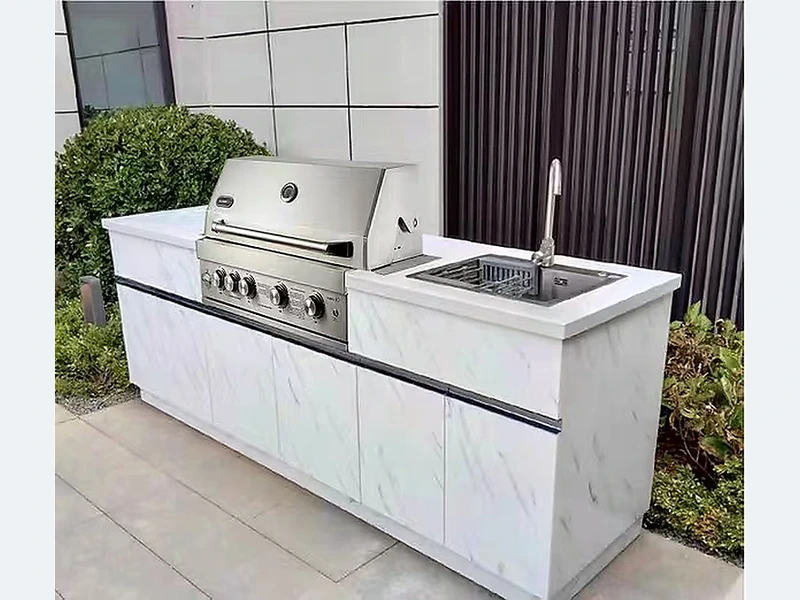
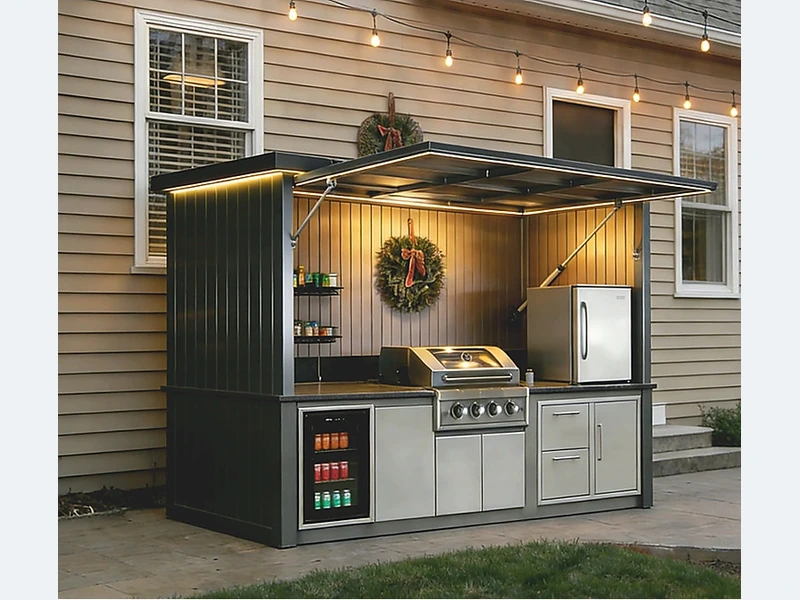
Yes, aluminium can be a good outdoor-cabinet material because it is light and does not form red rust. It still needs the right alloy, coating or anodising, compatible fasteners and isolation from dissimilar metals. Thin panels can dent and poorly prepared coatings can fail, so assess cabinet construction and finish warranty—not just the fact that the cabinet is aluminium.
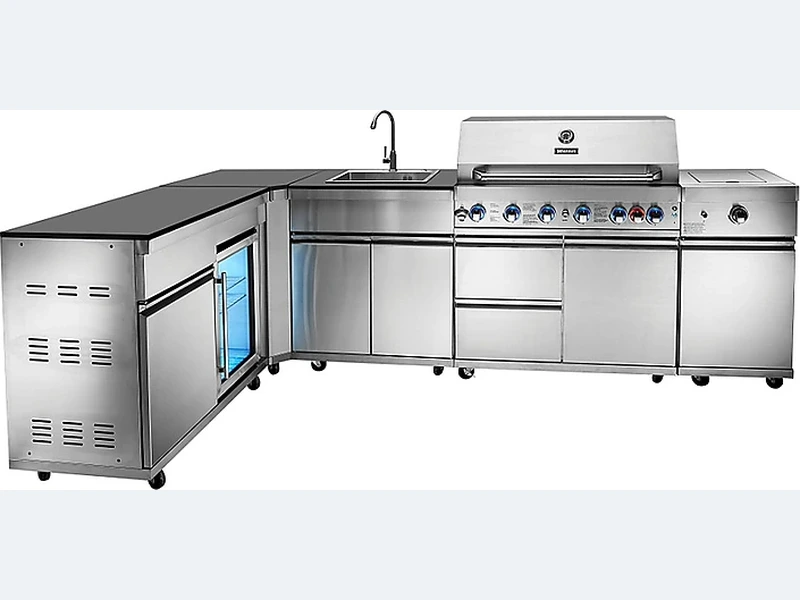
Most disappointing outdoor kitchens fail at an interface: cabinet to appliance, worktop to weather, or service line to site. A cabinet is a collection of metals, coatings, hinges, runners, seams and edges. Its weakest part sets the maintenance burden. Match every component to rain, ultraviolet light, heat, salt and cleaning rather than choosing from a small door sample indoors.
Before approving a quotation, for “Is aluminium good for outdoor kitchen cabinets?”, separate facts from choices. Site dimensions and model numbers are facts; finish and optional modules are choices; local approvals are external checks. Keeping those groups visible makes revisions easier to price and approve. The result is usually simpler, safer and easier to price than adding features one at a time.
| Decision | What to examine | What to record |
|---|---|---|
| Cabinet body | Alloy or grade, thickness and construction | Written material schedule |
| Finish | UV, salt, heat and cleaning exposure | Code, sample and care method |
| Hardware | Hinges, runners, handles and fasteners | Material and load rating |
| Water management | Seams, edges, vents and base details | Drain and drying path |
Use this list before accepting a design, price or product recommendation:
Evidence boundary: The recommendation has limits: appliance instructions, measured conditions and destination rules take precedence. Have the relevant local professional check any fire, gas, power, water, drainage or structural detail.
One useful configuration reference is the straight outdoor kitchen design collection together with the broader ForgeWin outdoor-kitchen range. Treat both as configuration references, then submit the measured site, appliance schedule, finish direction and delivery location for a project review.
Before production, reconcile the cabinet drawing with the appliance manuals and the local rough-in plan. The supplier, installer and trades should be working from compatible revisions rather than three separate sketches.
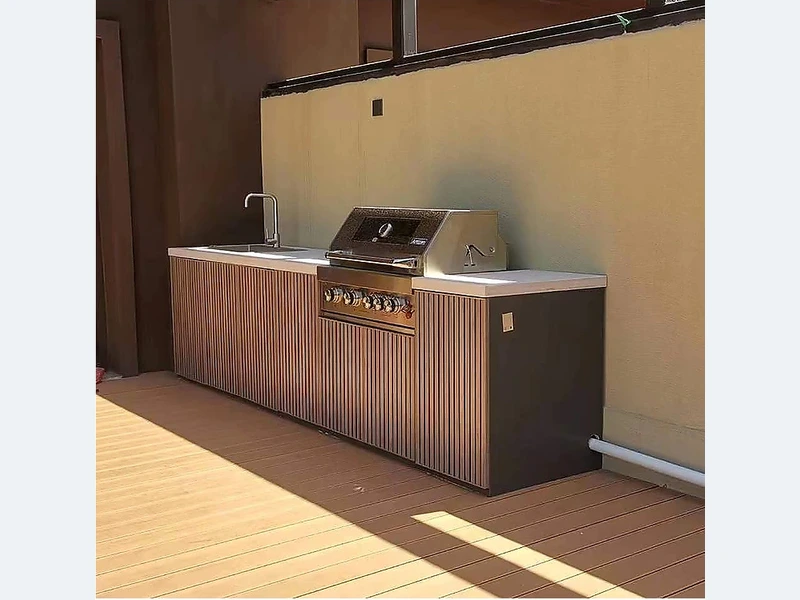
Choose stainless steel when heat tolerance, stiffness and a food-service look are priorities; choose marine-grade aluminium when low weight and broad corrosion resistance are more important. Both can work outdoors. Stainless grade, aluminium alloy, coating system, fasteners and galvanic isolation decide performance. Near salt water, compare a properly specified 316 stainless system with a marine-grade coated aluminium system rather than comparing generic labels.
Engineered quartz is not automatically suitable outdoors. Many products contain resins that can discolour or change under UV and heat, while a limited number of ranges are specifically sold for exterior use. Check the exact manufacturer’s written outdoor approval and warranty. If it is absent, choose a proven exterior material such as suitable granite, porcelain or stainless steel instead.
Long service life comes from a matched system rather than one material name. A suitable stainless or aluminium cabinet with compatible hardware, protected edges, drainage and routine cleaning will generally outlast indoor joinery outdoors. In coastal sites, chloride resistance and maintenance become decisive; under strong UV, coating and worktop colour stability matter. Ask for grade, finish and hardware in writing.
For “Is aluminium good for outdoor kitchen cabinets?”, the safest next step is to replace assumptions with project inputs. Finished measurements, appliance data and a responsibility list make the recommendation buildable and the quotation comparable. Send ForgeWin the dimensions, photos and model numbers so unresolved items can be marked before production.
2026-09-14
2026-09-22