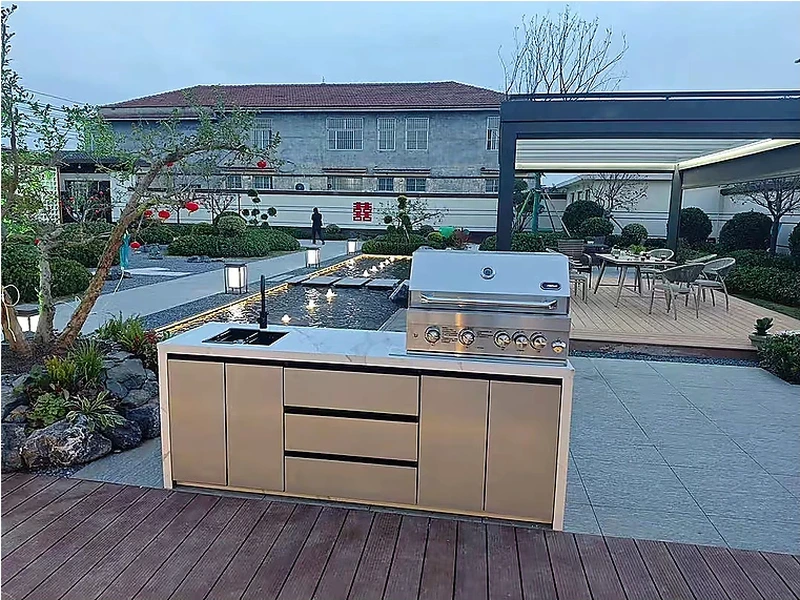
No cabinet material makes a complete outdoor-kitchen assembly perfectly waterproof. Stainless steel, aluminium, compact laminate and suitable masonry systems can be highly water resistant, but doors, vents, appliance cut-outs and service penetrations remain paths for moisture. Specify weather-resistant construction, raised bases, drain paths and dry storage zones rather than relying on a blanket waterproof claim.
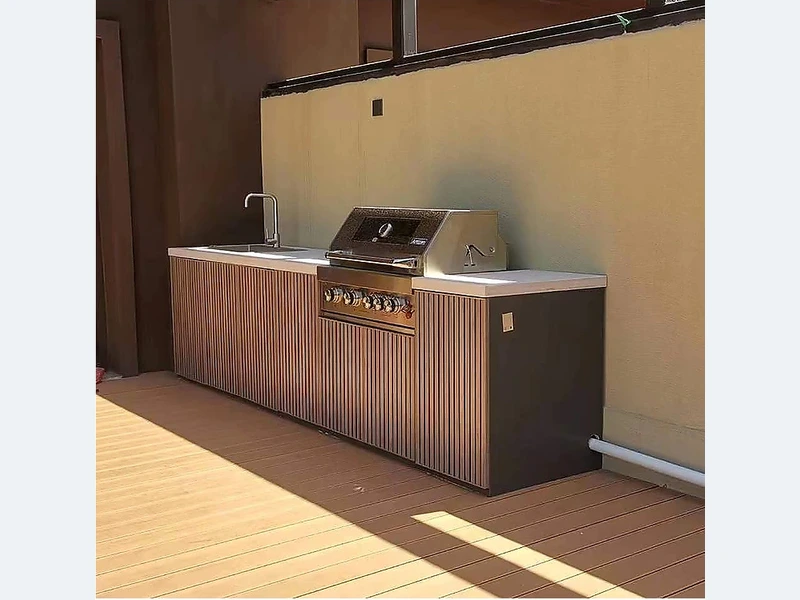
A useful way to approach this question is to separate the visible product from the site conditions around it. A cabinet is a collection of metals, coatings, hinges, runners, seams and edges. Its weakest part sets the maintenance burden. Match every component to rain, ultraviolet light, heat, salt and cleaning rather than choosing from a small door sample indoors.
In practical terms, for “What cabinet material is waterproof?”, put the uncertain interface on the drawing. That may be an appliance clearance, a drainage level, a finish in salt air or the boundary between factory supply and local installation. A qualified local professional should confirm regulated work. It also leaves a record that the installer can check instead of reconstructing decisions on site.
| Decision | What to examine | What to record |
|---|---|---|
| Cabinet body | Alloy or grade, thickness and construction | Written material schedule |
| Finish | UV, salt, heat and cleaning exposure | Code, sample and care method |
| Hardware | Hinges, runners, handles and fasteners | Material and load rating |
| Water management | Seams, edges, vents and base details | Drain and drying path |
Use this list before accepting a design, price or product recommendation:
Evidence boundary: Project evidence should close the remaining gaps. Keep the manufacturer data, site measurement and local trade approvals with the drawing before treating a general recommendation as buildable.
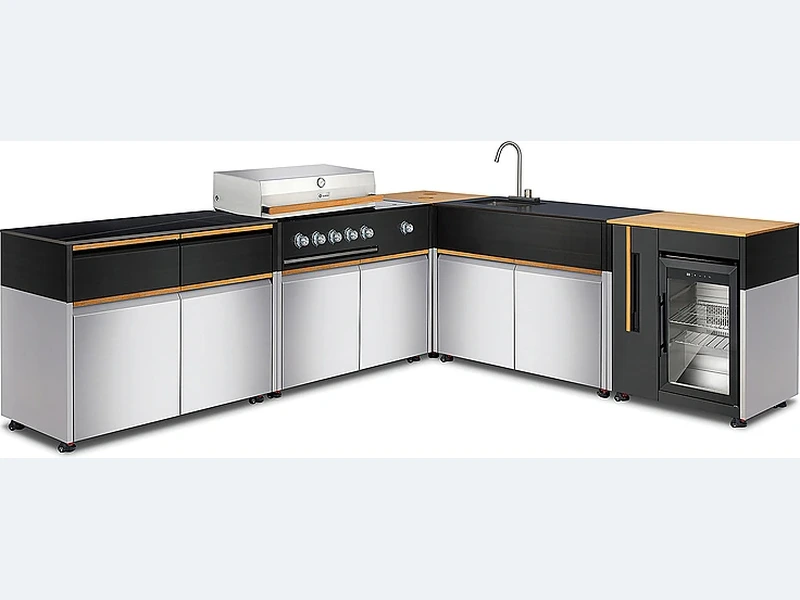
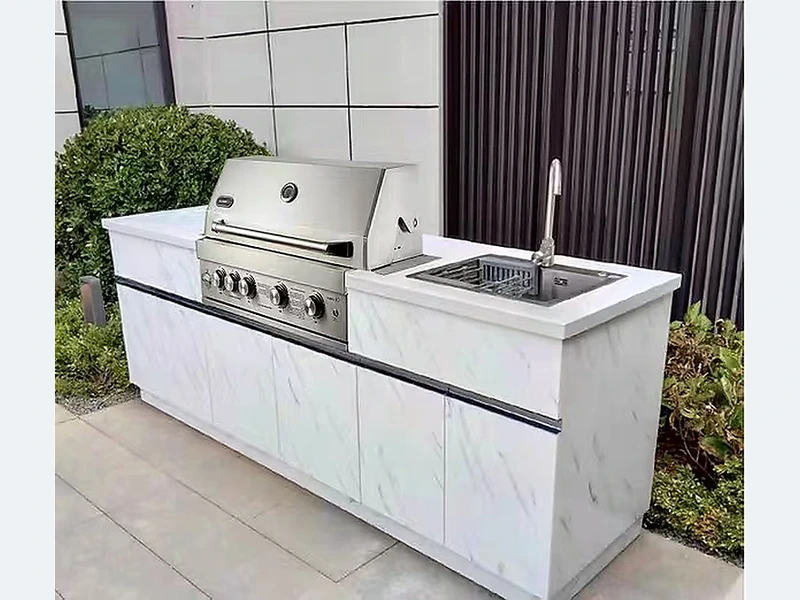
For a visual and dimensional reference, compare the stainless steel outdoor kitchen with grill and sink together with the broader ForgeWin outdoor-kitchen range. Treat both as configuration references, then submit the measured site, appliance schedule, finish direction and delivery location for a project review.
ForgeWin can coordinate cabinet modules, finish direction and appliance openings from drawings. The local team should verify finished dimensions, structural support, fire separation and code-controlled services. Keeping those roles visible prevents a product drawing from being mistaken for a site approval.
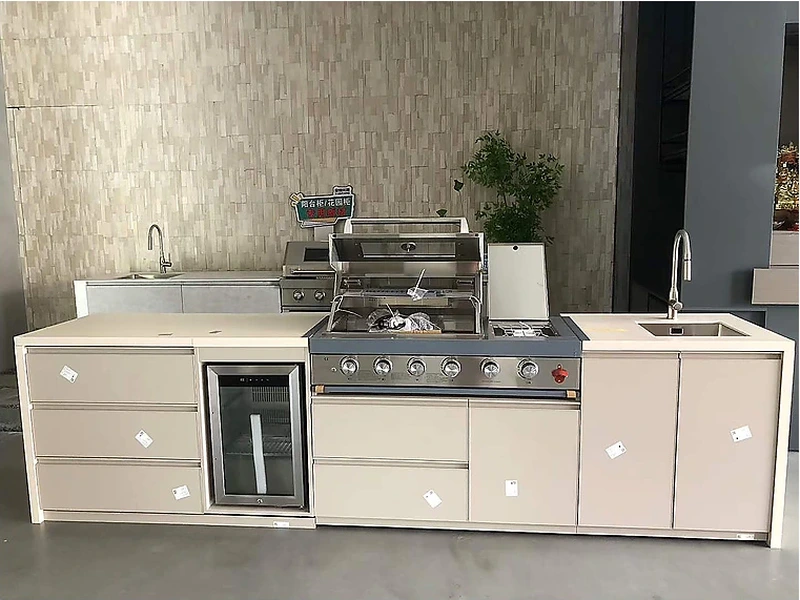
Long service life comes from a matched system rather than one material name. A suitable stainless or aluminium cabinet with compatible hardware, protected edges, drainage and routine cleaning will generally outlast indoor joinery outdoors. In coastal sites, chloride resistance and maintenance become decisive; under strong UV, coating and worktop colour stability matter. Ask for grade, finish and hardware in writing.
Wood cabinets can be used outdoors when the species, substrate, joinery, finish and ventilation are designed for exterior service. They normally need more maintenance than metal cabinets and should be kept away from standing water and intense grill heat. Wood-look metal or compact-laminate panels can provide a warmer appearance with less seasonal movement, but their edges and fixings still need outdoor detailing.
Outdoor cabinets can rust or develop corrosion staining if the material, finish or maintenance does not suit the environment. Prevention starts with the correct alloy and compatible fasteners, then adds drainage, isolation from dissimilar metals, regular fresh-water rinsing and prompt removal of salt or iron contamination. “Stainless” means corrosion resistant, not corrosion proof—especially near the sea or around pool chemicals.
For “What cabinet material is waterproof?”, the useful conclusion is a short decision record: what was selected, why it suits the site, what remains to be checked and who owns that check. Carry it into drawings, quotation and installation. Send ForgeWin the dimensions, photos and model numbers so unresolved items can be marked before production.
2026-09-18
2026-09-26
2026-10-04
2026-10-12