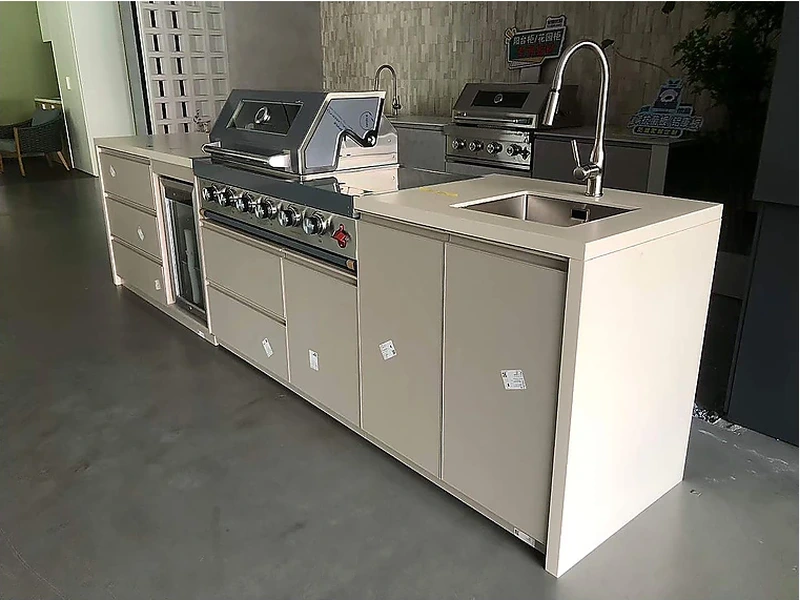
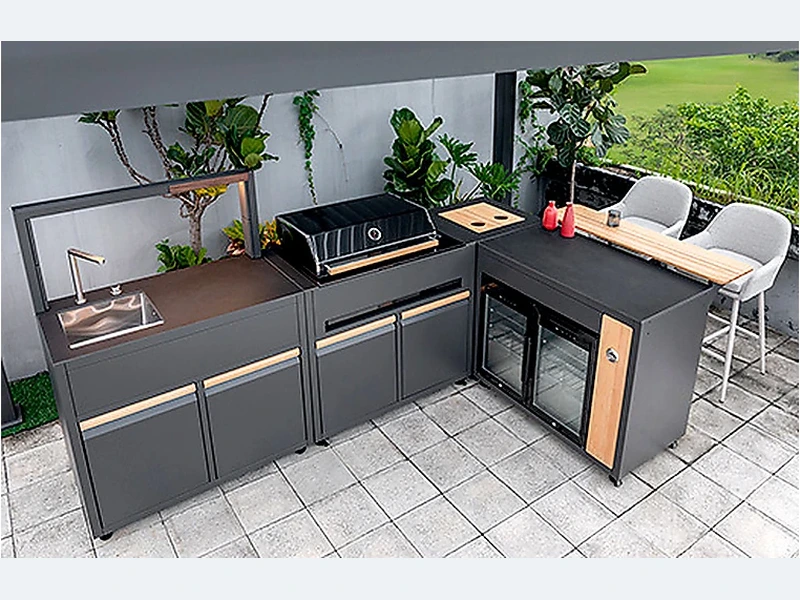
A well-designed outdoor kitchen sheds rain and dries without trapping water. Poorly detailed units can collect water behind doors, around worktop joints or beneath appliances, leading to staining, mould, electrical risk or corrosion. After heavy rain, check cabinet interiors, clear drainage, dry soft goods and inspect covers. Repeated water entry is a detailing fault to correct, not normal maintenance.
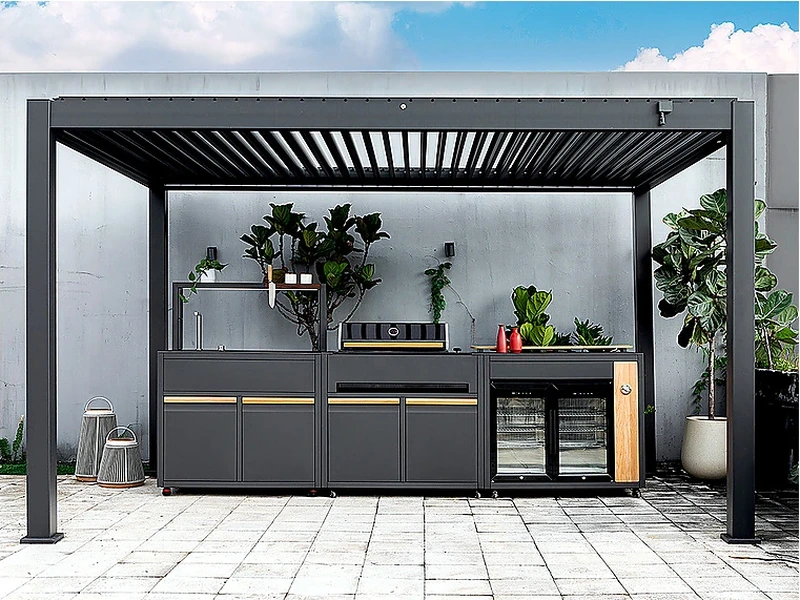
The decision becomes clearer once the kitchen is treated as a small building-services project, not a single cabinet purchase. Think in terms of wetting and drying cycles. The goal is not an impossible sealed box; it is a kitchen that sheds water, avoids trapped moisture and can be cleaned after storms. Appliance manuals still govern ventilation and covers in the sheltered design.
On a real project, for “What happens to an outdoor kitchen when it rains?”, ask who will verify each input before production. The supplier can coordinate modules and openings, while local trades confirm structure and controlled services. The answer should appear in the project record, not be left to the installation day. It also leaves a record that the installer can check instead of reconstructing decisions on site.
| Decision | What to examine | What to record |
|---|---|---|
| Exposure | Rain direction, sun, salt and seasonal extremes | Site exposure note |
| Shelter | Roof, screen or appliance cover | Ventilated protection plan |
| Drainage | Worktop, cabinet and floor water | Slopes, drips and drains |
| Maintenance | Cleaning, inspections and winterisation | Owner care schedule |
Use this list before accepting a design, price or product recommendation:
Evidence boundary: This is planning guidance, not a replacement for the selected appliance manual, a finished site measurement or local approval. Confirm clearances, environmental ratings and regulated trade work for the exact project.
One useful configuration reference is the straight outdoor kitchen design collection together with the broader ForgeWin outdoor-kitchen range. Treat both as configuration references, then submit the measured site, appliance schedule, finish direction and delivery location for a project review.
The factory drawing can define cabinetry, interfaces and finishes; it cannot inspect the destination site. Local installers and licensed trades should sign off measurements, structure and regulated connections before manufacture or commissioning.
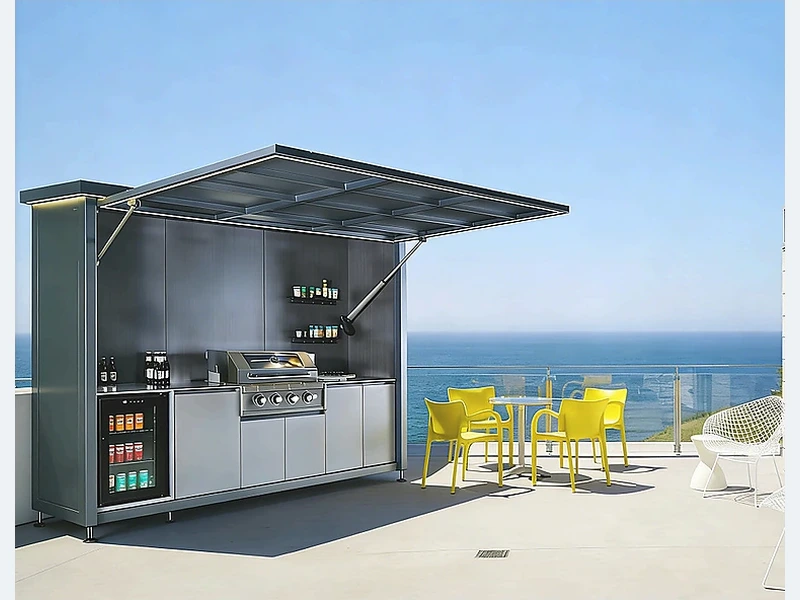
Outdoor cabinets can handle direct sunlight when the panels, coating, sealants and worktop are approved for UV and heat. Dark finishes can become very hot; resin-bound surfaces and some decorative films may change colour. Request exterior test or warranty information for the exact finish, provide shade where practical and keep refrigerators away from radiant heat and blocked ventilation.
Use a manufacturer-approved cover for the BBQ after the appliance is fully cool, and cover cabinets when the site receives severe rain, salt spray, dust or long periods of non-use. Covers should be breathable and secured without trapping standing water. They are a maintenance aid, not a substitute for outdoor-rated equipment, drainage or the clearances stated in the appliance manual.
Outdoor kitchens should be described as weather resistant, not completely waterproof. Rain can enter through door gaps, vents, appliance openings and service penetrations, and wind can drive water uphill. Durable designs manage water with sloped tops, drip edges, raised bases, drain holes, sealed joints and protected storage. Any supplier claiming “100% waterproof” should explain the test method and exclusions.
For “What happens to an outdoor kitchen when it rains?”, the useful conclusion is a short decision record: what was selected, why it suits the site, what remains to be checked and who owns that check. Carry it into drawings, quotation and installation. Send ForgeWin the dimensions, photos and model numbers so unresolved items can be marked before production.
2026-09-10
2026-10-04