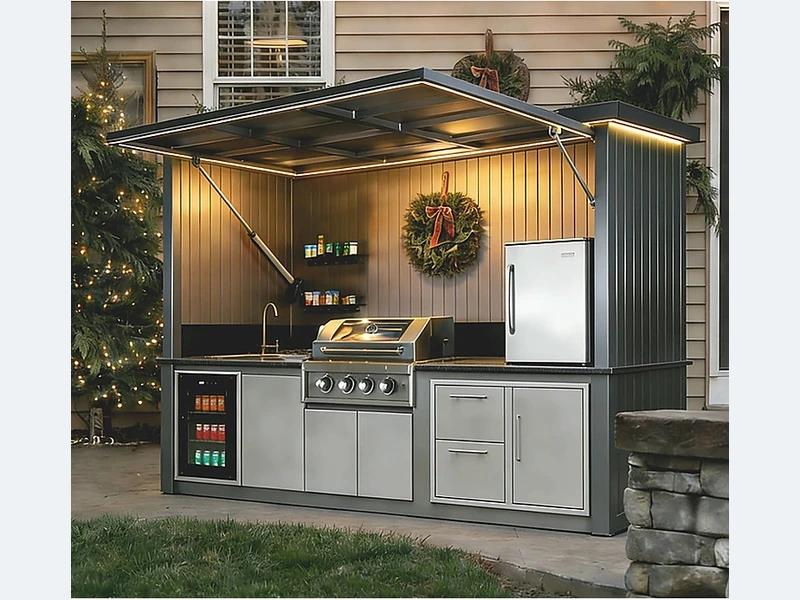
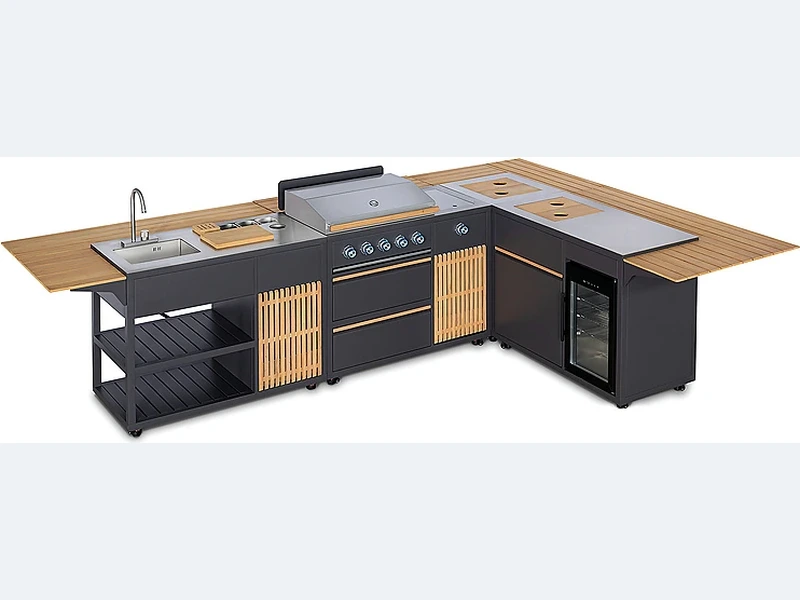
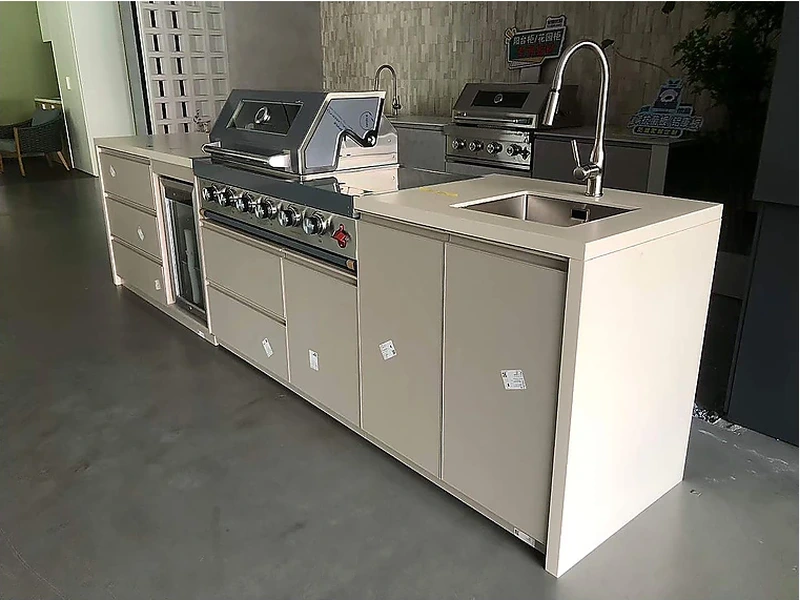
Outdoor appliances need an environmental rating and installation approval appropriate to the exposure; “waterproof” is usually the wrong test. Check whether the model is listed for outdoor use, its allowed level of shelter, ambient-temperature range, electrical protection and ventilation. Covers and roofs help, but they do not convert an indoor refrigerator, dishwasher or electrical appliance into an outdoor-rated product.
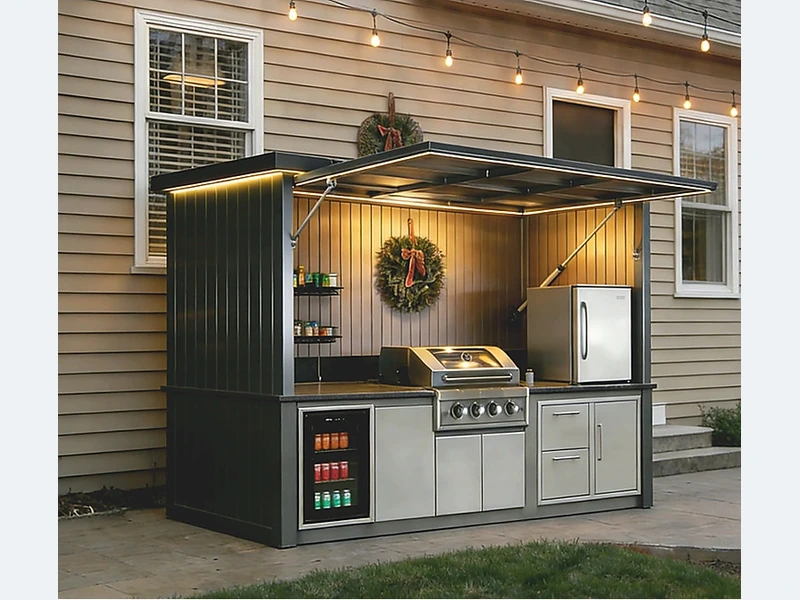
Most disappointing outdoor kitchens fail at an interface: cabinet to appliance, worktop to weather, or service line to site. Select equipment before cabinet production. A nominal grill or refrigerator width does not reveal the cut-out, lid swing, airflow or connection position. Designing from the approved manual prevents site trimming and preserves access when the appliance needs service.
Before approving a quotation, for “Do outdoor appliances need to be waterproof?”, separate facts from choices. Site dimensions and model numbers are facts; finish and optional modules are choices; local approvals are external checks. Keeping those groups visible makes revisions easier to price and approve. It turns a broad question into a list of decisions that can be checked before production.
| Decision | What to examine | What to record |
|---|---|---|
| Approval | Outdoor use and destination requirements | Data plate and technical sheet |
| Opening | Cut-out, support and insulation jacket | Manufacturer drawing |
| Airflow | Combustion or condenser ventilation | Unblocked free-air path |
| Service | Isolation, cleaning and removal | Accessible panels and connections |
Use this list before accepting a design, price or product recommendation:
Evidence boundary: The recommendation has limits: appliance instructions, measured conditions and destination rules take precedence. Have the relevant local professional check any fire, gas, power, water, drainage or structural detail.
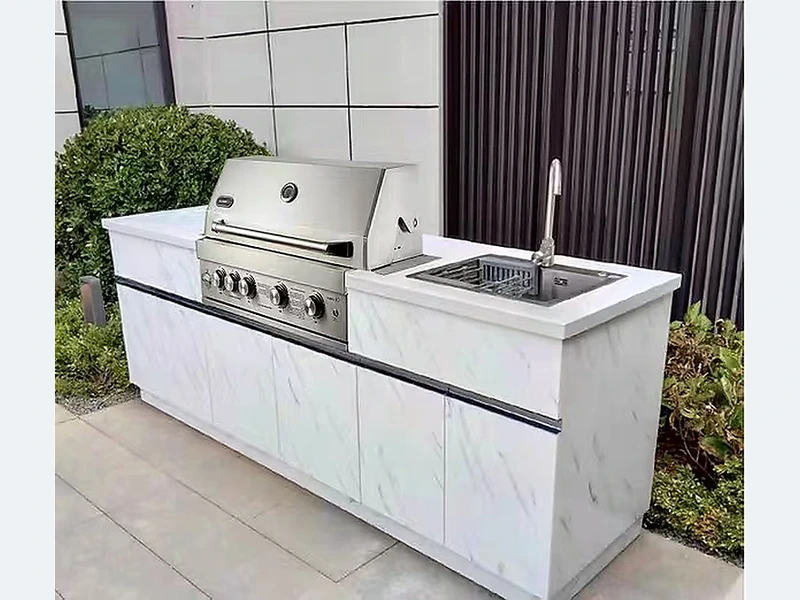
A product reference makes the planning choices easier to see; start with the stainless steel outdoor kitchen with grill and sink together with the broader ForgeWin outdoor-kitchen range. Treat both as configuration references, then submit the measured site, appliance schedule, finish direction and delivery location for a project review.
Before production, reconcile the cabinet drawing with the appliance manuals and the local rough-in plan. The supplier, installer and trades should be working from compatible revisions rather than three separate sketches.
Avoid indoor-only refrigerators, dishwashers, small appliances or electronics outdoors unless the manufacturer explicitly approves the installation. Also avoid appliances that cannot be serviced once built in, or whose vents would be blocked by the cabinet. Products with exposed plugs, unsuitable temperature ranges or no weather rating create more risk than convenience, even beneath a roof.
An outdoor refrigerator is optional. It is valuable when entertaining is frequent, the indoor kitchen is far away or drinks and ingredients need to stay close to the cooking area. If those conditions do not apply, use the space for storage or worktop. When specified, choose a unit listed for outdoor use and provide the ventilation, ambient-temperature range and protected power stated by its manufacturer.
An outdoor dishwasher is possible only with a model approved for the location and a complete plan for hot water, drainage, electrical protection, ventilation and freeze protection. In many homes it adds considerable complexity for limited use. Compare that cost and maintenance with a well-placed sink and carrying dishes inside before reserving a full cabinet bay.
For “Do outdoor appliances need to be waterproof?”, a dependable answer ends in a checkable drawing and specification, not a broad promise. Confirm the site, exposure, appliances and scope; then compare materials, modules and cost on the same basis. Send ForgeWin the dimensions, photos and model numbers so unresolved items can be marked before production.
2026-09-10
2026-10-04