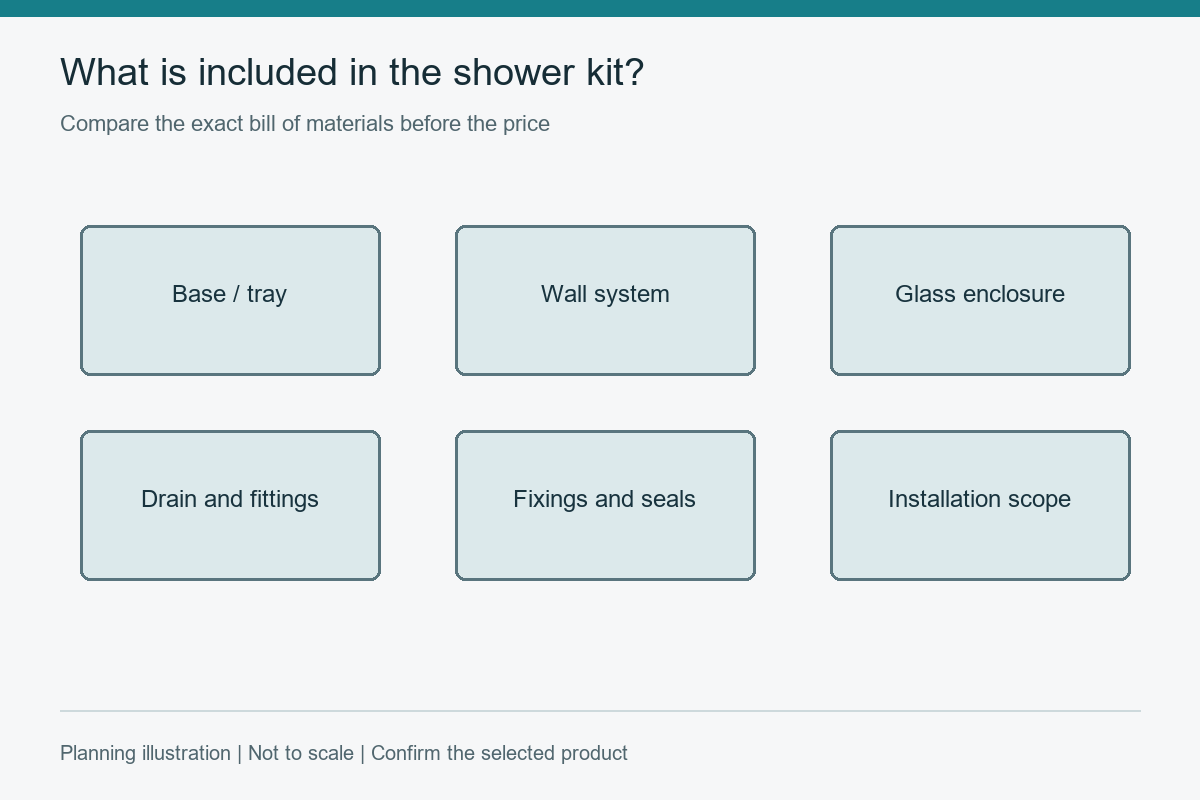
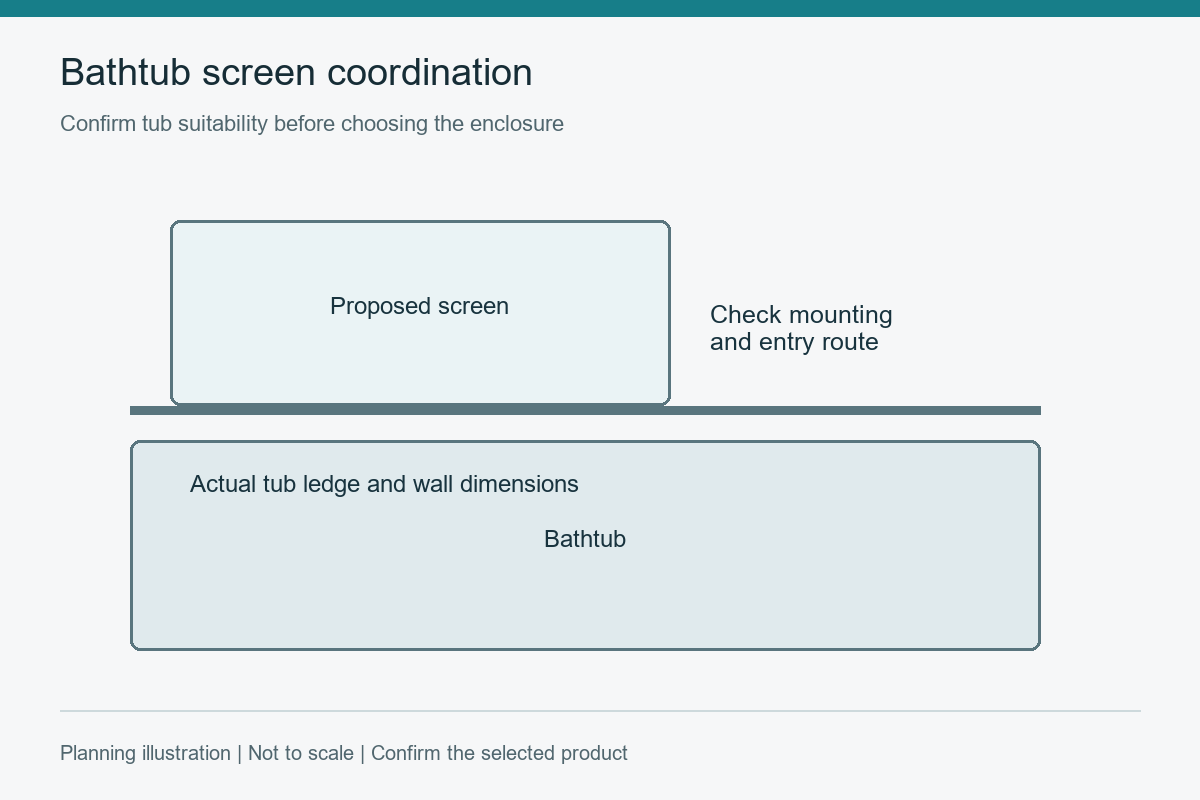
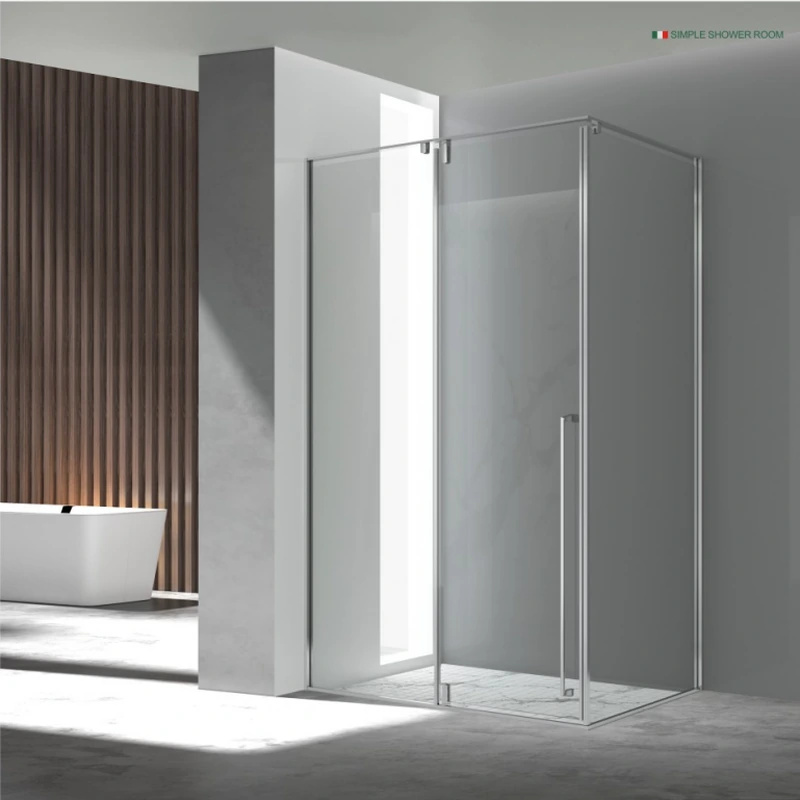
Shower glass and hardware must be selected together for the proposed enclosure. Panel dimensions, glass specification, hinges or rollers, supports and fixing positions all affect the arrangement. Glass thickness alone does not establish the safety or suitability of the finished shower.
State tempered or laminated construction where applicable, nominal thickness, tint, texture, coating and edgework. Safety requirements come from the jurisdiction and product standard.
Larger or heavier panels affect hinges, channels and walls. Holes and notches must follow fabrication rules, and finished edges should be protected during handling.
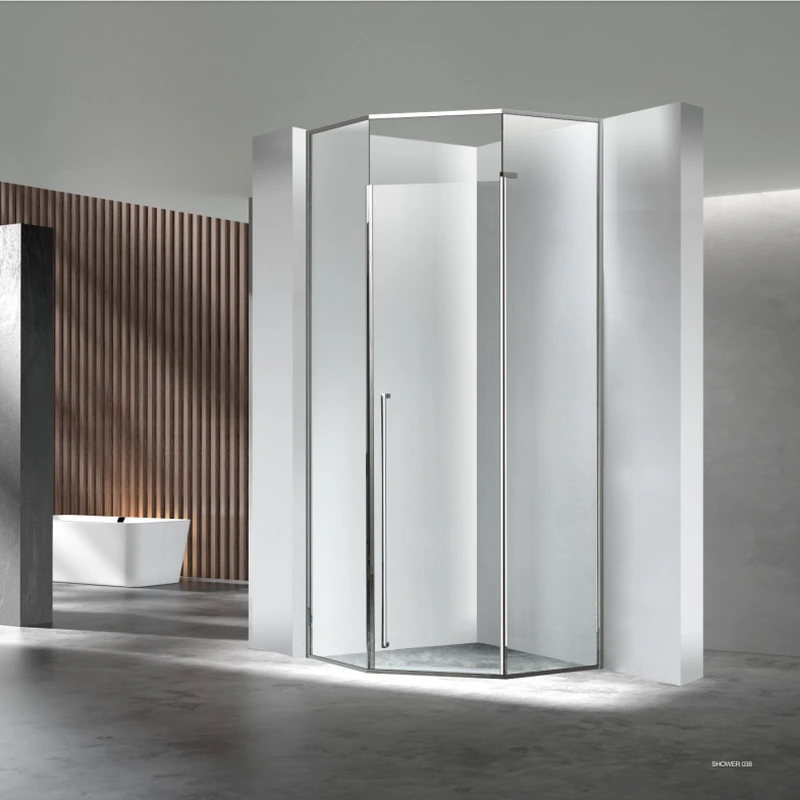
A related layout to review is Z003 Diamond-Shaped Two-Fixed One-Open Shower Enclosure. Use the product page to discuss the proposed dimensions and configuration.
Coatings can change cleaning instructions but do not eliminate maintenance. Review water quality, squeegee access and approved products before purchase.
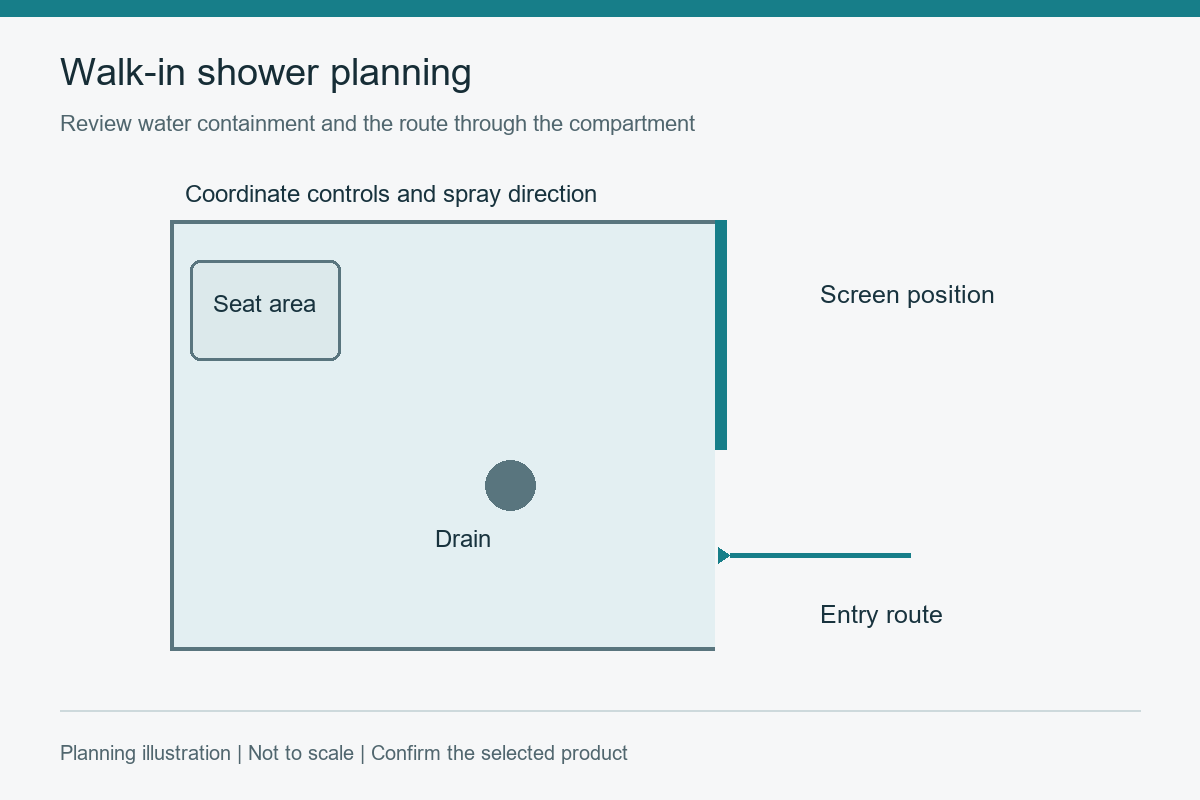
Show swing arcs, sliding overlap, handles, towels, toilet, vanity and entry door. A door can fit the opening but fail the room’s circulation.
Final glass size and thickness determine hinge, pivot or roller loads. Confirm hardware capacity, mounting and adjustment with the proposed panel.
Sweeps, magnetic seals and channels wear. Select parts that can be cleaned and replaced without dismantling waterproof finishes.
Ask for a drawing that labels fixed and moving panels, every support and the door's open position. Compare the hardware information with the actual panel size and weight. Check how seals and moving parts can be replaced, and retain the supplied glass identification. An attractive frameless appearance should not leave the support or maintenance arrangement unexplained.

A related layout to review is Y003 Square One-Fixed Two-Sliding Shower Enclosure. Use the product page to discuss the proposed dimensions and configuration.
No. The glass and hardware need to be assessed as a compatible assembly. Increasing glass thickness can also change the load on moving parts. Use the enclosure supplier's approved configuration and applicable project requirements.
Use the checks above to mark the unresolved items on your drawing or quotation. Send that marked-up version with the selected product reference so the next discussion can focus on the actual configuration.
Manufacturer instructions are cited as an example of the coordination required. Follow the instructions supplied for your selected enclosure.