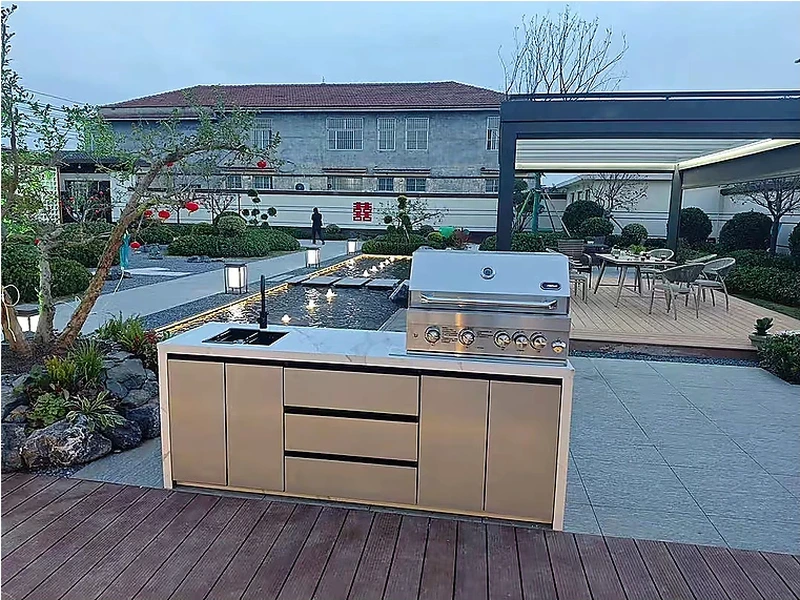
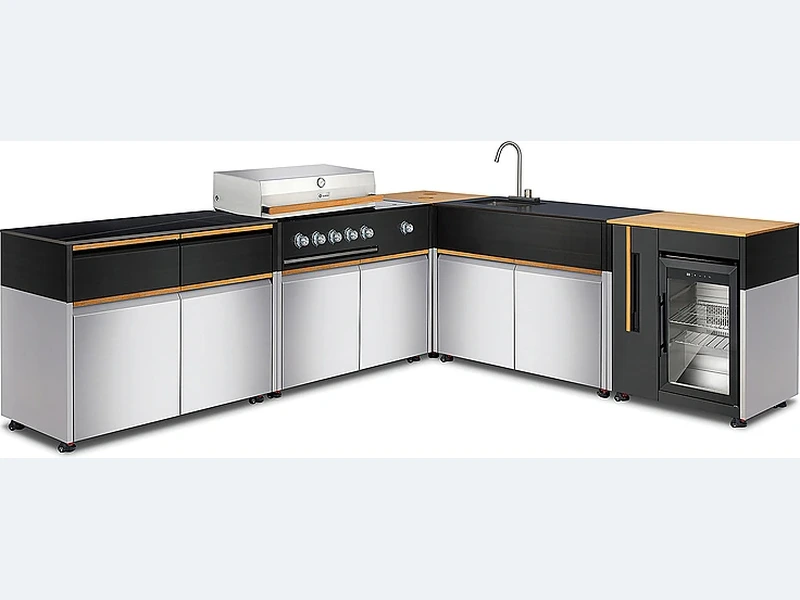
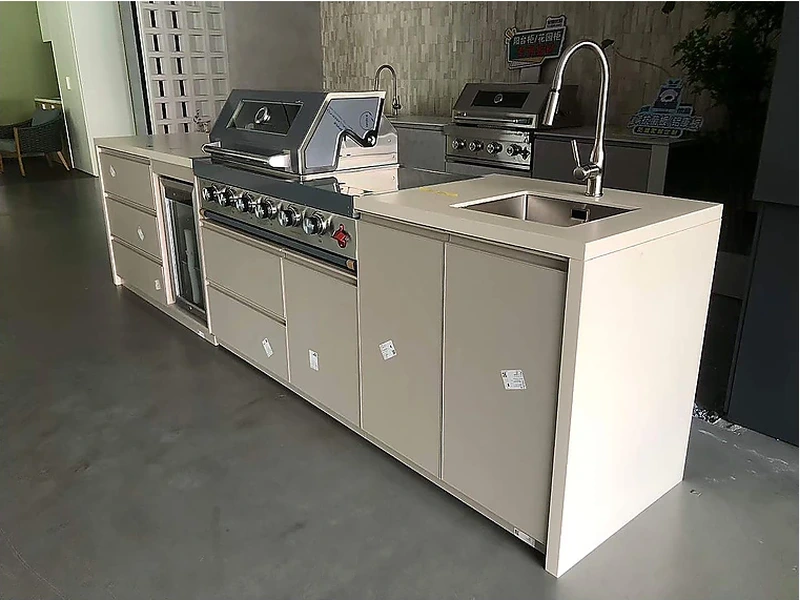
A custom or luxury outdoor kitchen can be expensive because it combines joinery, metalwork, stone fabrication, appliances and building services in an exposed environment. The premium should buy measurable differences—better material specification, coordinated appliance openings, robust hardware, drainage details, finish samples and documented installation—not simply a fashionable label. Request alternates so each upgrade has a visible cost.
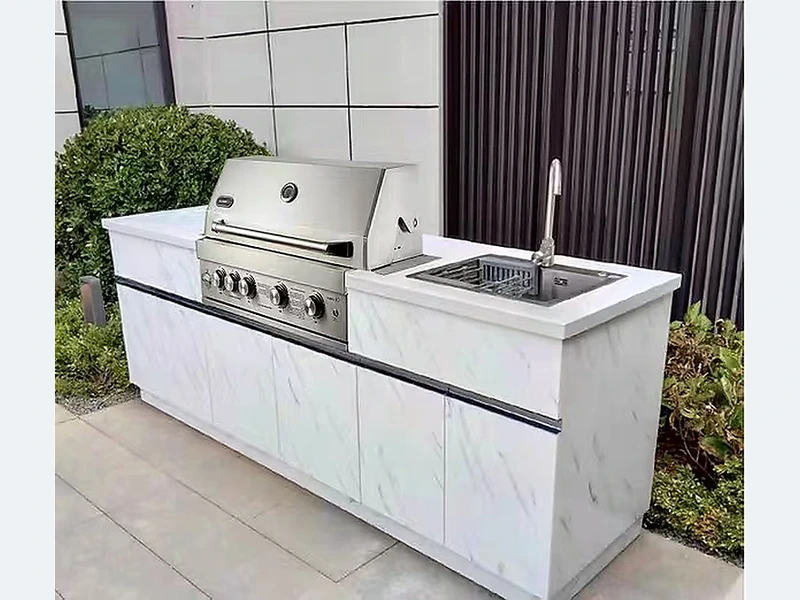
Begin with the constraint that cannot move, then design the cabinets around it. Budget control starts by turning the kitchen into priced parts: cabinets, panels, appliances, worktop, freight, utilities and site labour. Ask every bidder to show those parts in the same order. The exercise exposes whether a “complete” figure really stops at factory supply.
For a durable result, for “How much does a luxury outdoor kitchen cost?”, separate facts from choices. Site dimensions and model numbers are facts; finish and optional modules are choices; local approvals are external checks. Keeping those groups visible makes revisions easier to price and approve. It turns a broad question into a list of decisions that can be checked before production.
| Decision | What to examine | What to record |
|---|---|---|
| Cabinet scope | Module widths, fillers, panels and internal fittings | One itemised cabinet schedule |
| Appliances | Exact models, fuel, voltage and accessories | Model numbers and supplier responsibility |
| Worktop | Material, thickness, edges, joints and cut-outs | Measured fabrication scope |
| Site work | Utilities, base, access, lifting and installation | Included, excluded or provisional |
Use this list before accepting a design, price or product recommendation:
Evidence boundary: Use these checks to prepare the brief, then verify the final drawing against model-specific manuals and local requirements. No general article can approve a service connection or safety clearance for an unseen site.
A product reference makes the planning choices easier to see; start with the straight outdoor kitchen design collection together with the broader ForgeWin outdoor-kitchen range. Treat both as configuration references, then submit the measured site, appliance schedule, finish direction and delivery location for a project review.
Before production, reconcile the cabinet drawing with the appliance manuals and the local rough-in plan. The supplier, installer and trades should be working from compatible revisions rather than three separate sketches.
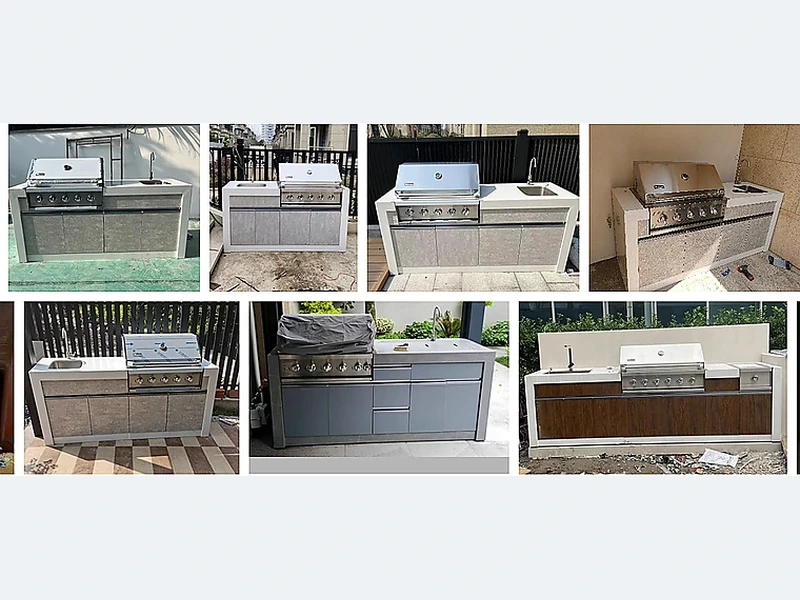
Yes. A useful quotation can be prepared from the outdoor-area dimensions, clear photos, the preferred layout, appliance model numbers and the delivery location. The first price should still be labelled preliminary until finished site dimensions, utilities, access and installation scope are confirmed. A dimensioned sketch is more reliable than area alone because corners, openings and service points affect cabinet modules.
A small outdoor kitchen usually costs less than a large custom installation, but size alone does not set the price. A short run with a grill, durable worktop and storage can stay relatively simple; adding a sink, refrigerator, gas work, drainage or difficult delivery can cost more than the cabinets. Compare a supply-only module price with a complete installed scope.
Stainless steel outdoor kitchens can cost more than basic coated or lightweight units, but price depends on grade, sheet thickness, construction, finish and hardware. The meaningful comparison is whole-life suitability for the exposure, not the word “stainless” on its own. Ask whether the quoted grade and finish suit rain, humidity or salt air and whether internal components match the external specification.
For “How much does a luxury outdoor kitchen cost?”, a dependable answer ends in a checkable drawing and specification, not a broad promise. Confirm the site, exposure, appliances and scope; then compare materials, modules and cost on the same basis. Send ForgeWin the dimensions, photos and model numbers so unresolved items can be marked before production.
2026-09-14
2026-09-22