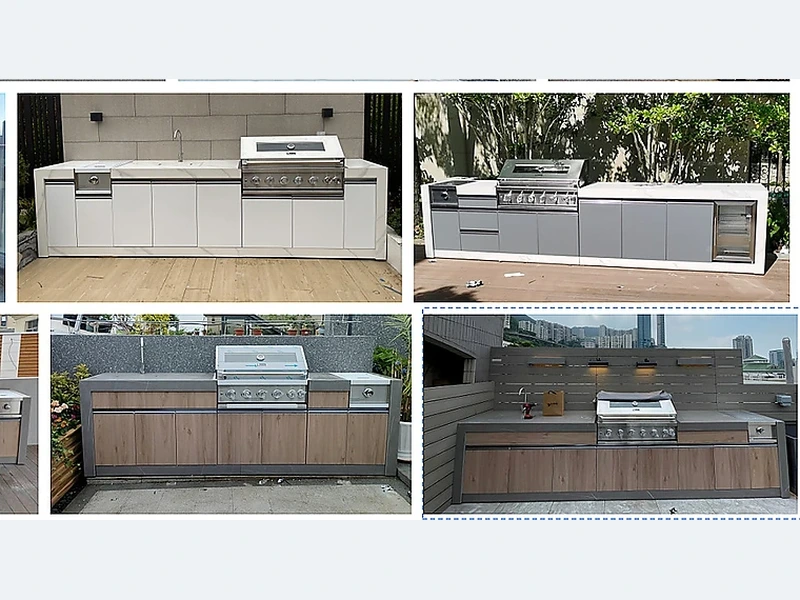
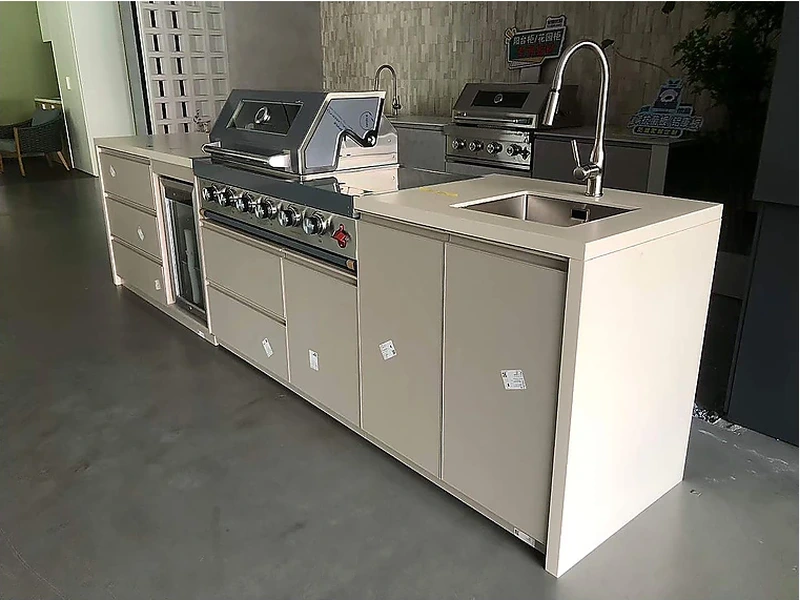
A sink can operate from a potable-water tank and pump without a direct house connection, but wastewater still needs a lawful collection or drainage method. This arrangement suits occasional use better than a full prep sink. Use food-safe components, make the tanks easy to clean and monitor, and check local health and plumbing rules before allowing greywater to discharge onto the ground.
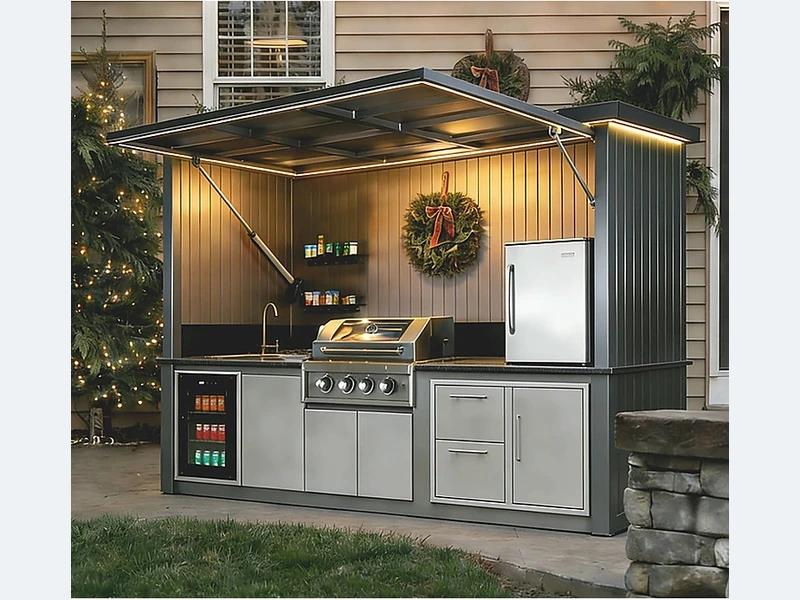
Most disappointing outdoor kitchens fail at an interface: cabinet to appliance, worktop to weather, or service line to site. Services are easiest to correct before paving and cabinets hide them. Place isolation and clean-outs where a technician can reach them. Water needs an approved discharge, gas needs tested pipework and airflow, and electricity needs outdoor protection for the jurisdiction.
Before approving a quotation, for “Can I install a sink without connecting to the house?”, treat this as a coordination question. Record the exposure, appliance models, finished dimensions and the party responsible for each service. Local fire, gas, electrical, plumbing and structural requirements still need review in the destination jurisdiction. That sequence keeps the design flexible early and precise when money is committed.
| Decision | What to examine | What to record |
|---|---|---|
| Water | Potable supply, isolation and freeze strategy | Plumber-approved route |
| Drainage | Trap, fall, venting and discharge | Lawful wastewater connection |
| Gas | Fuel, sizing, shut-off and ventilation | Tested licensed installation |
| Power | Load, protection, enclosure and isolation | Electrician-approved circuit |
Use this list before accepting a design, price or product recommendation:
Evidence boundary: This is planning guidance, not a replacement for the selected appliance manual, a finished site measurement or local approval. Confirm clearances, environmental ratings and regulated trade work for the exact project.
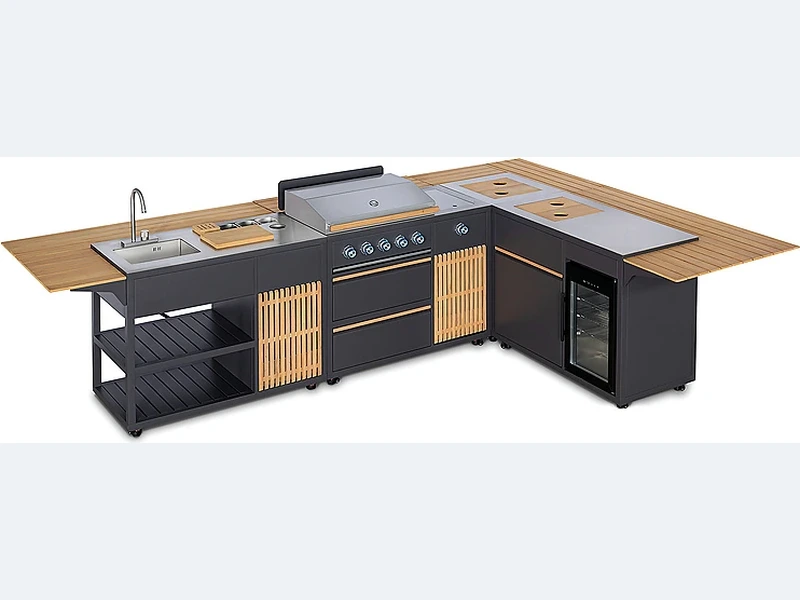
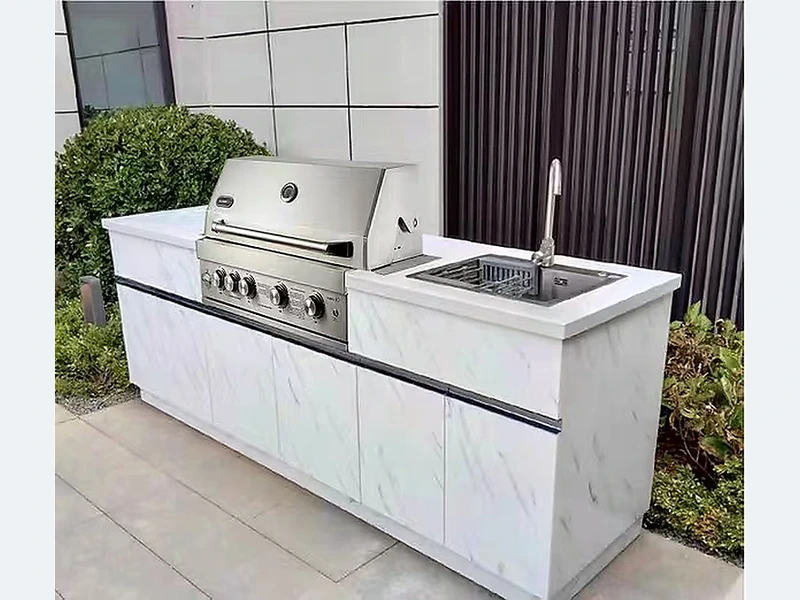
A product reference makes the planning choices easier to see; start with the stainless steel outdoor kitchen with grill and sink together with the broader ForgeWin outdoor-kitchen range. Treat both as configuration references, then submit the measured site, appliance schedule, finish direction and delivery location for a project review.
Before production, reconcile the cabinet drawing with the appliance manuals and the local rough-in plan. The supplier, installer and trades should be working from compatible revisions rather than three separate sketches.
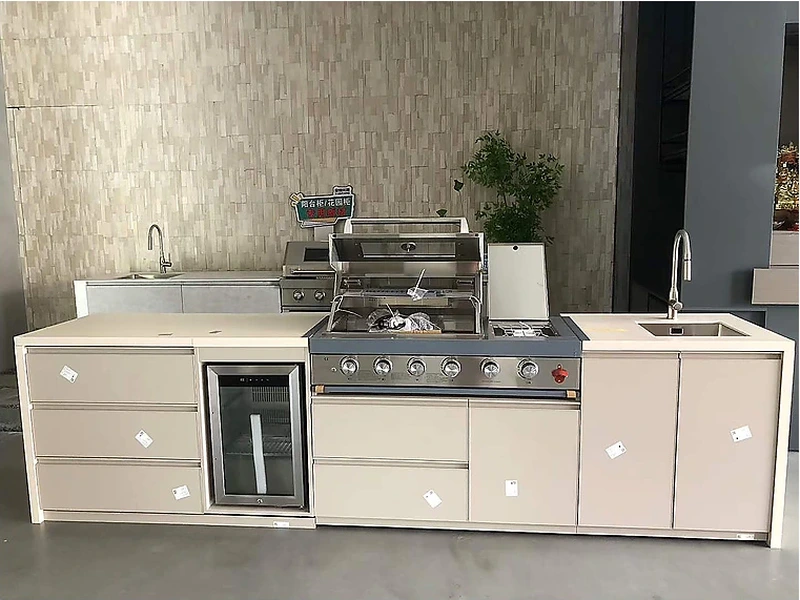
Water is normally brought from a nearby cold-water line through an approved underground or protected route with an accessible isolation valve. Alternatives include a small potable tank and pump for light use. Pipe material, burial, backflow protection, pressure and frost measures depend on local rules. Coordinate the route before pouring slabs or fixing cabinets so joints and shut-offs remain serviceable.
Natural gas suits frequent cooking and avoids cylinder changes when a correctly sized connection is available. LPG is more flexible and can suit sites without gas service, but cylinders need compliant storage, ventilation and safe replacement access. Appliance output and jets must match the chosen fuel. Compare installation cost, fuel availability and local rules rather than assuming one burns universally “better”.
An outdoor kitchen needs plumbing only when it includes a sink, ice maker, dishwasher or another water-using appliance. A grill-and-storage kitchen can work without it. If water is added, plan potable supply, isolation, lawful drainage, access for maintenance and frost protection where applicable. The drain route is usually the deciding issue; a tap without an approved wastewater solution is not a complete design.
For “Can I install a sink without connecting to the house?”, keep the solution simple until the fixed constraints are known. Once site, weather, equipment and services are recorded, the remaining choices can be priced without forcing late changes. Send ForgeWin the dimensions, photos and model numbers so unresolved items can be marked before production.
2026-09-21
2026-10-07
2026-09-05