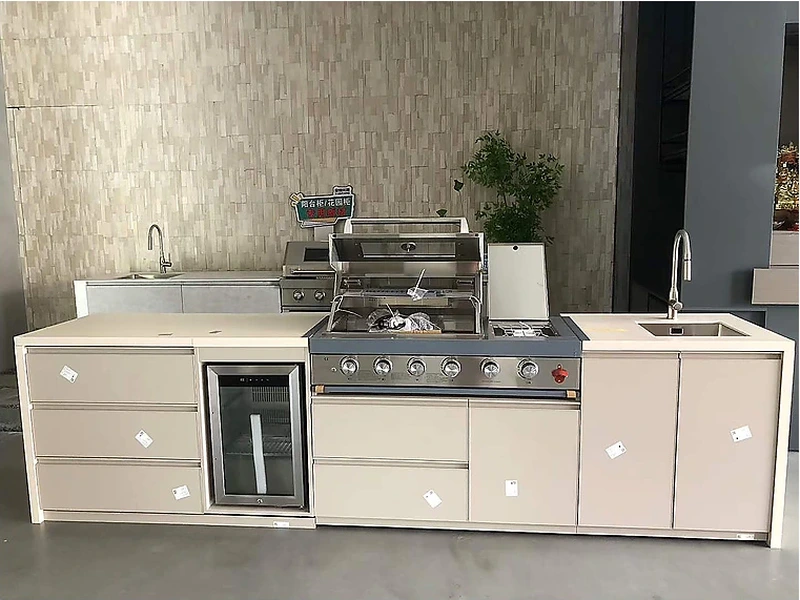
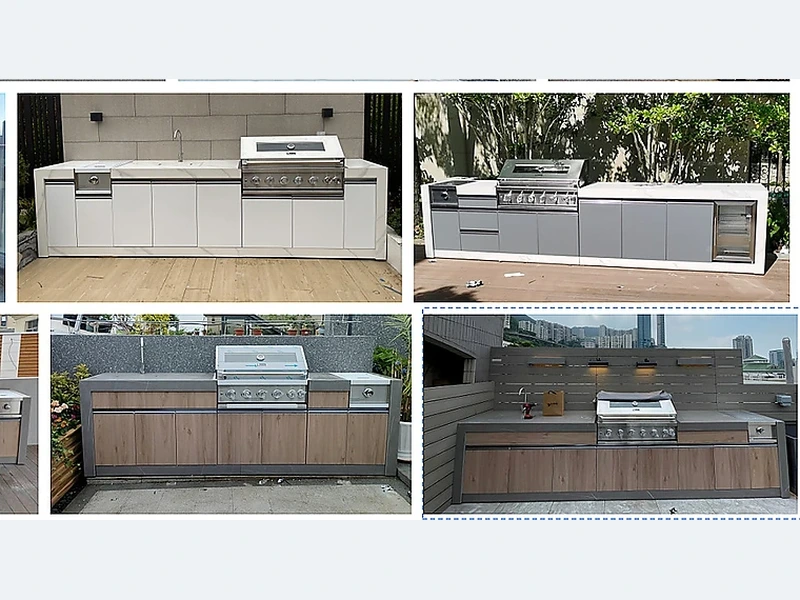
Water is normally brought from a nearby cold-water line through an approved underground or protected route with an accessible isolation valve. Alternatives include a small potable tank and pump for light use. Pipe material, burial, backflow protection, pressure and frost measures depend on local rules. Coordinate the route before pouring slabs or fixing cabinets so joints and shut-offs remain serviceable.
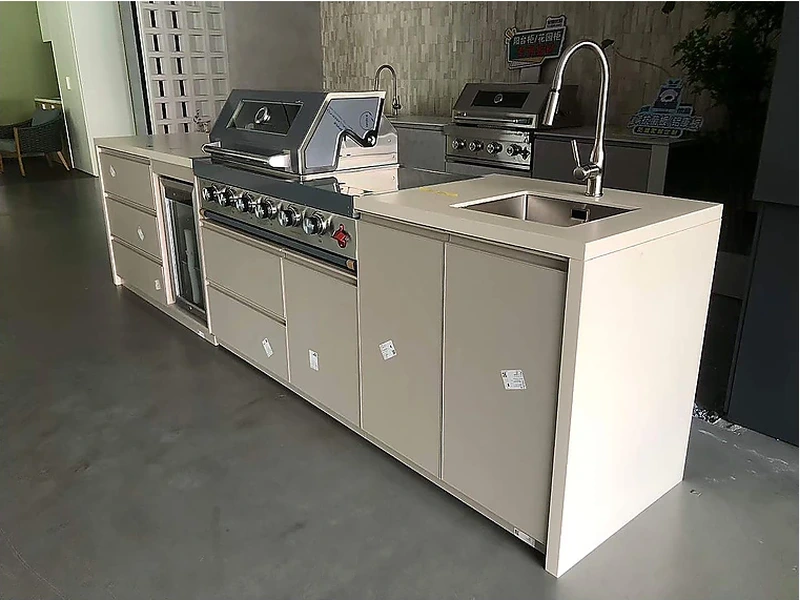
Most disappointing outdoor kitchens fail at an interface: cabinet to appliance, worktop to weather, or service line to site. Draw supply and waste routes in section as well as plan. Levels determine drainage; cabinet backs determine access; appliance data determines connection points. A brief rough-in inspection before delivery is cheaper than moving finished stone.
Before approving a quotation, for “How do you get water to an outdoor kitchen?”, separate facts from choices. Site dimensions and model numbers are facts; finish and optional modules are choices; local approvals are external checks. Keeping those groups visible makes revisions easier to price and approve. It also leaves a record that the installer can check instead of reconstructing decisions on site.
| Decision | What to examine | What to record |
|---|---|---|
| Water | Potable supply, isolation and freeze strategy | Plumber-approved route |
| Drainage | Trap, fall, venting and discharge | Lawful wastewater connection |
| Gas | Fuel, sizing, shut-off and ventilation | Tested licensed installation |
| Power | Load, protection, enclosure and isolation | Electrician-approved circuit |
Use this list before accepting a design, price or product recommendation:
Evidence boundary: The recommendation has limits: appliance instructions, measured conditions and destination rules take precedence. Have the relevant local professional check any fire, gas, power, water, drainage or structural detail.
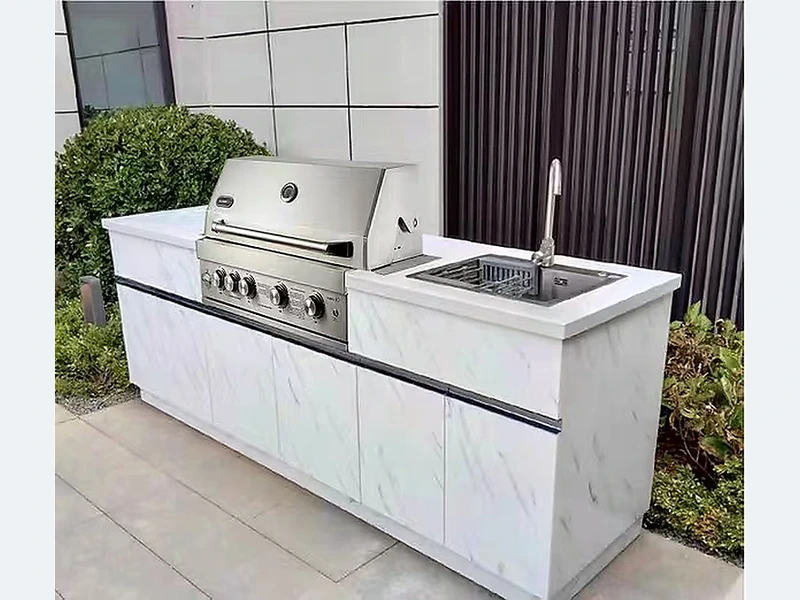
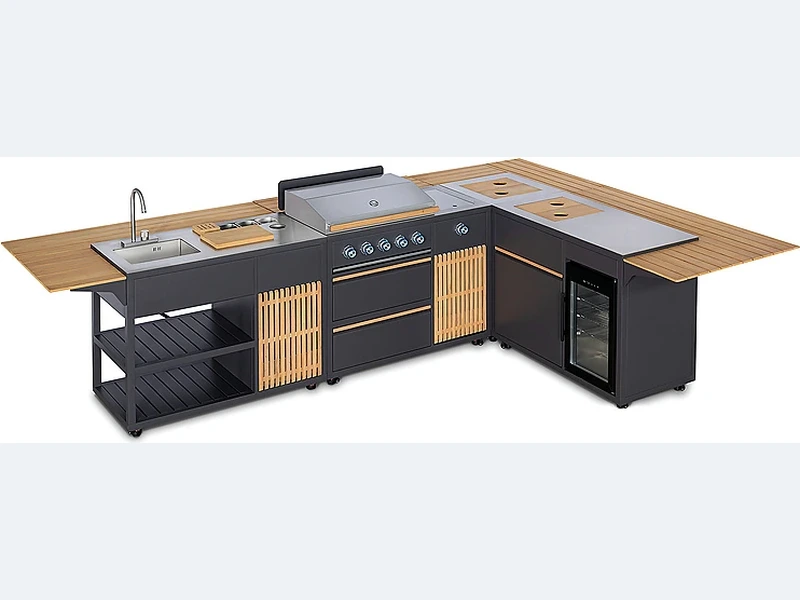
For a visual and dimensional reference, compare the stainless steel outdoor kitchen with grill and sink together with the broader ForgeWin outdoor-kitchen range. Treat both as configuration references, then submit the measured site, appliance schedule, finish direction and delivery location for a project review.
Use the ForgeWin proposal to coordinate modules and cut-outs, then return site and trade comments on the same drawing. This two-way check is especially important where worktops, fuel, drainage or existing construction fix the available dimensions.
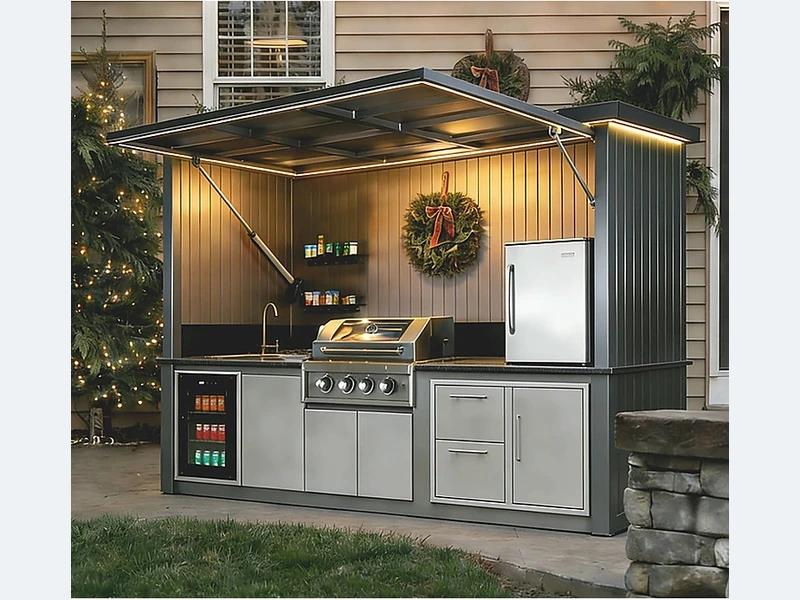
Yes, a working outdoor sink normally needs an approved drain or a contained wastewater system. Letting food-contaminated water run across paving or into a garden can create hygiene, pest and legal problems. Confirm the trap, venting, fall, clean-out access and discharge point with a local plumber. Cabinet drain holes only remove rainwater; they are not a substitute for sink drainage.
Outdoor kitchens often need protected power for refrigeration, ignition, lighting and small appliances. Use outdoor-rated outlets and enclosures, appropriate RCD/GFCI or local equivalent protection, dedicated circuits where required and accessible isolation. A licensed electrician should size and position the work for the site’s wet zones and appliance loads. Extension leads are not a permanent outdoor-kitchen wiring plan.
A sink can operate from a potable-water tank and pump without a direct house connection, but wastewater still needs a lawful collection or drainage method. This arrangement suits occasional use better than a full prep sink. Use food-safe components, make the tanks easy to clean and monitor, and check local health and plumbing rules before allowing greywater to discharge onto the ground.
For “How do you get water to an outdoor kitchen?”, a dependable answer ends in a checkable drawing and specification, not a broad promise. Confirm the site, exposure, appliances and scope; then compare materials, modules and cost on the same basis. Send ForgeWin the dimensions, photos and model numbers so unresolved items can be marked before production.
2026-09-05
2026-09-21
2026-10-07