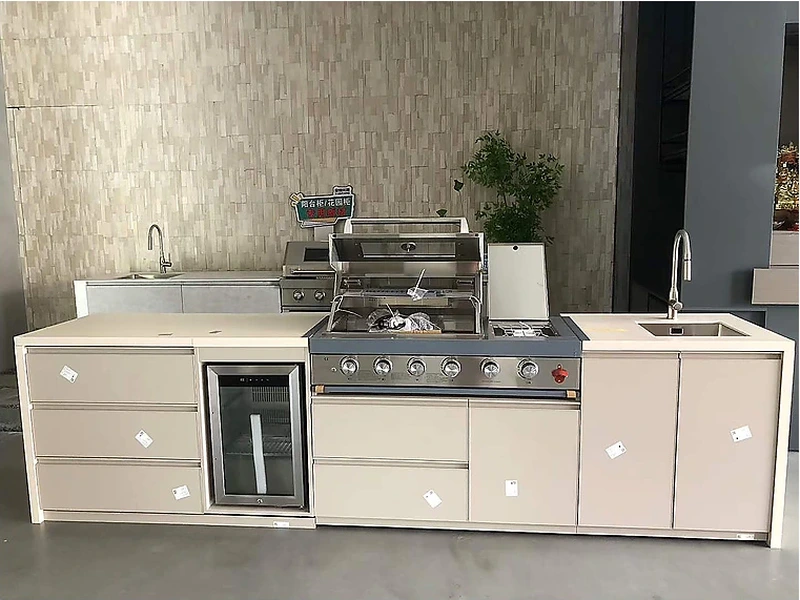
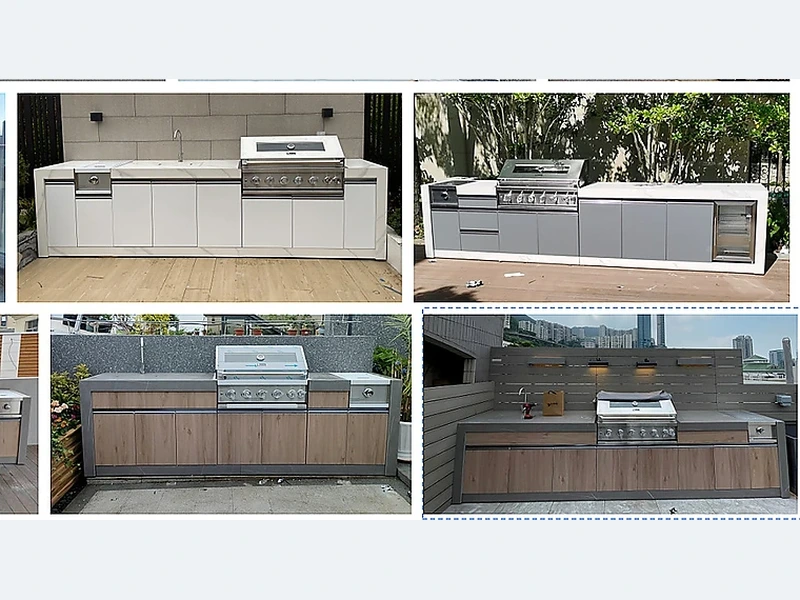
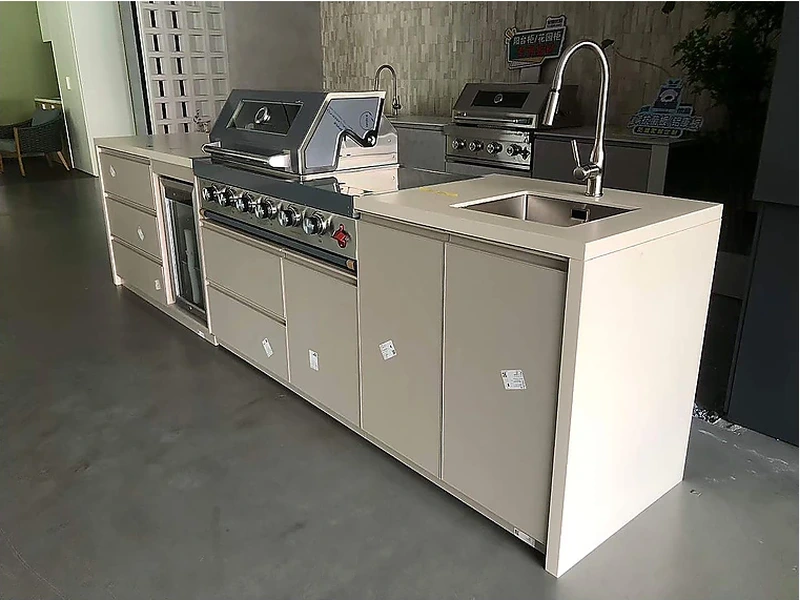
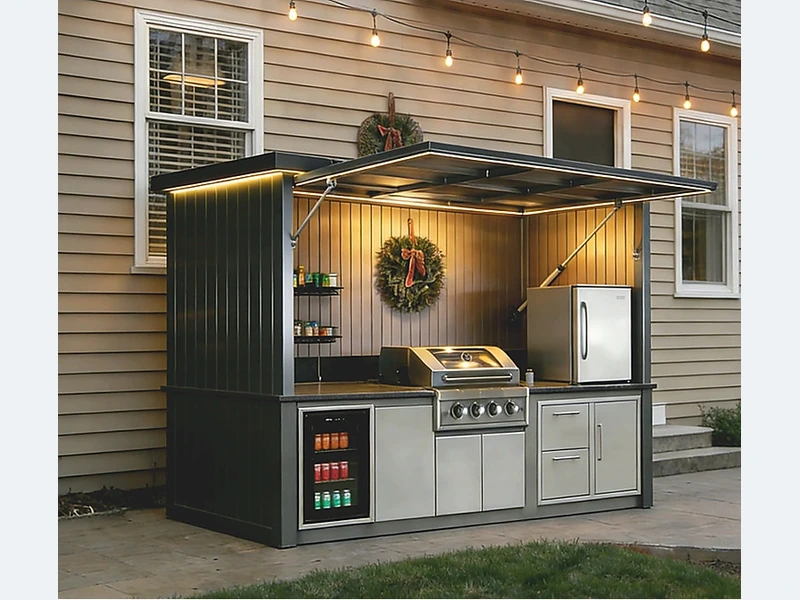
Protect an outdoor kitchen from heavy rain by combining shelter with water-management details: slope horizontal surfaces, add drip edges, seal service penetrations, raise cabinet bases, provide floor drainage and keep appliance covers fitted when cool. Design for wind-driven rain, not only vertical rainfall. A cover should not obstruct required ventilation or be placed over a hot appliance.
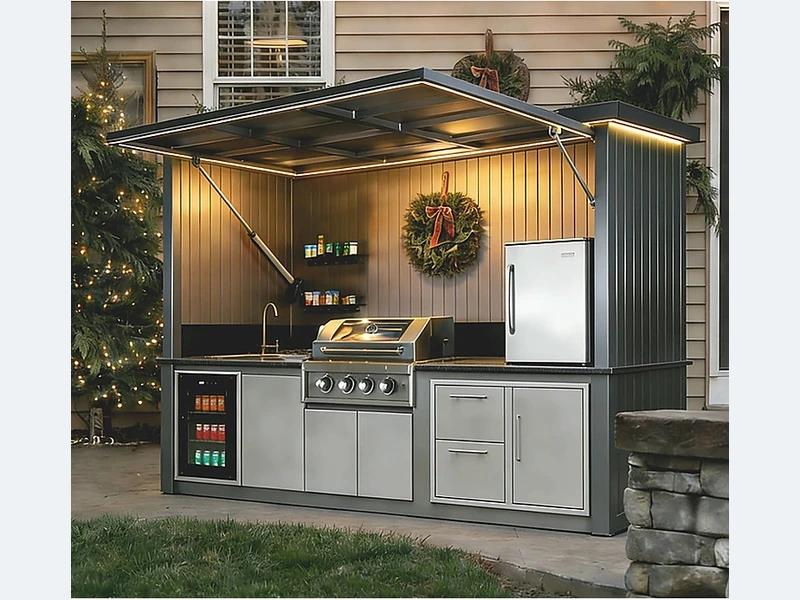
A useful way to approach this question is to separate the visible product from the site conditions around it. Think in terms of wetting and drying cycles. The goal is not an impossible sealed box; it is a kitchen that sheds water, avoids trapped moisture and can be cleaned after storms. Appliance manuals still govern ventilation and covers in the sheltered design.
In practical terms, for “How do I protect an outdoor kitchen from heavy rain?”, ask who will verify each input before production. The supplier can coordinate modules and openings, while local trades confirm structure and controlled services. The answer should appear in the project record, not be left to the installation day. This is where a dimensioned drawing is more valuable than another inspiration image.
| Decision | What to examine | What to record |
|---|---|---|
| Exposure | Rain direction, sun, salt and seasonal extremes | Site exposure note |
| Shelter | Roof, screen or appliance cover | Ventilated protection plan |
| Drainage | Worktop, cabinet and floor water | Slopes, drips and drains |
| Maintenance | Cleaning, inspections and winterisation | Owner care schedule |
Use this list before accepting a design, price or product recommendation:
Evidence boundary: The recommendation has limits: appliance instructions, measured conditions and destination rules take precedence. Have the relevant local professional check any fire, gas, power, water, drainage or structural detail.
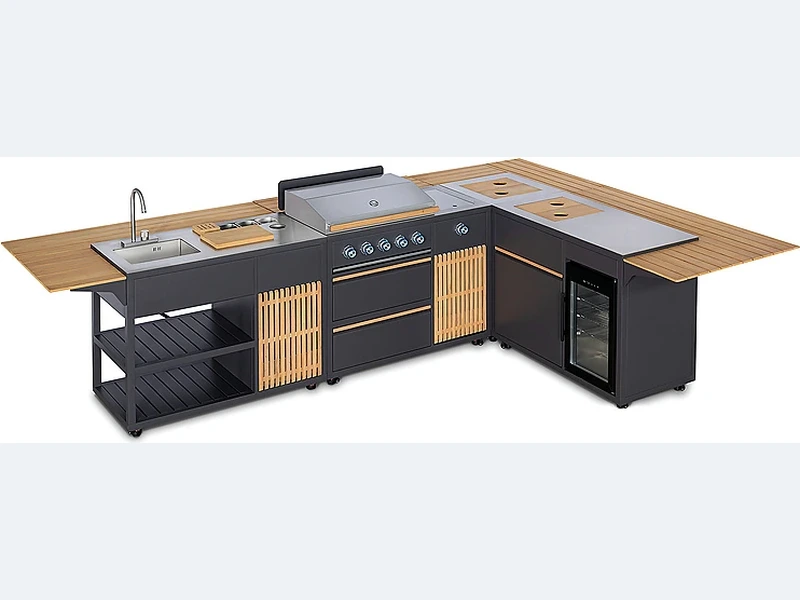
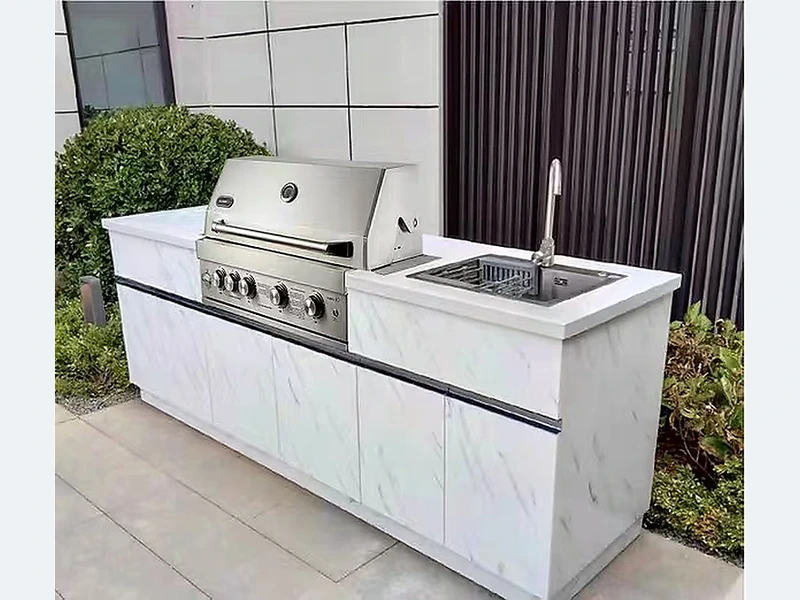
For a visual and dimensional reference, compare the straight outdoor kitchen design collection together with the broader ForgeWin outdoor-kitchen range. Treat both as configuration references, then submit the measured site, appliance schedule, finish direction and delivery location for a project review.
ForgeWin can coordinate cabinet modules, finish direction and appliance openings from drawings. The local team should verify finished dimensions, structural support, fire separation and code-controlled services. Keeping those roles visible prevents a product drawing from being mistaken for a site approval.
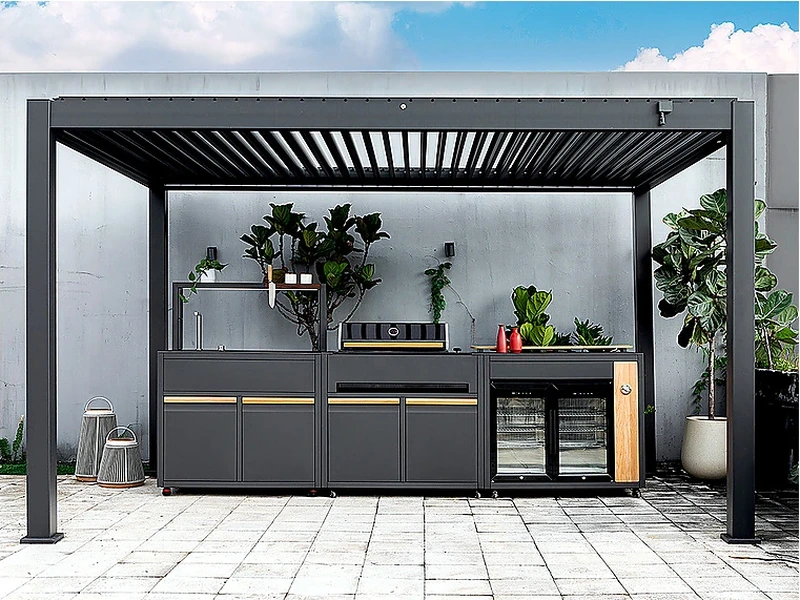
Year-round use is possible when the kitchen is designed for the local climate and winter or storm procedures are documented. Hot climates need shade and appliance ventilation; freezing climates need drain-down and frost protection; coastal sites need salt control. The limiting item is often a service or appliance—not the cabinet—so review water lines, refrigeration and gas equipment separately.
Outdoor kitchens can work near the sea, but salt deposits make specification and cleaning more demanding. Use chloride-resistant metals and compatible fasteners, avoid crevices that hold salt water, isolate dissimilar metals and rinse surfaces with fresh water on a site-appropriate schedule. 316 stainless is commonly considered for harsher chloride exposure, yet it still needs cleaning and careful fabrication.
Outdoor cabinets can handle direct sunlight when the panels, coating, sealants and worktop are approved for UV and heat. Dark finishes can become very hot; resin-bound surfaces and some decorative films may change colour. Request exterior test or warranty information for the exact finish, provide shade where practical and keep refrigerators away from radiant heat and blocked ventilation.
For “How do I protect an outdoor kitchen from heavy rain?”, good outdoor-kitchen decisions are specific. They name the product, exposure, interface and person who will verify it. That discipline matters more than adding another feature to the rendering. Send ForgeWin the dimensions, photos and model numbers so unresolved items can be marked before production.
2026-09-21
2026-10-07
2026-09-05